
Sugarcane aphid
Melanaphis sacchari
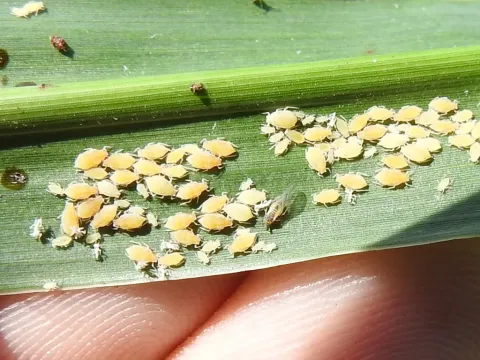
The sugarcane aphid (Melanaphis sacchari) is a member of the order Hemiptera and the family Aphididae. These insects are small, typically measuring between 1.5 and 2 mm in length.
What the section contains
Sugarcane aphid
Their body color ranges from light yellow to pale tan or brown. A key identifying characteristic is the presence of dark-colored legs and antennae, which distinguishes them from other common aphid species.
Both winged and wingless morphs exist within a population. Winged individuals are crucial for the migration of the species, allowing them to rapidly colonize new sorghum fields during the growing season.
The species reproduces through parthenogenesis, enabling extremely rapid population growth. In favorable conditions, multiple generations can occur within a single month, causing quick infestation.
This aphid is highly adaptable and can develop resistance to chemical treatments, making it a persistent challenge for integrated pest management programs in various regions.
The primary host for this pest is sorghum, including grain, forage, and sweet sorghum varieties. It also infests sugarcane, corn, millet, and several wild grasses.
Aphids feed on plant sap by piercing the leaves with their mouthparts. This process drains the plant of essential nutrients, leading to physiological stress and reduced growth rates.
Infestation typically begins on the lower leaves and progresses upward. As the population increases, the aphids cover the entire plant, causing leaves to yellow, turn brown, and eventually wither.
Severe infestations result in significant yield losses, reduced seed weight, and poor quality of forage. In extreme cases, the plant may fail to produce a viable seed head entirely.
Furthermore, the sugarcane aphid is known to transmit viral diseases, which can cause mosaic-like symptoms and stunted development across the entire field.
The pest usually appears in fields during the active vegetative growth stages of the sorghum crop. Hot and dry summer conditions significantly accelerate their life cycle and colonization rates.
Optimal temperatures for development range between +25 °C and +30 °C. Under these conditions, the aphid population can double in just a few days, leading to rapid spread.
Winged aphids migrate into sorghum fields as plants reach the boot and heading stages. These growth stages are particularly vulnerable to aphid-induced damage and yield reduction.
In regions with mild autumns, the aphids continue to reproduce on late-season growth, volunteer plants, and weeds until temperatures drop significantly and frost occurs.
Early-season scouting is vital. Farmers should begin inspecting their fields as soon as the seedlings emerge to detect the first colonies before they become widespread.
The most visible sign of an infestation is the presence of honeydew on the leaves. This sticky substance is secreted by the aphids and often leads to the growth of black sooty mold.
Leaves will initially show yellowing, which eventually transitions to a red or brown discoloration. This is the plant's necrotic response to the aphid's saliva and feeding damage.
The presence of large numbers of ants crawling on the plants is a secondary indicator, as ants are attracted to the honeydew produced by the aphid colonies.
Leaf curling and deformation are common symptoms in heavily infested plants. The presence of these pests on the underside of leaves makes them difficult to spot without careful inspection.
Checking the bottom of lower leaves in the field is the most reliable way to identify early colonies, as this area provides protection from sunlight and some natural predators.
Integrated management begins with cultural practices, such as choosing early-maturing varieties, planting at the recommended time, and controlling weeds that host the aphids.
Biological control plays a significant role. Conserving natural enemies like lady beetles, lacewings, and syrphid fly larvae can help suppress aphid populations naturally in the field.
When the economic threshold is reached—often defined as a specific number of aphids per leaf—the application of systemic insecticides is necessary to protect the crop.
Rotating insecticide classes is essential to manage resistance. It is critical to follow local extension guidelines regarding the selection and application timing of chemical products.
- Scout fields weekly.
- Use resistant sorghum hybrids.
- Apply insecticides according to threshold guidelines.