
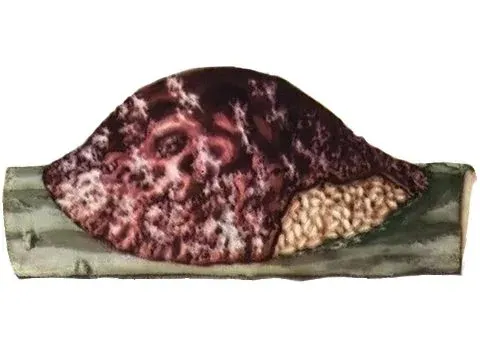
Walnut scale
Lecanium juglandifex
The walnut scale (Latin: Lecanium juglandifex) is a member of the Coccidae family, commonly known as soft scale insects. Adult females are distinguished by their convex, nearly hemispherical, brown bodies that harden into a protective dome after egg-laying.
What the section contains
Walnut scale
Unlike armored scale insects, the walnut scale does not produce a separate waxy shield. Instead, its own toughened cuticle serves as the protective covering. Males of this species are rarely seen and are significantly different, possessing wings for mating.
The first-instar nymphs, known as crawlers, are small, oval, and yellowish. This stage is critical for the pest's dispersal, as they actively move across branches to find suitable sites for feeding.
Identification is challenging because their color blends perfectly with the bark of host trees. Often, they resemble natural lenticels or small bumps, making them difficult to detect during early infestations.
Entomologists typically identify them by examining the localized colonies on branches and the structure of the eggs found beneath the dead female's protective body shell.
The primary hosts for this pest include walnut trees, although they can also infest various fruit-bearing and ornamental trees such as plum or apple. They mainly aggregate on stems and perennial branches.
They feed by inserting their needle-like mouthparts into the plant tissue to suck sap. This constant extraction of nutrients depletes the plant's energy reserves and weakens its overall systemic health.
Severe infestations lead to stunted shoot growth, premature leaf drop, and poor fruit production. The tree becomes chronically stressed, making it susceptible to secondary pests and various environmental pressures.
These insects excrete honeydew, a sticky substance that promotes the growth of sooty mold. This black fungal layer covers the leaves, significantly interfering with photosynthesis and reducing the tree's vitality.
Prolonged colonization can result in the dieback of major structural branches and, if left unmanaged, may eventually lead to the decline and death of the entire tree over several years.
The walnut scale overwinters as second-instar nymphs tucked away in bark crevices or near bud scales. As spring temperatures rise, these nymphs resume activity and migrate to their final feeding positions.
During late spring, the insects molt into adult females. This is the period when they become most visible as they swell significantly, developing their characteristic rounded, brown appearance.
Egg production generally occurs in early summer. A single female can produce several hundred eggs, which are safely tucked under her body until they are ready to hatch into the next generation of crawlers.
In mid-summer, the crawlers emerge and spread across the tree canopy, often settling on the undersides of leaves or green shoots. As autumn approaches, they return to the woody parts of the tree to hibernate.
Their life cycle is tightly synchronized with the phenology of the host tree, ensuring that the pest maximizes its feeding efficiency and survival rates throughout the growing season.
An early indicator of an infestation is the presence of small, firm, brown bumps on the bark that feel slightly raised. These bumps may release fluid if pressed, indicating they are still active.
The presence of a sticky, shiny residue on branches and foliage (honeydew) is a clear sign of scale activity. This sticky layer often attracts ants, which feed on the honeydew and protect the scales from predators.
Leaves showing premature yellowing or wilting in the middle of summer can be an indicator that a colony is sapping the tree's moisture and nutrients effectively.
Dieback of terminal twigs or the presence of rough, cracked bark in localized areas often confirms that the scale population has been feeding in those spots for a prolonged period.
A general decrease in tree vigor, reduced annual growth increments, and smaller nut sizes are classic signs of a long-term walnut scale infestation that requires professional attention.
Integrated pest management begins with cultural practices, such as pruning infested branches and scrubbing the bark to remove old, dead tissue where nymphs might be overwintering.
Chemical control is most effective when targeted at the crawler stage, as they lack the hardened protective shell. Applying systemic insecticides during this window provides the highest mortality rate.
Dormant oil sprays applied in early spring before bud break can effectively smother overwintering nymphs. This method is environmentally safer than broad-spectrum insecticides and helps reduce early-season populations.
Biological control involves conserving or introducing natural predators such as lady beetles (coccinellids) and lacewings, which are known to prey on scale insects and their eggs.
- Monitoring for crawlers using double-sided sticky tape on branches.
- Maintaining optimal soil health and irrigation to improve tree resistance.
- Avoiding non-selective insecticides that kill beneficial predatory insects.