
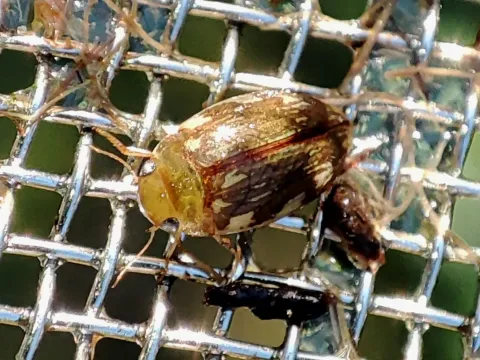
Laccophilus hyalinus
Laccophilus hyalinus
Laccophilus hyalinus is a species of diving beetle belonging to the family Dytiscidae, order Coleoptera. These beetles are relatively small, typically measuring between 4 to 5 millimeters in length.
What the section contains
Laccophilus hyalinus
The beetle's body features a streamlined, oval shape, which is a classic adaptation for efficient movement through aquatic environments. Its coloration usually ranges from pale yellow to light brown.
The name reflects the presence of semi-transparent elytra, which allow for a distinctive appearance compared to other darker members of the Dytiscidae family.
The hind legs are specialized for swimming, equipped with dense hairs that function like oars. This allows the beetle to be highly maneuverable in both stagnant and slow-moving water.
Due to their small size and cryptic coloration, these beetles are often overlooked in standard aquatic surveys until their population density reaches problematic levels.
Laccophilus hyalinus acts as a predator in fish farms, posing a significant threat to fry and juvenile fish populations. Both larvae and adults are opportunistic hunters.
The larvae are particularly aggressive, attacking young fish, damaging their skin and fins, and often leading to mass mortality in nursery ponds.
Adult beetles also inflict injuries on juveniles, which can make the fish more susceptible to secondary bacterial and fungal infections that thrive in the damaged tissues.
These insects also compete directly with fish for food resources, as they consume zooplankton and small aquatic invertebrates that are vital for the growth of fish fry.
The presence of these predators in high numbers significantly reduces the overall productivity of aquaculture systems, leading to economic losses for fish farmers.
The seasonal activity of Laccophilus hyalinus begins in early spring when water temperatures rise, prompting the beetles to emerge from their overwintering sites.
The peak reproductive period occurs during late spring and summer. During this time, females lay eggs on aquatic vegetation or within the substrate of the pond.
Larval development takes place throughout the summer months. The growth rate is highly dependent on food availability and water temperature, which determines how many generations are produced.
As autumn approaches, the final larval stage pupates in the soil along the shoreline or within dense vegetation. Adults then seek refuge for hibernation as temperatures drop.
The life cycle is closely synchronized with the environmental conditions of the pond, making them a recurring challenge in warm-climate aquaculture regions.
Signs of an infestation include the visible presence of adult beetles during pond sampling using dip nets or mesh traps.
The detection of larvae is a clear indicator that the species is actively breeding within the pond environment, signaling a need for intervention.
Observable damage to fish fry, such as skin abrasions, missing fins, or sluggish swimming behavior, indicates that they are being harassed or attacked by predatory insects.
A sudden decline in the density of zooplankton, specifically daphnia and other crustaceans, can serve as an indirect warning that a predatory beetle population has established itself.
The presence of dead juvenile fish without obvious signs of disease or parasitic infection often points to mechanical injury caused by these diving beetles.
The most effective strategy involves drying out pond bottoms between cycles, which helps eliminate both overwintering adults and any dormant stages in the substrate.
Management of aquatic vegetation is crucial; removing excessive plant growth reduces the habitat available for egg-laying and provides fewer hiding spots for larvae.
Installing fine-mesh screens on water inlet pipes prevents the entry of adult beetles from nearby natural water bodies into managed aquaculture ponds.
Biological control methods include stocking the ponds with predator-friendly fish species that may consume beetle larvae without affecting the primary crop.
Chemical control should be considered as a last resort, using selective compounds that are safe for the target fish population while remaining effective against aquatic insects.