
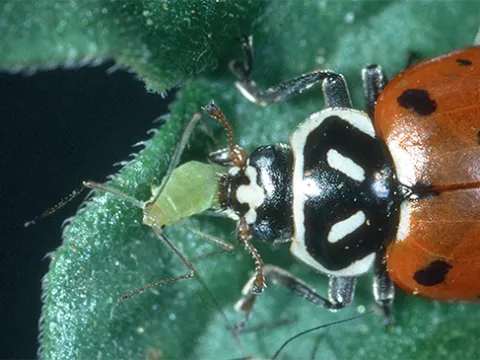
Convergent lady beetle
Hippodamia convergus
The Convergent lady beetle (Hippodamia convergens) is a member of the Coccinellidae family, measuring approximately 5 to 7 millimeters in length with an oval body shape.
What the section contains
Convergent lady beetle
The wing covers are generally orange or red, featuring various black spots. A key identifying feature is the pronotum, which is black with a white margin and two distinct converging white lines.
Larvae are elongated and dark, often marked with orange or yellow spots, making them resemble small alligators when moving across plant surfaces.
Pupae are often found attached to the undersides of leaves or stems, appearing as smooth, dark structures that are well-adapted to remain camouflaged during development.
Adults are highly capable of long-distance flight, which they use to migrate toward food sources or seasonal overwintering locations depending on the time of year.
While often viewed as a beneficial insect due to its aphid-eating habits, Hippodamia convergens can become a nuisance or even a pest when environmental stress leads to high population densities.
These beetles may damage various agricultural crops, including grains and vegetables, particularly when they feed on plant tissues if their primary prey becomes scarce.
Feeding damage often targets tender new shoots, developing buds, and flowers, leading to stunted growth and reduced yields in sensitive plant species.
Injuries caused by their mouthparts create entry points for opportunistic pathogens, potentially leading to secondary fungal or bacterial infections in the crop.
Large aggregations of these beetles can cause significant stress to individual plants, affecting both the physical structure and the physiological development of the crop.
The activity cycle begins in early spring, as overwintered adults emerge from protected sites to search for early-season aphid populations on newly emerged crops.
Mid-summer is typically the peak of reproductive activity, with multiple generations possible in a single season depending on climate conditions and food availability.
As temperatures decline in the autumn, the beetles begin their migration to communal overwintering sites, often found in higher elevations or sheltered debris.
Weather patterns, including extreme heat or heavy rain, significantly impact the survival rates of each generation and the timing of their migratory patterns.
Understanding these seasonal movements is crucial for farmers to anticipate potential surges in beetle activity throughout the critical phases of crop growth.
Identifying an infestation starts with visual inspection of the foliage, where adults are most frequently found resting or feeding on the undersides of leaves.
- Surface tissue removal on young, tender leaves.
- Wilting or deformation of terminal growth points.
- Presence of cluster eggs laid in sheltered areas of the plant.
- Frass and dark spots on leaves indicating active feeding sites.
Early detection is easier when monitoring colonies of aphids, as the presence of lady beetles in those zones is a strong indicator of current or future feeding damage.
Integrated Pest Management (IPM) is the most effective approach, focusing on cultural practices that limit beetle attraction to sensitive crop zones.
Maintaining diverse field borders can encourage natural biodiversity, which helps keep beetle populations in check through ecological competition and predation.
Chemical control should be reserved as a last resort, using targeted, low-toxicity insecticides only when pest populations exceed defined economic injury thresholds.
Good field hygiene, including the removal of crop residues and weeds, can eliminate potential overwintering sites and reduce the number of beetles emerging the following year.
Regular monitoring through the use of pheromone traps or visual scouting provides data-driven insights, allowing for precise interventions that protect crop yields while minimizing environmental impact.