
Erosomyia
Erosomyia
Erosomyia belongs to the Cecidomyiidae family, commonly known as gall midges, within the order Diptera. These are tiny insects often overlooked due to their diminutive size.
What the section contains
Erosomyia
The larvae are typically legless and maggot-like, ranging in color from transparent to orange, and spend their development inside plant tissues.
Adult midges are delicate insects with distinct antennae and veined wings, often active during crepuscular hours or on cloudy days.
Identification often requires a microscope to examine the specific morphological features of the larvae, as many gall midge species look very similar.
Their life cycle is highly specialized, and they have evolved to synchronize their development with the phenology of their specific host plants.
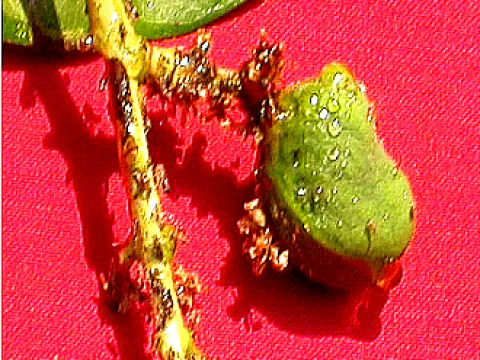
Erosomyia species primarily attack fruit and ornamental trees, causing the formation of galls on shoots, buds, and fruit ovaries.
The larvae feed on plant sap, inducing abnormal cell growth, which leads to tissue distortion and significant damage to the plant's health.
Damage to the terminal buds can halt shoot growth, posing a severe threat to young saplings and nursery stock.
In addition to physical distortion, the wounds created by the larvae serve as entry points for secondary pathogens like fungi and bacteria.
Heavy infestation of fruit ovaries results in premature fruit drop, which significantly reduces the final harvest of fruit trees.
The activity of Erosomyia begins in early spring, synchronized with the onset of plant growth and bud break, when adults emerge to lay eggs.
The pest may undergo several generations per growing season, increasing the risk of infestation if left unmanaged throughout the summer.
Warm and humid weather conditions are optimal for the development of larvae and increase the survival rate of the population.
As autumn approaches, larvae seek overwintering sites, often moving into the top layer of the soil or remaining within dried plant debris.
Understanding the seasonal behavior is critical for timing control measures effectively, particularly targeting the early stages of infestation.
The most noticeable sign is the development of abnormal swellings or galls on leaves, stems, or buds that do not occur on healthy plants.
Distorted or stunted growth of new shoots is a classic indicator that larvae are feeding within the internal tissues.
Premature fruit drop, especially when fruit appears small or deformed, often points to gall midge larvae infestation inside the ovaries.
Withered buds in early spring that fail to open should be inspected for the presence of larval activity inside.
- formation of galls on stems;
- curling and deformation of leaves;
- stunting of apical growth;
- premature fruit shedding;
- tiny exit holes visible on plant tissue.
The primary control method involves cultural practices, such as the immediate removal and destruction of infested plant parts to stop the lifecycle.
Cultivating the soil beneath infested trees in autumn and spring can help destroy pupating larvae hiding in the ground.
Biological control, including the protection of natural predators like parasitic wasps, can help keep gall midge populations at manageable levels.
Systemic insecticides should only be used as a last resort, timed precisely to coincide with the emergence of adult midges or the hatching of larvae.
Regular monitoring of the orchard using yellow sticky traps can provide early warning of adult activity, allowing for targeted intervention.