
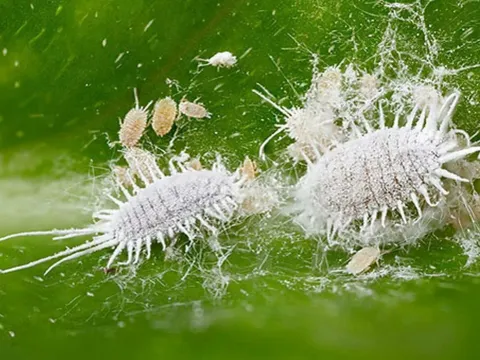
Taxus mealybug
Dysmicoccus cuspidatae
The Taxus mealybug (Dysmicoccus cuspidatae) is a sap-sucking pest belonging to the family Pseudococcidae. Adult females are oval-shaped, measuring 3–5 mm in length, and are typically covered in a characteristic white, waxy, cotton-like substance.
What the section contains
Taxus mealybug
Male Taxus mealybugs are rarely seen, as they are small, winged, and short-lived, primarily existing to locate females for reproduction. Females remain relatively stationary once they have found a suitable feeding site.
The mobile stage of the pest is the crawler (first-instar larva). These crawlers are very small, yellowish-brown in color, and move actively across the needles and bark to find new feeding locations on the host plant.
These insects prefer protected environments on the plant, such as needle axils, bark crevices, or protected spots near branch junctions. They use their specialized piercing-sucking mouthparts to feed on the plant's vascular sap.
Depending on the climate, the Taxus mealybug can complete multiple generations in a single year, particularly in greenhouses or warm regional climates, leading to rapidly increasing infestations if left unchecked.
As the name suggests, the primary host plant for this species is the yew (Taxus). However, it is also known to infest other conifers, including various species of juniper and fir, causing significant damage to landscape plantings.
By feeding on the sap, the mealybug extracts essential nutrients from the plant. This process weakens the host, causing stunted growth and reduced vigor, which is particularly detrimental to young or newly planted specimens.
A major indirect consequence of the infestation is the production of honeydew. This sticky substance covers the foliage and serves as a medium for the growth of sooty mold, which creates black, unsightly patches on the branches.
Severe infestations lead to yellowing of the needles, premature needle drop, and distortion of new growth. If the pest population remains high over several seasons, branches may die back entirely, significantly ruining the plant's aesthetics.
Furthermore, weakened yew trees become more susceptible to environmental stressors such as drought, winter cold, and secondary infections from pathogens that exploit the damaged, honeydew-coated surfaces.
The most prominent sign of a Taxus mealybug infestation is the presence of white, cottony masses on the branches, needles, and trunk. These represent the protective ovisacs where the female lays her eggs.
Sticky honeydew deposits on the needles are a reliable indicator of active feeding. Over time, these deposits attract sooty mold, resulting in a dark, grimy appearance on the affected parts of the conifer.
Affected trees often show visible signs of decline, such as overall chlorosis (yellowing) of the foliage and reduced annual growth. The needles may look dull and lackluster compared to the healthy, vibrant green of an unaffected plant.
The presence of ants crawling on the bark can indicate a mealybug infestation. Ants are attracted to the sugary honeydew and often defend the mealybugs from natural predators, which allows the pest population to expand.
In cases of light infestations, checking inside the bark scales and branch junctions is essential. Since the insects are sedentary, they often hide in narrow crevices where they are protected from environmental exposure.
For minor infestations, mechanical removal is a viable first step. This includes pruning out heavily infested branches and scrubbing the bark with a stiff brush and mild soap solution to dislodge the insects.
Systemic insecticides are generally the most effective control method, as they are absorbed by the plant and kill the mealybugs as they feed. Products containing active ingredients like acetamiprid or thiamethoxam are widely recommended.
Timing is critical when applying insecticides. Treatments should be targeted during the crawler stage, as these young larvae are much more susceptible to chemical applications than the waxy-coated adult females.
Proper cultural practices play a significant role in long-term management. Ensuring proper plant nutrition, adequate irrigation, and avoiding overcrowded conditions will increase the tree's natural resistance to pests.
Biological control using horticultural oils (such as neem oil) can be effective in suppressing early-stage populations. These oils work by coating the insects and suffocating them, offering a safer alternative to heavy synthetic pesticides.