
Draeculacephala reticulata
Draeculacephala reticulata
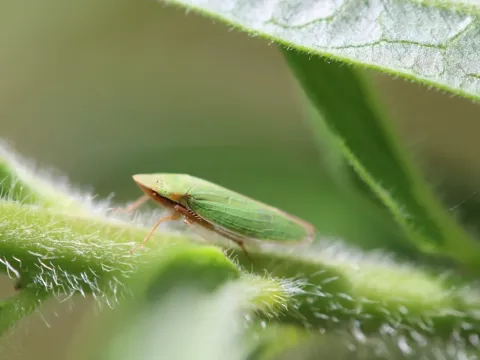
Draeculacephala reticulata, commonly known as a type of sharpshooter leafhopper, is a member of the Cicadellidae family within the order Hemiptera. These insects are easily identified by their narrow, elongated body shape and a distinct reticulated pattern on their wings.
What the section contains
Draeculacephala reticulata
Adult leafhoppers exhibit a yellowish-green color, providing excellent camouflage within lush greenery. The head is noticeably pointed, which serves as a key morphological characteristic for distinguishing this species from other leafhoppers.
The nymphs resemble smaller, wingless versions of the adults. They are highly active and typically inhabit the undersides of leaves, making them somewhat difficult to detect during early infestation stages.
The life cycle encompasses an egg stage, five nymphal instars, and the adult stage. The speed of development is heavily influenced by environmental temperature, allowing for multiple generations per year in warmer climates.
These pests prefer humid environments, such as irrigation ditches, moist meadows, and densely vegetated areas near water sources, which provide shelter and a constant food supply.
This species primarily infests various cereal crops, including rice, wheat, corn, and oats. In addition to cultivated plants, they feed on many wild grasses, which often serve as alternative hosts throughout the season.
By piercing the leaf tissue and extracting cell sap, the insects deprive the plant of vital nutrients. This mechanical damage disrupts photosynthetic activity and causes the plant to lose structural integrity.
The most significant concern regarding this pest is its role as a vector for various plant pathogens, including phytoplasmas and viruses. These diseases can devastate entire crops by causing systemic failures and stunted growth.
Initial signs of damage include wilting and yellowing leaves. In severe cases, the foliage may curl or become necrotic, leading to a significant reduction in overall yield and crop quality.
Feeding by large populations can lead to complete failure of seedling stands, making early detection and intervention critical for commercial agriculture.
Activity typically begins in early spring as temperatures rise, allowing overwintering populations to emerge from wild host grasses. They quickly colonize young cereal crops as they become available.
The population reaches its peak during the mid-summer months when environmental conditions are optimal for rapid reproduction. During this time, high insect pressure can be observed on susceptible fields.
Multiple generations occur within a single growing season. This rapid turnover makes the species a persistent threat throughout the spring and summer months in agricultural regions.
As temperatures drop in autumn, the insects migrate to dense perennial vegetation to overwinter. They survive the cold season either as adults or as eggs deposited within plant tissues.
Humidity is a major driver of population dynamics. While excessive heat and drought can reduce nymph survival, irrigated croplands provide a stable environment for continuous infestation.
Early signs of infestation include the appearance of small chlorotic spots on the leaves, which are caused by the insect's feeding punctures. These spots often coalesce, leading to broad yellowing of the leaf surface.
A distinctive behavioral sign is the abrupt jumping of adults when the host plant is disturbed. This movement is a reliable indicator that the crop is being utilized by the leafhopper population.
The presence of honeydew secretion on the foliage is another common sign. This sticky substance promotes the growth of sooty mold, appearing as black patches on the leaves that impair plant respiration.
Systemic yellowing or a mosaic pattern in the crop canopy often suggests the presence of viral diseases, which are frequently transmitted by these sharpshooters during their feeding activities.
Inspecting the lower leaf surfaces during the early morning hours provides the best chance to spot clusters of nymphs before they disperse during the heat of the day.
Managing Draeculacephala reticulata requires an integrated pest management (IPM) strategy that addresses both the insects and their environmental niches.
- Maintaining clean field margins by eliminating wild grasses that host the pest between growing seasons.
- Implementing appropriate crop rotation schedules to disrupt the life cycle of the leafhoppers.
- Applying systemic insecticides early in the season when thresholds are exceeded to prevent virus transmission.
- Encouraging natural biological control agents, such as predatory beetles and parasitic wasps.
- Using yellow sticky traps in monitoring programs to track population density and timing of insecticide applications.