
Barley stem gall midge
Tetramesa hordei
Description
How to identify
The barley stem gall midge (Tetramesa hordei) belongs to the Hymenoptera order and the Eurytomidae family. The adult insect is a small wasp, approximately 2–3 mm in length, with a shiny black body.
The female possesses a specialized ovipositor used to deposit eggs directly into the plant tissues. The larvae are legless, white, and lead an endoparasitic life cycle inside the cereal stems.
Pupation occurs within the stem cavity, and the emerging adult bores a small exit hole to escape the plant once development is complete.
While the insect resembles a tiny wasp, its microscopic size makes it extremely difficult to detect in a field environment without specialized equipment.
The lifecycle of this pest is strictly synchronized with the phenology of barley, making it a specialized threat to this specific cereal crop.
What it damages
Barley is the primary host for this pest, although it can occasionally be found on certain wild grass species within the fields.
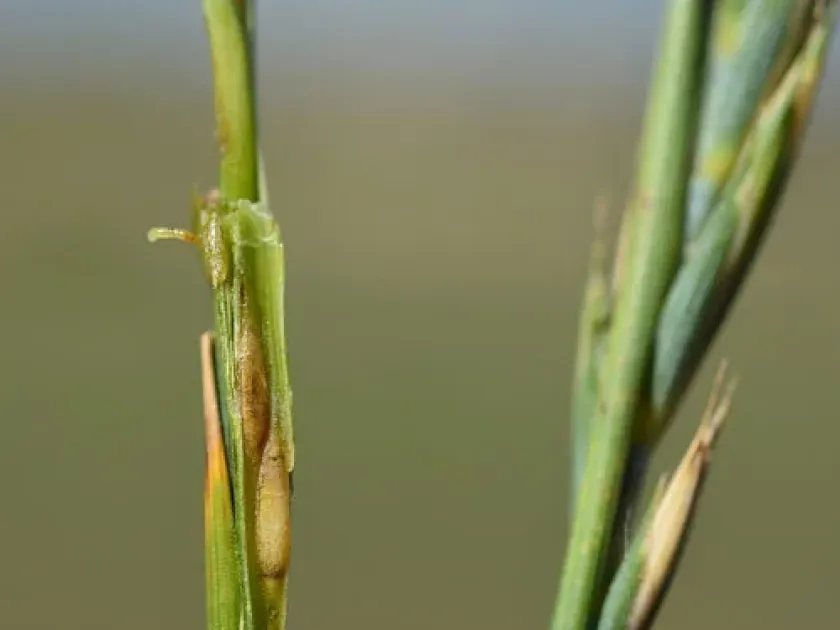
The pest attacks the stems, inducing the formation of characteristic galls or swellings, where the larva feeds and completes its development.
This deformation impairs the plant's vascular system, hindering the transport of nutrients to the grain and causing overall stunted development.
Grain produced by infested plants is usually shriveled, resulting in lower bushel weight and significantly reduced grain quality for milling or seed use.
Mass infestations can lead to substantial yield losses, affecting the overall productivity and profitability of the barley crop.
When it appears
Adult emergence typically occurs during the tillering stage or the early booting stage of barley, when the stems are most susceptible to egg-laying.
The insect typically completes one generation per year, overwintering as a mature larva inside the plant residues or stubble left in the field.
Spring activity begins as temperatures rise, signaling the adults to emerge and start infesting the developing young cereal crops.
The period of adult activity is relatively short, but this window is critical for determining the level of crop infestation for the current season.
Larvae continue their development throughout the summer months, feeding and preparing for overwintering within the stem tissues.
Signs of infestation
The most reliable diagnostic sign of infestation is the presence of visible galls or swellings on the stems of barley plants.
Infested plants may exhibit reduced vigor, delayed growth, and premature yellowing of the leaves compared to healthy plants in the same field.
Dissecting a suspect stem will reveal internal cavities containing larvae or pupae, confirming the presence of the pest.
After the adults emerge, small, round exit holes remain on the surface of the stems, providing clear evidence of a completed life cycle.
In large-scale infestations, irregular patches of deformed or weakened plants can be identified, indicating localized areas of high pest density.
Control measures
Effective management relies on cultural practices, particularly crop rotation, to prevent the build-up of the pest population on the same field.
Deep plowing of stubble immediately after harvest is a vital mechanical control measure to bury and destroy overwintering larvae.
Strict weed control and the elimination of barley volunteers are necessary to remove alternative hosts that harbor the pest between seasons.
Chemical control involving insecticides may be employed during the period of adult emergence if population thresholds exceed economic damage levels.
The use of resistant barley varieties remains the most sustainable and efficient strategy to mitigate the impact of Tetramesa hordei in agricultural settings.
Taxonomy
- Latin name
- Tetramesa hordei
- Order
- Hymenoptera
- Family
- Eurytomidae
- EPPO code
- HAROHO
Discussion
No discussions yet — be the first.