
Bamboo wasp
Tetramesa bambusae
Description
How to identify
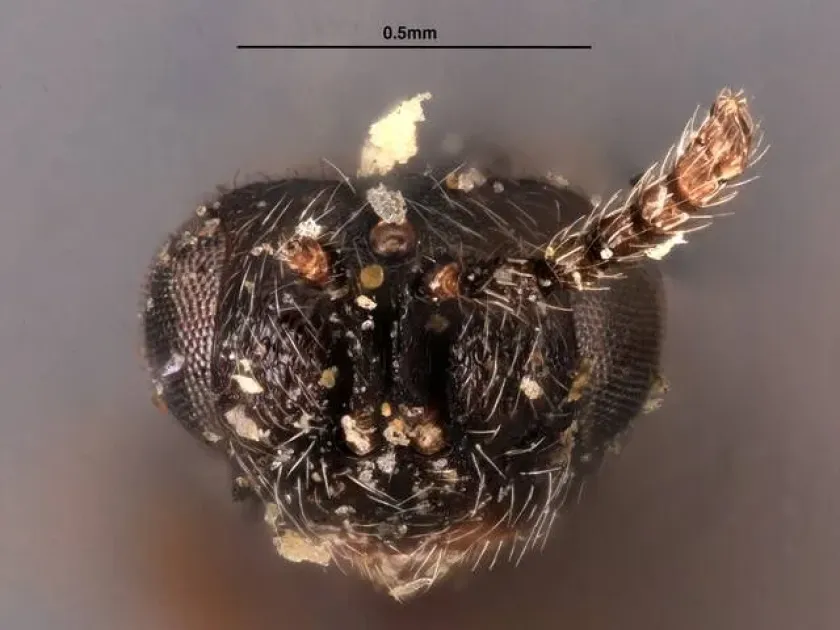
The bamboo wasp (Tetramesa bambusae) is a small hymenopteran insect belonging to the family Eurytomidae. It is recognized as a significant pest that lives within the stems of various bamboo species.
Adults are tiny, black-colored wasps with thin bodies and wings, adapted for navigating and laying eggs directly into the tough outer layer of bamboo shoots. Their size often makes them inconspicuous during the early stages of infestation.
The larvae are legless, white-colored grubs that reside within the internodes or walls of the bamboo stem. Their development happens entirely inside the plant tissue, hidden from external observation.
Systematically, this species is a specialist parasite of the Poaceae family, specifically targeting the genus Bambusa for its reproductive cycle.
Understanding their morphology and classification is essential for agronomists, as Tetramesa bambusae relies on specific host plant availability to sustain its annual population growth.
What it damages
The primary hosts of this pest include several bamboo species, which are extensively used in both industrial timber production and ornamental gardening worldwide.
Larvae feed on the internal vascular tissues of the bamboo stem. By doing so, they disrupt the plant's ability to transport nutrients and water, leading to severe physiological stress.
The damage caused by these larvae results in the loss of structural integrity of the stems, rendering the bamboo brittle and susceptible to environmental damage like wind breakage.
Commercial plantations suffer economic losses due to the degradation of fiber quality. Infested stems are often unsuitable for high-value construction or decorative crafts.
In ornamental settings, the presence of the wasp significantly lowers the plant's visual appeal, causing premature yellowing, stunted growth, and death of the infested culms.
Signs of infestation
The most noticeable sign of an active infestation is the presence of minute, pin-prick-sized exit holes on the surface of the bamboo culms, created by adults leaving the plant.
Physical deformities, such as localized swellings or irregularities on the stem surface, often indicate the spots where larvae have been actively feeding and developing.
Infested areas might show discolored epidermis, turning pale or dull compared to the healthy green sheen of uninfected bamboo stems.
Stems frequently show signs of drying out from the inside. When pressure is applied, these weakened culms tend to break much more easily than healthy ones.
Upon cutting an infested stem, one can observe hollowed-out galleries or tunnels within the tissue, confirming the internal nature of the damage caused by the larvae.
Control measures
The most effective management strategy involves cultural control: regular inspection of bamboo groves and the immediate removal of all infested stems.
Removed material must be burned or chipped and disposed of immediately to ensure that developing larvae and pupae within the stems do not mature into adults.
Chemical control is challenging because larvae are shielded inside the plant stems. Targeted applications of insecticides during the flight period of adult wasps can help mitigate population spikes.
Maintaining high plant vigor through proper irrigation and balanced fertilization can make bamboo plants less attractive to the female wasps seeking sites for oviposition.
Biological control, including the conservation of native parasitoids that naturally attack Tetramesa bambusae, can provide a sustainable way to keep pest numbers at a manageable level.
Taxonomy
- Latin name
- Tetramesa bambusae
- Order
- Hymenoptera
- Family
- Eurytomidae
- EPPO code
- TTRMBA
Discussion
No discussions yet — be the first.