
Tetramesa
Tetramesa
Description
How to identify
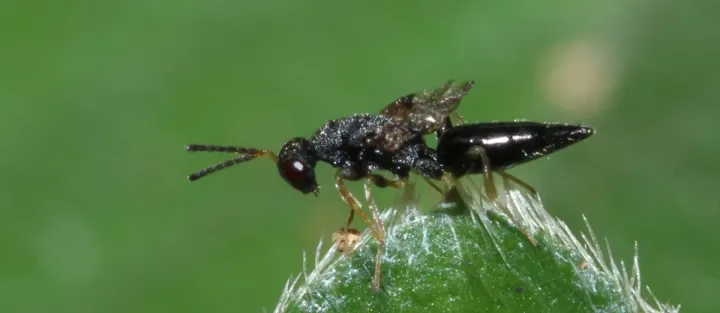
Tetramesa (Tetramesa) belongs to the family Eurytomidae within the order Hymenoptera. These are tiny wasps, typically ranging from 3 to 5 millimeters in length, characterized by a dark, metallic, or black body color.
Adult insects have a slender appearance with well-developed wings. Their body surface is typically covered with fine punctures, giving them a distinct matte or slightly textured look common in this family.
The larvae are legless, whitish, or yellowish in color, featuring a well-defined head and strong mandibles adapted for burrowing inside plant tissues. They spend their entire larval stage within the stems of host plants.
Females possess a prominent ovipositor, which they use to insert eggs directly into the succulent internodes of young grass or cereal stems during the early growth stages.
Identification of the specific species usually requires microscopic inspection of morphological features, as many species within the genus are visually similar and can occupy the same habitat.
What it damages
Tetramesa primarily attacks cereal crops, including winter and spring wheat, barley, rye, and oats. In addition to commercial crops, wild grasses often serve as host reservoirs.
Larvae feed on internal stem tissues, which disrupts the transport of water and essential nutrients to the ear. This physiological stress leads to stunted growth and reduced grain yield.
Infected stems may show signs of deformation or thinning, which increases the risk of lodging. In cases of high infestation, affected plants exhibit premature yellowing and eventual death.
The damage is particularly critical during the grain-filling period, leading to shriveled or underdeveloped kernels. This significantly affects the quality and weight of the harvested crop.
By damaging the vascular system of the stalk, the larvae weaken the plant's overall integrity, making it more susceptible to wind and weather-related damage before the harvest.
When it appears
The flight of adult wasps typically coincides with the booting and heading stages of cereals, usually occurring between late May and June, depending on the climate.
Females lay eggs in the soft stems of developing plants. Larvae hatch within a week and continue to feed internally as the plant grows throughout the summer.
The pest overwintering occurs primarily in the larval stage within the stubble or dried stems of grasses. They undergo pupation inside these shelters as temperatures rise in the spring.
Adult emergence happens as the environment warms up, synchronizing with the availability of suitable host plant stages, ensuring the survival of the new generation.
Most species in this genus follow an annual cycle, meaning their survival is strictly dependent on the presence of host crops during the specific phases of their life development.
Signs of infestation
A primary indicator of infestation is a noticeable delay or uneven growth in parts of the field. Infected plants often appear weaker or paler than neighboring healthy crops.
Visual confirmation involves splitting the stems; finding larval tunnels and the larvae themselves is the most accurate method for identifying an infestation in its early stages.
The occurrence of "whiteheads" — ears that appear dry and empty while the rest of the plant is still green — is a classic symptom of significant stem damage caused by larvae.
The presence of tiny exit holes on the stems, created by adults emerging after completion of their life cycle, indicates that the population has already successfully reproduced.
A reduction in the number of grains per head or lower test weight observed during crop analysis is a strong indicator of the impact of Tetramesa on overall harvest performance.
Control measures
Integrated pest management strategies focus on crop rotation, which effectively breaks the pest life cycle by removing host plants from the field for at least one season.
- Deep tillage or plowing after harvest destroys stubble, which is the primary overwintering site for the larvae.
- Control of wild grasses around field perimeters to reduce the secondary host reservoir.
- Selection of early-maturing varieties that can complete critical development stages before the mass flight of the adult wasps.
- Application of insecticides timed with the adult flight period to prevent egg-laying if the infestation threshold is exceeded.
Maintaining a clean harvest process with low cutting heights for the stubble is essential to remove potential overwintering larvae from the field environment.
Taxonomy
- Latin name
- Tetramesa
- Order
- Hymenoptera
- Family
- Eurytomidae
- EPPO code
- TTRMSP
Discussion
No discussions yet — be the first.