
Caraway seed wasp
Systole albipennis
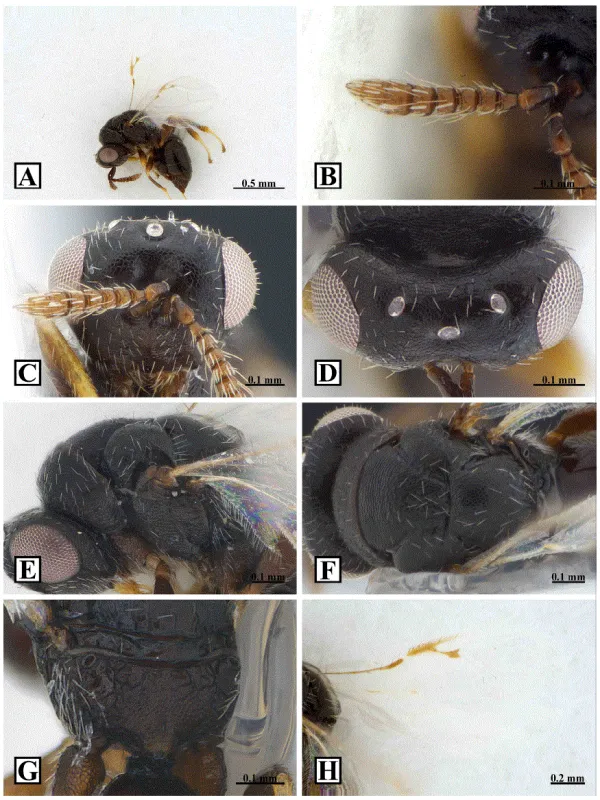
Description
How to identify
The Caraway seed wasp (Systole albipennis) is a small insect belonging to the Eurytomidae family within the Hymenoptera order. The adult wasp is typically 2-3 mm long and has a distinctive black body.
Adults are known for their active movement during the flowering season of host plants. They possess two pairs of clear wings with specific vein patterns characteristic of this species.
The larvae are legless, white, or yellowish, and are exclusively found inside the seeds of host plants, where they complete their development.
The pupal stage occurs inside the damaged seed. Once the transformation into an adult is complete, the wasp emerges by boring a small, round hole through the seed coat.
Due to their small size and hidden development, identification often requires microscopic inspection of seeds or the use of insect nets during the flowering period.
What it damages
The primary host for this pest is caraway (Carum carvi), but it can also infest other plants within the Apiaceae family, leading to significant agricultural losses.
Larvae consume the interior of the seed, leaving only the shell. This results in a direct loss of seed weight and the destruction of the embryo, making the crop useless for planting.
The infestation ruins the quality of the seeds for the food and essential oil industries, as the seeds become contaminated with larval waste and debris.
Economic damage is often underestimated until harvest time, as externally the infected seeds may appear normal until they lose their density and color.
In severe cases, infestation rates can reach significant percentages, drastically reducing the market value of the harvested caraway.
When it appears
Adult activity begins in the spring, coinciding with the flowering phase of the caraway plants. This timing allows females to lay eggs directly into the ovaries of the developing flowers.
The life cycle is closely synchronized with the seed development of the host plant, ensuring that the larvae have sufficient nutrition throughout their growth phase.
The pest overwinters as mature larvae inside seeds that remain on the field or in post-harvest stubble, entering a period of diapause.
As temperatures rise in late spring, the larvae pupate, and the new generation of adults emerges to restart the cycle.
Usually, there is one generation per year, though climatic variations can occasionally result in partial second generations in warmer growing zones.
Signs of infestation
The most reliable sign of an infestation is the presence of small, perfectly circular holes on the surface of the seeds, indicating where an adult wasp has emerged.
Seeds that feel unusually light when handled or sorted suggest that the interior endosperm has been consumed by the larvae.
A reduction in germination percentage during testing is a key indicator of latent infestation that may not be immediately visible to the naked eye.
Field monitoring during the flowering stage using sweep nets can reveal the presence of adult wasps, signaling the need for immediate intervention.
Presence of loose seed husks during the threshing process is a clear sign of significant pest activity within the harvested crop batch.
Control measures
Crop rotation is the most effective cultural control method, as it breaks the life cycle of the pest by removing the host plant from the site for several years.
Deep plowing after harvest is essential to bury infested seeds and crop residues, preventing the emergence of adult wasps the following spring.
Sanitation of field borders by removing wild Apiaceae plants reduces the number of alternative host sites for the wasp population.
Chemical control should be timed to hit the adults during their peak flight period, specifically before they begin the egg-laying process.
- Use of certified, clean, and treated seeds for sowing.
- Spatial isolation of new crops from old infected fields.
- Regular monitoring using sticky traps and insect nets.
Taxonomy
- Latin name
- Systole albipennis
- Order
- Hymenoptera
- Family
- Eurytomidae
- EPPO code
- SYSLAL
Discussion
No discussions yet — be the first.