
Eurytoma
Eurytoma
Description
How to identify
Eurytoma is a genus of insects in the family Eurytomidae, order Hymenoptera, known for its diverse biological habits, including many species that act as serious plant pests.
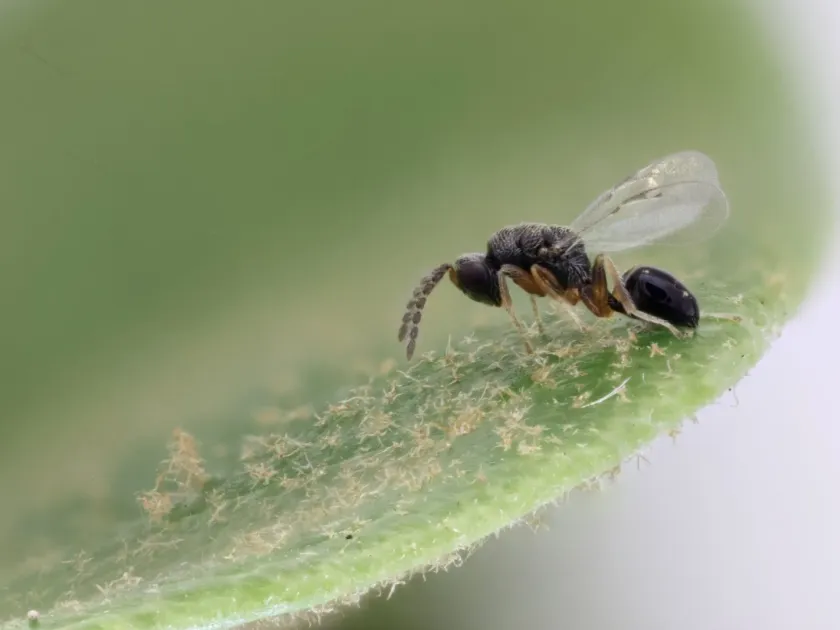
Adult Eurytoma are small, parasitic-looking wasps, typically measuring 2–6 mm in length, often possessing a distinctively black or dark, heavily sclerotized body.
The body surface is characterized by a rough, pitted texture (sculpturing), which is a common diagnostic feature for this group of chalcid wasps.
Their larvae are legless, white to cream-colored grubs that live endophytically, meaning they complete their development entirely inside plant tissues.
Because the genus is taxonomically complex and large, identification usually relies on the host plant or the specific type of gall or seed damage observed.
What it damages
Several species within the genus are significant pests of stone fruits, nuts, and legumes, causing substantial yield losses in commercial orchards.
The larvae feed specifically on the developing kernels or seeds, hollow out the interior, and render the affected fruit useless for market or consumption.
Feeding damage often leads to the premature abortion of fruits, reducing the total harvest volume and weakening the tree's reproductive potential.
Visible exterior damage typically appears as the adult wasp emerges, leaving small, circular exit holes in the hardened shells or fruit skins.
Secondary infections, such as fungi or bacteria, often infiltrate the entry/exit points, causing additional decay of the fruit tissues.
When it appears
The life cycle of Eurytoma is strictly synchronized with the phenology of its host plant, beginning in the spring when fruits start to form.
Adults emerge during the flowering and fruit-setting stage, mating and immediately searching for suitable fruits to lay their eggs beneath the epidermis.
The larvae spend the entire summer feeding inside the growing fruit, progressing through their larval instars while the fruit matures externally.
Development typically stops in the late summer or autumn as the larvae enter a period of diapause within the hardened fruit or seed.
Overwintering occurs inside the protective shell of the infested fruit, either on the tree or on the orchard floor, until the cycle restarts the following spring.
Signs of infestation
The most reliable sign of an Eurytoma infestation is the presence of perfectly round exit holes (1–1.5 mm diameter) on mature fruits or nuts.
Early-stage infestations are hard to detect, but may be signaled by unusually stunted growth or abnormal yellowing of specific fruits compared to healthy ones.
Cracking open suspect seeds or stone fruit pits often reveals the white larva or the hollowed-out interior filled with frass and larval debris.
Widespread premature fruit drop during late spring and early summer is a strong indicator of an active population inhabiting the orchard.
Discarded pupal exuviae (skins) sometimes remain around the exit holes, indicating a recent emergence of the adult generation.
Control measures
Sanitation is the cornerstone of Eurytoma management: all infested fruit, whether on the tree or on the ground, must be collected and destroyed annually.
Removing and burning mummified fruit during winter pruning helps significantly reduce the population of overwintering larvae in the orchard.
Insecticide applications may be required during the adult flight period, targeting the wasps before they successfully deposit eggs into the young fruits.
Monitoring adult activity using sticky traps can help time pesticide treatments more precisely and minimize unnecessary chemical sprays.
Cultivating the soil beneath infested trees in late winter or early spring can help destroy pupating larvae that overwintered in fallen fruits.
Taxonomy
- Latin name
- Eurytoma
- Order
- Hymenoptera
- Family
- Eurytomidae
- EPPO code
- EURTSP
Discussion
No discussions yet — be the first.