
Cactus moth
Cathilaria opuntiae
Description
How to identify
The cactus moth (Cactoblastis cactorum) is a moth belonging to the family Pyralidae. The adult moth is relatively inconspicuous, with mottled greyish-brown wings and a wingspan of approximately 25 to 40 mm.
It is the larval stage that causes significant damage. The caterpillars are easily recognizable by their bright orange or red bodies covered in distinct black transverse bands, which serve as a warning to predators.
The life cycle consists of the egg, larva, pupa, and adult stages. Females lay eggs in chains that mimic the spines of the host cactus, a clever adaptation that makes them difficult to detect on infested plants.
A single female can produce several hundred eggs, allowing the population to expand rapidly and colonize new plants, which is why it is considered a significant invasive threat in many regions.
Environmental factors, particularly temperature, play a crucial role in development. In warm climates, the moth can complete multiple generations within a single growing season.
What it damages
The cactus moth is highly specialized, primarily feeding on cacti of the genus Opuntia. The larvae are strictly phytophagous and depend entirely on the tissues of these succulents for survival.
Caterpillars bore into the pads of the cactus, where they feed gregariously. This internal feeding destroys the internal structure of the pad, often causing it to collapse and turn into a rotting mass.
Because of its ability to kill large colonies of cacti, Cactoblastis cactorum has been intentionally introduced in several countries as a biological control agent to manage invasive Opuntia species.
For cactus enthusiasts and commercial growers, however, this insect is a devastating pest that can wipe out entire plant collections if left untreated for even a short period.
Secondary infections from bacteria and fungi often enter through the holes created by the larvae, leading to the rapid decay of the entire plant structure.
Signs of infestation
The first sign of infestation is the appearance of egg sticks, which look like small, tan-colored chains resembling spines attached to the edges of the cactus pads.
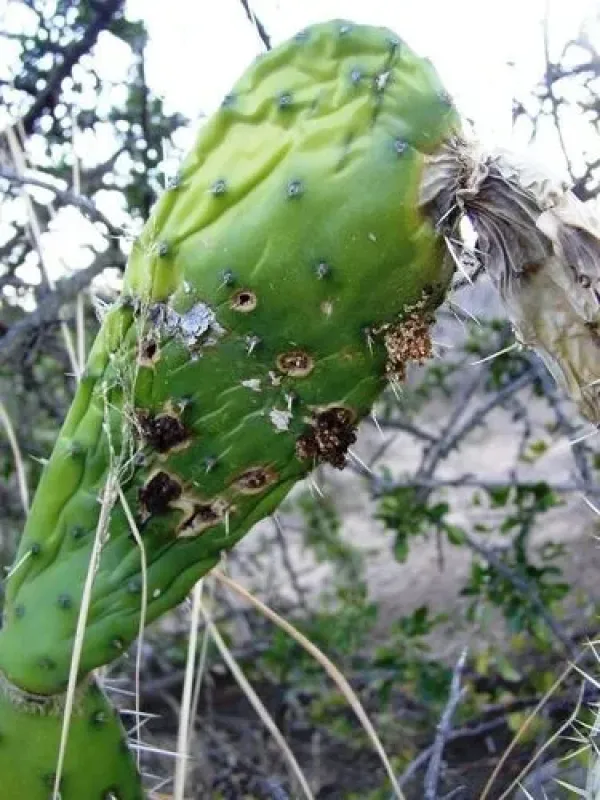
As the larvae penetrate the cactus, they leave small holes on the surface. These holes are often accompanied by "frass" (larval excrement), which appears as dark, moist granules leaking from the entry points.
The pads themselves will start to lose their healthy color, turning yellow or brown, and eventually shrivel as the internal tissue is completely hollowed out by the feeding larvae.
If you notice the cactus segments becoming soft or hollow when squeezed, this is a clear indication of advanced larval colonization inside the succulent.
The presence of fine silken webbing near the base of the plant or around the feeding holes can also indicate active infestation by the caterpillars.
Control measures
Immediate mechanical removal is the most effective way to save a mildly infested plant. Affected pads should be cut out and destroyed by burning or disposal in sealed bags to kill the larvae.
Systemic insecticides, particularly those containing imidacloprid, can be used to protect the plant. These are absorbed into the cactus tissue, poisoning the larvae when they feed on the internal flesh.
Stringent quarantine protocols are essential for any new plant. Always inspect new acquisitions carefully and keep them in isolation for at least one month before introducing them to the main collection.
Monitoring for adult moths using pheromone traps can help detect the presence of the pest before egg-laying begins, allowing for timely application of protective measures.
- Inspect plants weekly for egg chains.
- Use systemic insecticides for early-stage infestations.
- Prune and destroy all damaged tissues immediately.
Taxonomy
- Latin name
- Cathilaria opuntiae
- Order
- Hymenoptera
- Family
- Eurytomidae
- EPPO code
- HAROOP
Discussion
No discussions yet — be the first.