
Apanteles laevigatus
Apanteles laevigatus
Description
How to identify
Apanteles laevigatus is a species of parasitic wasp belonging to the family Braconidae, an order known for its diverse and beneficial members.
These wasps are minute insects, often measuring only a few millimeters in length, making them difficult to spot without close inspection of the foliage.
They possess a slender body structure and characteristic wing venation typical of the Braconid family, adapted for efficient flight in search of hosts.
The larvae are endoparasitoids, meaning they complete their development within the body of a host caterpillar, eventually emerging to pupate.
Identification typically requires expert entomological skills, as many species within the genus Apanteles look morphologically similar.
What it damages
Apanteles laevigatus is not a crop pest; rather, it is a significant natural enemy of various lepidopteran caterpillars that attack agriculture.
It exerts pressure on pest populations by consuming the caterpillar from within, thereby preventing further damage to the host plant.
This wasp acts as a cornerstone of integrated pest management (IPM) by providing free and effective ecological suppression of harmful larvae.
Misidentifying this wasp as a pest could lead to unnecessary chemical treatments, which inadvertently destroy these beneficial natural allies.
Farmers should consider these wasps as partners in field management, promoting their presence to maintain a stable ecosystem balance.
When it appears
The seasonal appearance of Apanteles laevigatus is highly synchronized with the life cycle of its preferred lepidopteran hosts.
Adult wasps emerge in late spring when temperatures rise, coinciding with the first appearance of active caterpillars in the fields.
Multiple generations can occur throughout the growing season, ensuring continuous predation on various stages of host insect populations.
As autumn approaches, the insects prepare for overwintering, typically in the pupal stage protected within a silk cocoon.
Favorable weather conditions in summer lead to higher activity rates, which translates into better control of pests in commercial crops.
Signs of infestation
The most visible sign of Apanteles laevigatus activity is the discovery of dying or paralyzed caterpillars on crop leaves.
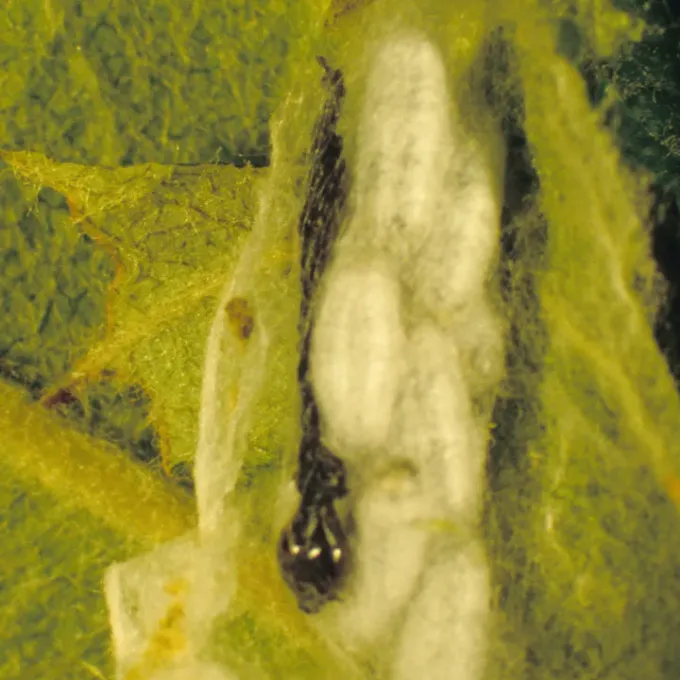
Tiny silk cocoons, often white or yellowish, attached to or near the host carcass indicate that the wasp larvae have completed their development.
Affected caterpillars typically cease feeding and remain stationary for days before eventually succumbing to the parasitic infestation.
Observing these cocoons is a reliable indicator that natural biological control is currently active in the farming area.
A lack of crop damage in areas where pest density is typically high may indicate that parasitoids are effectively keeping the infestation in check.
Control measures
Control strategies for this species focus exclusively on its conservation and habitat enhancement rather than eradication.
The most effective strategy is the implementation of IPM, which prioritizes the use of soft pesticides that are harmless to beneficial wasps.
Providing nectar-rich flower strips around crop fields significantly increases the survival rate and fecundity of the adult wasp population.
Avoiding indiscriminate broad-spectrum insecticide spraying is essential for maintaining the population of Apanteles laevigatus.
- Minimize the use of chemical pesticides.
- Establish hedgerows or wild flower areas for nectar.
- Monitor for parasitism levels before applying any control.
Taxonomy
- Latin name
- Apanteles laevigatus
- Order
- Hymenoptera
- Family
- Braconidae
- EPPO code
- APANLV
Discussion
No discussions yet — be the first.