
Agathis annulipes
Agathis annulipes
Description
How to identify
Agathis annulipes is a species of hymenopteran insect belonging to the family Braconidae, known for its role as a parasitoid.
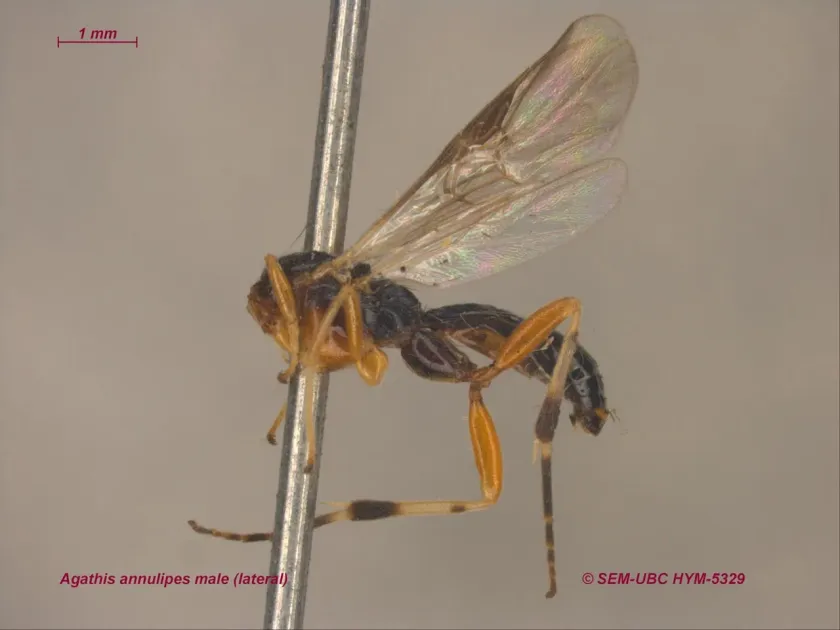
The adults are characterized by a slender body, typical of the Agathidinae subfamily, with well-developed wings and a prominent ovipositor in females.
As the name annulipes suggests, the legs display distinct pale rings or bands, serving as a key diagnostic feature for field identification.
These insects are primarily active during warm daylight hours, frequently observed in gardens and agricultural fields where their hosts are present.
Detailed taxonomic identification usually requires microscopic analysis of venation patterns and wing structures to distinguish them from related species.
What it damages
The biological impact of this species is complex, as its larvae develop as endoparasites within the larvae of various Lepidoptera.
It targets several species of leafrollers, codling moths, and other small moths that cause significant damage to fruit trees and leafy vegetables.
While the parasitism kills the host, high populations of this wasp can interfere with other natural biological control agents present in the ecosystem.
Plants affected by the host larvae sustain direct damage to foliage and fruits, which remains the primary economic concern for growers.
The overall impact on crop yields is typically indirect, linked to the population dynamics of the moth species it parasitizes.
Signs of infestation
The most reliable sign of its presence is the discovery of mummified or inactive moth larvae on the leaves of host plants.
Parasitized caterpillars exhibit reduced mobility and cessation of feeding as the parasitoid larva matures internally.
Exit holes found on the remains of moth larvae are a clear indication that a wasp has completed its development and emerged.
Changes in the population density of local moth pests can also indicate the active presence of Agathis annulipes in the immediate vicinity.
Field observation during peak growing seasons can confirm the wasp's activity through sweeping or yellow sticky trap monitoring.
Control measures
Management strategy should focus on conservation biological control rather than eradication, as these wasps provide free pest suppression.
Avoiding the calendar-based use of broad-spectrum insecticides is crucial to protecting these beneficial parasitoid populations.
Implementing integrated pest management (IPM) practices, such as providing nectar sources, helps sustain these natural allies in agricultural environments.
In cases where pest pressure is extreme, use selective biological agents that do not negatively impact the parasitoid population.
- Integrate flower strips into crop rotation systems.
- Prioritize biological control over chemical interventions.
- Monitor parasitism rates before making treatment decisions.
Taxonomy
- Latin name
- Agathis annulipes
- Order
- Hymenoptera
- Family
- Braconidae
- EPPO code
- AGATAN
Discussion
No discussions yet — be the first.