
Apanteles lacteicolor
Apanteles lacteicolor
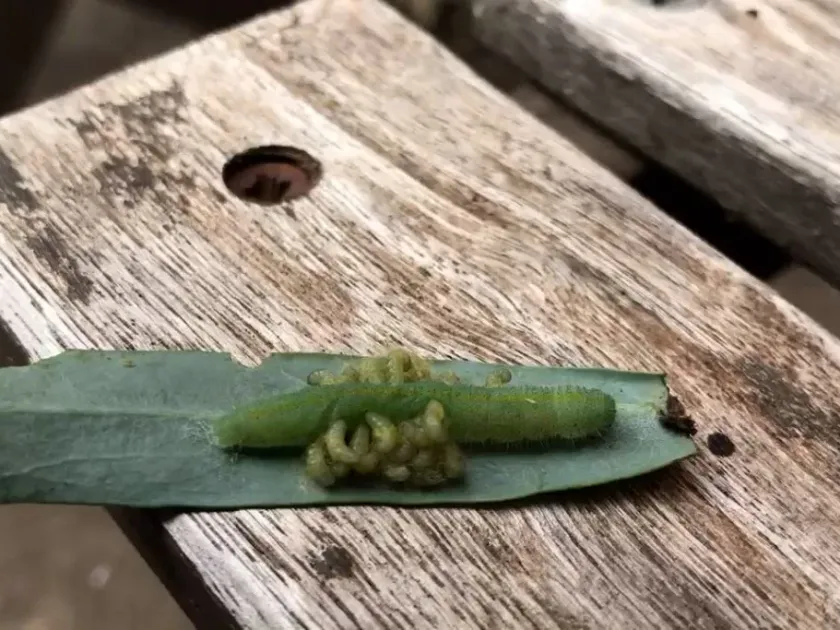
Description
How to identify
Apanteles lacteicolor is a specialized parasitic wasp belonging to the Braconidae family, order Hymenoptera. This tiny insect is a vital natural enemy of various moth larvae, particularly the goldtail moth.
Adult wasps are very small and dark in color, often going unnoticed by gardeners despite their significant impact on pest populations.
The life cycle involves the adult female laying eggs inside the larvae of the host. The wasp larvae then develop internally, consuming the host from the inside out.
This species is highly efficient at locating hosts, making it one of the most effective natural regulators of caterpillar populations in orchards and wooded areas.
Upon completing their development, the wasp larvae emerge to pupate, forming small, distinct cocoons often found near the remains of the host.
What it damages
From an agricultural standpoint, Apanteles lacteicolor is strictly a beneficial insect and does not cause any damage to plants or crops.
Its primary target is the larvae of the goldtail moth (Euproctis chrysorrhoea), a serious pest that can cause defoliation in fruit and ornamental trees.
By parasitizing and killing these caterpillars, the wasp provides essential biological protection to trees like apples, pears, and oaks.
Adult wasps feed on nectar from flowers, fulfilling an ecological role as pollinators while simultaneously performing pest control duties.
The presence of this wasp contributes significantly to the natural balance of the garden ecosystem, preventing pest outbreaks without chemicals.
When it appears
The activity of Apanteles lacteicolor is synchronized with the life cycle of the host larvae, typically peaking during the spring and summer months.
Multiple generations can occur throughout the growing season, allowing the wasp to track the development of the goldtail moth effectively.
Activity begins in early spring when overwintering larvae emerge and become vulnerable to the female wasp's egg-laying behavior.
As the season progresses, subsequent generations of wasps continue to suppress pest numbers, providing sustained protection throughout the summer.
Environmental factors, especially temperature and host availability, determine the population density and reproductive success of the wasp each year.
Signs of infestation
The presence of Apanteles lacteicolor is usually indicated by the observation of dying or stationary caterpillars on infested trees.
If you examine such larvae closely, you may find small, silky white or yellowish cocoons attached to their bodies or the surrounding foliage.
A significant reduction in pest defoliation compared to previous years without chemical intervention is a strong sign of this wasp's active involvement.
Empty host skins are a common sight, indicating that the parasitic larvae have successfully emerged to complete their transformation.
- Lethargic or dying goldtail moth larvae.
- Small, distinctive cocoons visible near larval feeding sites.
- Noticeable decrease in caterpillar activity on host trees.
- Natural restoration of leaf health in previously infested areas.
Control measures
The most important measure to support Apanteles lacteicolor is the avoidance of broad-spectrum insecticides that kill beneficial insects alongside pests.
Integrated Pest Management (IPM) strategies should prioritize selective biological agents that leave the wasp population intact.
Gardeners are encouraged to plant nectar-rich flowers nearby, providing the necessary carbohydrate source for adult wasps to survive and reproduce.
Preserving hedgerows and unsprayed areas provides refugia for these wasps, allowing them to remain in the landscape year-round.
By monitoring the timing of pest emergence, one can avoid spraying during the peak flight of the wasps, thereby maximizing natural biological control.
Taxonomy
- Latin name
- Apanteles lacteicolor
- Order
- Hymenoptera
- Family
- Braconidae
- EPPO code
- APANLC
Discussion
No discussions yet — be the first.