
Apanteles kurosawae
Apanteles kurosawae
Description
How to identify
Apanteles kurosawae is a beneficial parasitic insect belonging to the Braconidae family within the order Hymenoptera. It functions as a specialized parasitoid, playing a crucial role in maintaining ecological balance in agricultural ecosystems.
Physically, the adult wasp is very small, typically characterized by a dark-colored body and thin, transparent wings. Their morphology is perfectly adapted for searching out specific caterpillar hosts for reproduction.
Females are equipped with a delicate ovipositor, which they use to inject eggs into the larvae of their target hosts. This ensures that their offspring have immediate access to nutrients for development.
As an endoparasitoid, the wasp larvae complete their development inside the body of the host. This unique life strategy is what makes them such effective agents for suppressing pest populations.
Because they are tiny, identification usually requires expert analysis under a microscope or the observation of specific host interaction patterns in the field.
##damage##It is essential to clarify that Apanteles kurosawae is not a plant pest; rather, it is a highly beneficial insect that aids in protecting crops by naturally reducing pest numbers.
The wasp targets the larvae of various moth and leafroller species. These pests are known to cause significant damage to vegetables, fruits, and ornamental plants by consuming foliage and boring into crops.
By parasitizing these larvae, the wasp terminates their feeding activity, thereby preventing the destruction of plant tissues and saving potential yields for the farmer.
Integrating these wasps into a pest management strategy helps farmers move away from heavy chemical reliance, promoting more sustainable agricultural practices.
Their impact is most significant when they naturally regulate pest populations before they reach the economic injury level, minimizing the need for manual or chemical intervention.
##season##The life cycle of Apanteles kurosawae is highly synchronized with the activity of their specific host larvae throughout the growing season.
Adult wasps typically emerge in the spring, coinciding with the arrival of the first generation of caterpillar hosts, which ensures an immediate supply of food for their offspring.
Depending on the region and climate, the wasp can produce several successive generations, allowing it to provide sustained protection throughout the active vegetative period.
During the winter months, the wasps enter a dormant state, typically as pupae protected within silken cocoons or inside the remains of their host, often buried in plant debris.
Environmental factors such as temperature and humidity significantly influence the development rate of each generation, determining the wasp's effectiveness in controlling seasonal pest outbreaks.
##signs##The most visible sign of Apanteles kurosawae activity is the presence of mummified or abnormal-looking larvae on the affected plants.
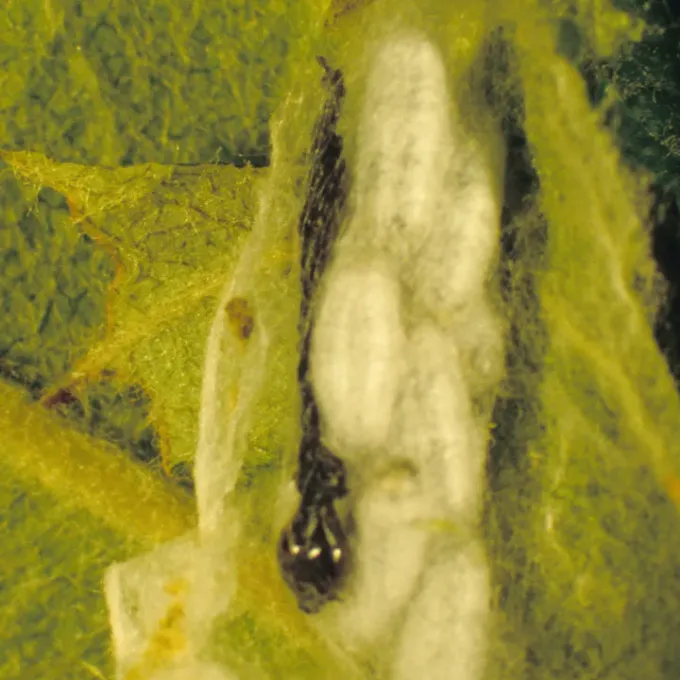
Farmers may spot tiny, light-colored cocoons attached to leaves or near the dead bodies of the host larvae. These cocoons represent the final stage of larval development before the new generation of wasps emerges.
A noticeable decrease in new leaf damage or fruit scarring in areas where these insects are present is a strong indicator of successful biological pest suppression.
Systematic monitoring of the fields can reveal the presence of adult wasps, especially near nectar sources or on sticky traps, confirming that the population is actively working.
Finding empty cocoons serves as definitive proof that the wasp has successfully completed its reproductive cycle within the field environment.
##control##Since Apanteles kurosawae is a valuable ally in crop protection, management efforts should focus on preserving and encouraging their presence rather than eliminating them.
- Avoid the use of broad-spectrum insecticides, especially during the wasp's peak activity periods.
- Plant floral buffers or nectar-rich borders to provide adult wasps with the essential energy source they need to survive.
- Maintain undisturbed areas of natural vegetation near crop fields to provide safe overwintering sites for the next generation.
- Adopt Integrated Pest Management (IPM) protocols that prioritize the use of biological control agents over synthetic chemicals.
- Conduct regular monitoring to assess the density of beneficial insects before deciding on any necessary pest control treatments.
Taxonomy
- Latin name
- Apanteles kurosawae
- Order
- Hymenoptera
- Family
- Braconidae
- EPPO code
- APANKU
Discussion
No discussions yet — be the first.