
Apanteles heterusiae
Apanteles heterusiae
Description
How to identify
Apanteles heterusiae is a species of parasitic wasp belonging to the family Braconidae. It is widely recognized in agronomy as a beneficial insect, specifically an entomophagous parasitoid that helps regulate pest populations.
Taxonomically, this species is classified under the order Hymenoptera. Its morphology is typical of the family, characterized by a slender body, narrow waist, and membranous wings that allow for agile flight while searching for hosts.
The biology of this wasp is strictly tied to the life cycle of its host, typically caterpillars of lepidopteran insects that feed on tea plants. The female wasp possesses a specialized ovipositor for inserting eggs into the host.
As a biological agent, Apanteles heterusiae is valued for its precision in target host selection, which minimizes impact on non-target species in the agricultural ecosystem.
Recognizing this wasp is essential for integrated pest management (IPM) practitioners, as its presence indicates a healthy, self-regulating agroecosystem within the plantation.
What it damages
Apanteles heterusiae does not directly damage agricultural crops. Its role is that of a natural enemy to the spotted tea leaf roller (Heterusia virescens), a major pest that causes severe damage to tea bushes.
The damage to tea plantations is caused by the caterpillars of the leaf roller, which defoliate the bushes, reducing photosynthetic capacity and overall crop yield significantly.
When the population of Apanteles heterusiae declines, there is a direct risk of uncontrolled outbreaks of the leaf roller, leading to substantial economic losses for tea farmers.
The parasitism induced by the wasp prevents the caterpillars from reaching the mature stage, thereby breaking the pest's reproductive cycle and protecting the foliage from further destruction.
Therefore, the "damage" associated with this wasp is actually the prevention of damage through the natural suppression of phytophagous insects that would otherwise destroy the crop.
When it appears
The activity patterns of Apanteles heterusiae are closely synchronized with the seasonal development of its primary host, the leaf roller caterpillar, in subtropical tea-growing regions.
The wasp is most active during the warmer and more humid months of the year, which align with the peak vegetative growth of tea plants and the subsequent increase in pest density.
The life cycle involves rapid generation turnover, allowing the wasp population to expand quickly in response to higher host numbers during the peak monsoon or growing season.
Environmental variables such as temperature and relative humidity play a crucial role in determining the success rate of parasitism and the duration of each developmental stage from egg to adult.
Seasonal peaks of the wasp usually follow the outbreaks of the host caterpillars, reflecting a classic predator-prey relationship that maintains balance within the plantation environment.
Signs of infestation
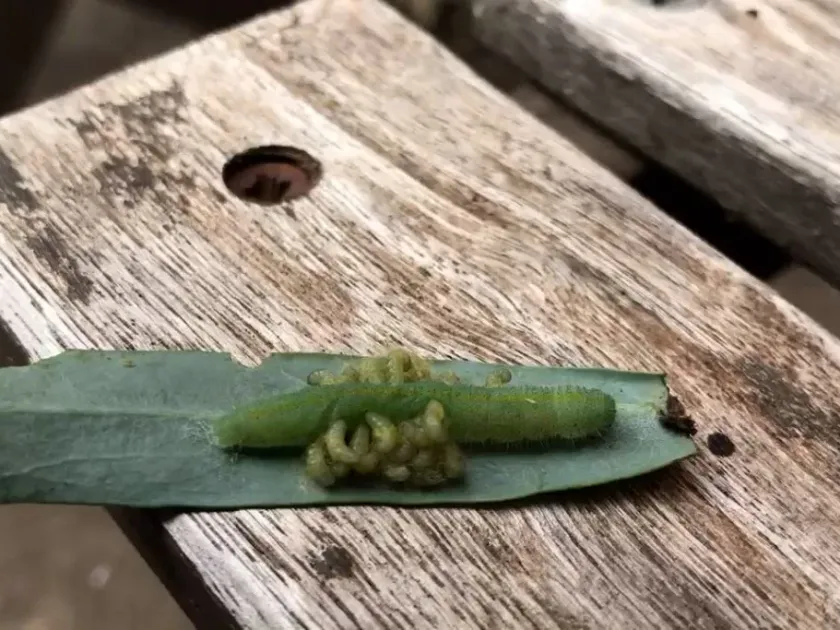
The most distinctive sign of Apanteles heterusiae activity is the presence of small, white to cream-colored silken cocoons clustered on the surface of the host caterpillar's body.
Observers can often find these cocoons on dying or sluggish caterpillars that have stopped feeding, serving as clear indicators of successful parasitization by the wasp larvae.
Heavily defoliated tea leaves serve as a site for searching adults, where they can be observed inspecting the foliage for larvae to parasitize.
The appearance of multiple, neatly arranged cocoons attached to a single caterpillar is a hallmark of this species' successful colonization of the pest population.
These signs should be monitored by agronomists to determine if the natural biological control is sufficient or if intervention with targeted agricultural measures is required.
Control measures
Management strategies must prioritize the conservation of Apanteles heterusiae populations to ensure long-term sustainability and effective pest suppression in tea cultivation.
- Minimize the use of broad-spectrum chemical insecticides that kill beneficial parasitic wasps.
- Adopt selective pest control products that specifically target lepidopteran larvae without affecting parasitoids.
- Maintain floral borders and biodiversity strips to provide nectar sources for adult wasps.
- Implement regular field scouting to assess parasitism rates before deciding on intervention.
- Promote integrated pest management (IPM) practices to reduce reliance on heavy chemical applications.
By protecting this natural ally, tea producers can significantly improve their ecological footprint while effectively managing pest pressure through natural biological dynamics.
Taxonomy
- Latin name
- Apanteles heterusiae
- Order
- Hymenoptera
- Family
- Braconidae
- EPPO code
- APANHE
Discussion
No discussions yet — be the first.