
Varroa wongsirii
Varroa wongsirii
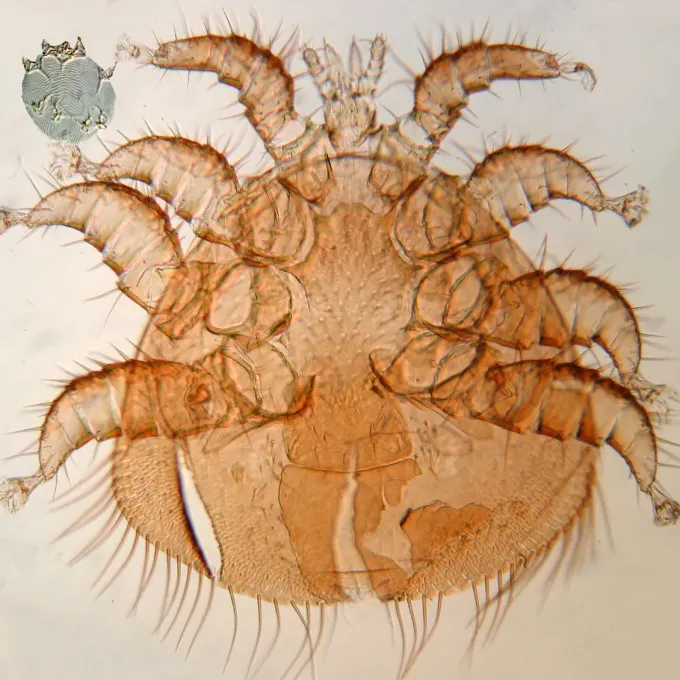
Description
How to identify
Varroa wongsirii is a parasitic mite belonging to the Varroidae family. It is a highly specialized mite species that primarily parasitizes the Asian honey bee, Apis cerana, demonstrating a unique host-parasite relationship.
The adult female mite is flattened, oval-shaped, and reddish-brown in color, specifically adapted to grip the bee's exoskeleton. Its small size, approximately 1.5 mm, allows it to hide effectively beneath the abdominal segments of the host.
The life cycle of this mite occurs within the brood cells of the colony. The female mite enters the cell before it is capped, where she lays eggs. The developing nymphs feed on the haemolymph of the bee pupa, going through several stages of growth before emerging.
Distinguishing Varroa wongsirii from its notorious relative, Varroa destructor, is challenging in the field. Accurate identification often relies on microscopic examination of the mite's dorsal shield or DNA sequencing to confirm the specific species.
This mite species is primarily adapted to the life cycle of its natural host. Its reproductive strategy is finely tuned to the development time of the host's brood, ensuring that the mite offspring reach maturity alongside the developing bees.
What it damages
The primary damage caused by Varroa wongsirii involves the extraction of haemolymph from the developing pupae. This parasitism deprives the bee of vital nutrients, significantly weakening the individual's immune system and development.
Bee pupae infested by these mites often suffer from developmental issues. This frequently results in the emergence of deformed bees with stunted wings, malformed legs, or reduced body size, which are unable to perform standard foraging or nursing duties.
In heavily infested colonies, the overall population decreases rapidly. The loss of healthy workers leads to a reduction in brood rearing and nectar collection, ultimately causing the colony to become unstable and prone to collapse.
Beyond direct physical damage, the mites act as efficient vectors for several bee viruses. When the mite feeds on a pupa, it can transmit pathogens directly into the bee's haemolymph, triggering secondary viral infections that decimate the hive.
Affected colonies exhibit signs of chronic stress, including reduced thermoregulation capability. The inability of the colony to maintain optimal hive conditions during harsh weather further accelerates the decline of the bee population.
Signs of infestation
One of the first signs of infestation is the observation of mites on the hive floor. Monitoring the debris on the bottom board using sticky inserts is a standard diagnostic practice to estimate the infestation level within the colony.
Visually inspecting the brood frames often reveals dead or malformed larvae and pupae. If a large number of bees are seen crawling near the hive entrance with deformed wings, it is a clear indicator that the infestation has reached a critical stage.
A decline in colony growth and honey storage performance is another major sign. If a colony fails to develop at the same pace as neighboring healthy hives during the peak season, varroa infestation should be suspected.
Broken cell caps or uncapped pupae are indicators of brood removal behavior. Bees may attempt to uncap and remove infested brood, leading to irregular patterns in the brood comb and an overall reduction in the brood nest area.
- Presence of mites on adult bees.
- Emergence of bees with visible physical deformities.
- Increased mortality of brood before reaching adulthood.
- Stagnation in colony population growth.
- Observation of crawling bees unable to fly.
Control measures
Effective management of Varroa wongsirii relies on integrated pest management (IPM) practices. The cornerstone of these efforts is consistent monitoring, ensuring that the mite population remains below the threshold for economic damage.
Chemical treatments using organic acids like formic or oxalic acid are widely used to control mite populations. It is essential to apply these treatments during periods of low brood production to maximize efficacy and minimize honey contamination.
Cultural control methods involve drone brood trapping. Because mites prefer the larger drone cells for reproduction, removing these cells can effectively decrease the overall mite population in the colony without using harsh chemicals.
Breeding for hygienic behavior is a long-term solution. Encouraging the development of bee strains that can detect and remove infested pupae allows for natural suppression of the mite population within the hive, reducing dependency on external treatments.
Maintaining strong and healthy colonies is the best defense against infestation. Regular hive inspections, proper nutrition, and strict adherence to biosecurity protocols help ensure the longevity of the apiary and protect it from severe outbreaks.
Taxonomy
- Latin name
- Varroa wongsirii
- Order
- Mites
- Family
- Varroidae
- EPPO code
- VARRWO
Discussion
No discussions yet — be the first.