
Varroa sinhai
Varroa sinhai
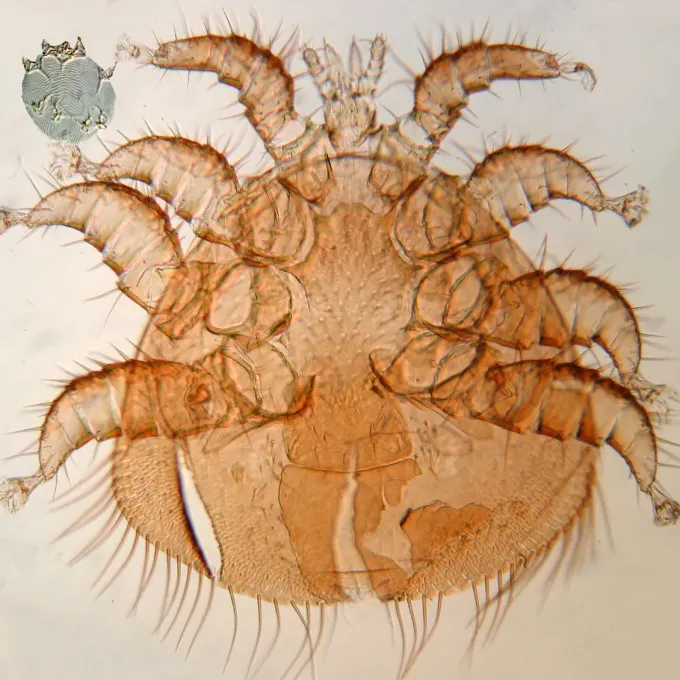
Description
How to identify
Varroa sinhai belongs to the family Varroidae and the order Mesostigmata. Often confused with its counterparts that parasitize honey bees, this specific mite is recognized as a significant pest of certain vegetation. Understanding its taxonomy is essential for selecting the appropriate management techniques.
Physically, the mite is characterized by a flattened, oval-shaped body that is typically brownish in color. This morphology allows it to navigate easily across the intricate structures of plant leaves and stems. Adults are extremely small, usually measuring under one millimeter, requiring magnification for accurate identification.
The biology of Varroa sinhai is strictly governed by microclimatic conditions. High humidity and protected environments are ideal for its development, as these conditions prevent the mite from desiccating. They are most active in concealed locations on the plant canopy.
Their life cycle consists of several developmental stages, including egg, larva, protonymph, deutonymph, and adult. The speed of development is highly dependent on ambient temperature, which allows for multiple generations to occur during a single growing season under favorable conditions.
Dispersal primarily occurs through plant-to-plant contact, wind currents, and phoresy on larger insects. Because of these efficient spreading mechanisms, monitoring and detection in agricultural fields are critical to preventing widespread outbreaks and economic loss.
What it damages
This pest causes direct damage to various herbaceous and woody crops by feeding on cellular sap. Young, rapidly growing leaves and tender shoots are the most vulnerable, as they offer the highest concentration of nutrients necessary for the mite's lifecycle.
When the mite feeds, it pierces the plant epidermis with its mouthparts and injects salivary enzymes. These enzymes cause localized tissue death (necrosis) and disrupt essential metabolic processes, which ultimately weakens the overall vitality of the host plant.
Necrotic areas caused by Varroa sinhai often become entry points for secondary pathogens, including fungi and bacteria. This opportunistic infection can lead to extensive tissue degradation, further impairing the plant's ability to photosynthesize and grow.
Massive infestations often result in leaf curling, premature leaf drop, and stunted growth of reproductive organs. If left untreated, the cumulative stress can lead to a drastic reduction in fruit quality and total crop yield, negatively impacting farm profitability.
Economic damage is twofold: it includes the direct loss of harvest volume and the increased cost associated with intensive chemical control measures. Consistent monitoring is the only way to manage these risks effectively before the threshold of damage is exceeded.
Signs of infestation
The primary symptom of infestation is the appearance of small, discolored spots on the leaves, which eventually turn brown or necrotic. Affected leaves often exhibit curling, wilting, or reduced turgor, despite adequate irrigation, indicating compromised nutrient transport.
Inspecting the underside of the leaf often reveals the presence of small, moving dots, which are the mites themselves. In advanced cases, the presence of excrement and honey-dew can support the growth of sooty mold, appearing as a dark, sticky film on the foliage.
Stunted growth of internodes and a decrease in blooming intensity are reliable signs of high-density populations. Plants look visibly stressed and exhibit reduced resilience to external environmental factors such as drought or heat fluctuations.
Deformed fruit is a common indication of severe infestations. Damage may appear as uneven ripening, surface cracks, or hardened patches on the fruit skin, which significantly lowers the marketability and quality of the final agricultural product.
Effective early detection involves the use of sticky traps and periodic field inspections with a hand lens. Focusing on the lower, more protected parts of the plant canopy during the early morning hours increases the probability of spotting the pest early.
Control measures
Integrated Pest Management (IPM) is the most effective approach to control Varroa sinhai, combining cultural practices, biological agents, and judicious chemical applications. Maintaining plant vigor through proper fertilization and irrigation is a primary deterrent.
Field sanitation is critical; weed management reduces alternative host plants that support the mite population between crops. Removing and destroying infested plant material post-harvest is essential to minimize the overwintering potential of the pest.
Biological control using predatory mites, such as Phytoseiulus persimilis, has proven effective, especially in greenhouse environments. These natural predators significantly reduce mite density without the need for toxic residues on the produce.
Chemical control requires the use of acaricides, rotating between different modes of action to prevent the development of resistance. Strict adherence to product labels and pre-harvest intervals is mandatory to ensure food safety and regulatory compliance.
A structured monitoring program is the cornerstone of control. By tracking mite densities and keeping detailed records, agronomists can apply treatments only when necessary, maximizing the impact of the control strategy while minimizing environmental footprint.
Taxonomy
- Latin name
- Varroa sinhai
- Order
- Mites
- Family
- Varroidae
- EPPO code
- VARRSI
Discussion
No discussions yet — be the first.