
Varroa rindereri
Varroa rindereri
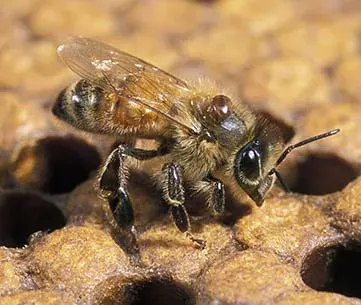
Description
How to identify
Varroa rindereri is a species of ectoparasitic mite belonging to the family Varroidae within the order Mesostigmata. It is morphologically very similar to the more common Varroa destructor, which makes accurate identification in the field extremely difficult.
The mite possesses a flattened, brown body designed for clinging to the exoskeleton of a honey bee. Adult females are significantly larger than males and feature specialized mouthparts used to pierce the bee's cuticle to feed on hemolymph.
This parasite is highly specialized and has co-evolved with specific honey bee species. Its size typically ranges between one and one-and-a-half millimeters, making it challenging to spot without microscopic examination.
Identification of this specific species requires detailed laboratory analysis, focusing on morphological characteristics such as the arrangement of dorsal setae and the structure of the anal shield.
The mites lead a cryptic lifestyle, spending most of their time inside sealed brood cells or hidden under the abdominal tergites of adult bees, which facilitates their survival and reproduction.
What it damages
The primary hosts for this mite are honey bees, particularly Apis cerana, although it represents a potential threat to all species of honey bees kept for commercial purposes.
The mite parasitizes both adult bees and developing brood, feeding on hemolymph, which serves as the essential nutrient source for its survival and reproduction.
Damage to developing bee pupae often results in malformations, such as deformed wings, shortened limbs, or incomplete body development, rendering the emerging bee non-viable.
Infestation severely weakens the immune system of the entire colony, leaving it highly susceptible to secondary viral, bacterial, and fungal infections, ultimately leading to colony collapse.
Economic damage manifests as a significant reduction in honey production, lower pollination efficiency, and high mortality rates of bee colonies during winter months.
When it appears
The activity and population growth of the mite are strictly linked to the bee brood rearing cycle, with the highest levels of infestation typically occurring during the spring and summer months.
As the brood rearing rate declines in late summer, the mites migrate from the brood cells to adult bees, significantly increasing the parasitic load on the worker bees.
During the winter, the mites do not hibernate but survive on the bodies of adult bees within the cluster, utilizing the heat generated by the colony to maintain their life processes.
The hive environment provides stable conditions for the mite's survival throughout the year, allowing it to remain a persistent threat regardless of external climatic fluctuations.
Reproduction is synchronized with the capping of brood cells, where the female mite lays eggs that feed on the developing bee pupa until the bee emerges.
Signs of infestation
One of the first signs of infestation is the presence of adult bees with physical deformities, such as stunted or twisted wings, observed on the landing board or around the hive entrance.
Upon closer inspection of frames, beekeepers may notice mites moving on the bees' bodies or observe them inside brood cells during inspections when brood is uncapped.
General colony distress, restlessness, and a rapid decline in the adult bee population are often secondary indicators of a severe mite infestation level.
Because early stages of infestation may go unnoticed, regular monitoring using techniques like alcohol washes or powdered sugar rolls is critical for early detection.
Direct confirmation is obtained by finding mites at various life stages within the brood cells, which serves as a definitive indicator of an established parasitic population.
Control measures
Control strategies involve the application of registered acaricides that effectively target mites in the phoretic phase, i.e., while they are attached to adult bees.
The use of organic acids, such as formic or oxalic acid, is a preferred management method as it provides effective control while minimizing the risk of residue accumulation in honey.
Mechanical control techniques include the targeted removal of drone brood, as mites preferentially choose drone cells for reproduction due to their longer development period.
Ongoing monitoring of infestation levels is essential for making informed decisions regarding the timing and frequency of necessary veterinary treatments.
A comprehensive integrated pest management approach, combining biological, mechanical, and chemical strategies, is necessary to maintain healthy colonies and mitigate damage.
Taxonomy
- Latin name
- Varroa rindereri
- Order
- Mites
- Family
- Varroidae
- EPPO code
- VARRRI
Discussion
No discussions yet — be the first.