
Black fly
Odagmia ornata
Description
How to identify
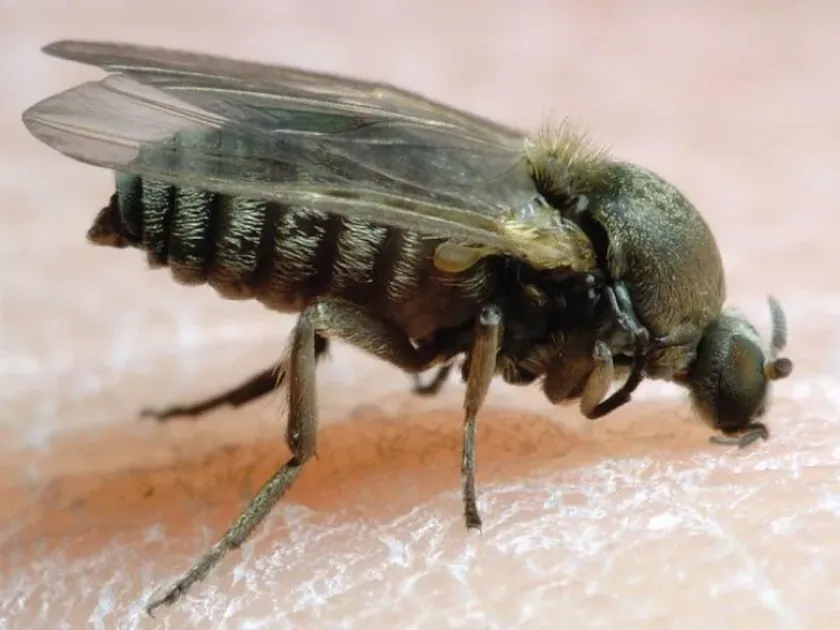
The black fly Odagmia ornata is a member of the Simuliidae family within the order Diptera. These are small flies, typically ranging from 3 to 4 millimeters in length, characterized by a stout body.
Adults exhibit a distinct pattern on the thorax, which is a key identification feature. The females possess specialized mouthparts designed for piercing the skin of warm-blooded animals to feed on their blood.
Their life cycle is closely tied to running water environments. Larvae and pupae develop exclusively in streams, rivers, and flowing channels, where they anchor themselves to submerged vegetation or rocks.
The life cycle undergoes a complete metamorphosis: egg, larva, pupa, and adult. The duration of each stage is highly dependent on water temperature and oxygen levels in the environment.
Larvae usually overwinter on the bottom of freshwater bodies. As temperatures rise in early spring, the development process accelerates, resulting in the emergence of adult flies.
What it damages
Although Odagmia ornata does not directly feed on crops, it poses a severe threat to the agricultural sector, particularly livestock farming. Cattle, horses, and sheep are primary targets.
When a female bites, it injects saliva containing simulidotoxins into the wound. This leads to acute allergic reactions, intense itching, swelling, and inflammation in the affected areas.
Massive infestations cause a condition known as simulidotoxicosis. Animals become extremely restless, lose their appetite, and experience a significant drop in productivity, including milk yield losses.
In severe cases, massive attacks can lead to the death of young or weakened animals due to respiratory failure and profound systemic intoxication.
Furthermore, these flies act as vectors for various blood-borne pathogens, transmitting diseases that can lead to large-scale outbreaks within a herd.
When it appears
The peak activity period for Odagmia ornata occurs from spring to early summer, typically between April and June, depending on the climatic region.
They are most aggressive during dawn and dusk, favoring humid and moderately warm conditions (15–25°C). They generally avoid direct midday heat and strong winds.
The developmental rate is directly correlated with water temperatures in the breeding habitats. A warm spring promotes faster development and higher population densities.
Extended periods of rain or flooding can create ideal conditions for the larvae to thrive, often leading to prolonged infestation periods that can last for several weeks.
Populations usually decline by mid-summer, although a second generation may appear if water levels and environmental conditions remain favorable for their development.
Signs of infestation
Early warning signs include abnormal animal behavior: livestock may show signs of panic, such as shaking their heads, constant tail flicking, and crowding together to avoid bites.
Visual inspection of the animal's skin reveals small red dots, crusty scabs, and localized swelling, particularly around the ears, belly, and udder where the skin is thinner.
Animals may exhibit rapid breathing or panting, fever, and a reluctance to graze as the irritation from the constant biting becomes overwhelming.
Nearby water sources often harbor massive clouds of flies. The presence of these swarms is a direct indicator of an impending attack on nearby grazing herds.
Decreased daily gains in weight or sudden drops in milk production are reliable indicators of chronic or severe stress caused by these insects.
Control measures
Strategic management involves adjusting grazing schedules to keep livestock away from riverbanks or streams during the flies' peak biting hours, typically at dawn and dusk.
Applying veterinarian-approved insecticides and repellents to the animals is a critical step in reducing the frequency of attacks and preventing toxicosis.
Maintaining clear surroundings by removing excessive vegetation along water channels helps eliminate resting sites for adult flies and reduces their density near farms.
In cases of high infestation, biological control agents can be applied to the water bodies to target larvae, provided these methods comply with environmental regulations.
- Installing protective netting or screen shelters for livestock.
- Using insecticide-impregnated ear tags on cattle.
- Implementing regular vaccination programs to mitigate the risk of fly-borne diseases.
Taxonomy
- Latin name
- Odagmia ornata
- Order
- Diptera (flies)
- Family
- Simuliidae
- EPPO code
- ODAGOR
Discussion
No discussions yet — be the first.