
Black flies of the genus Odagmia
Odagmia
Description
How to identify
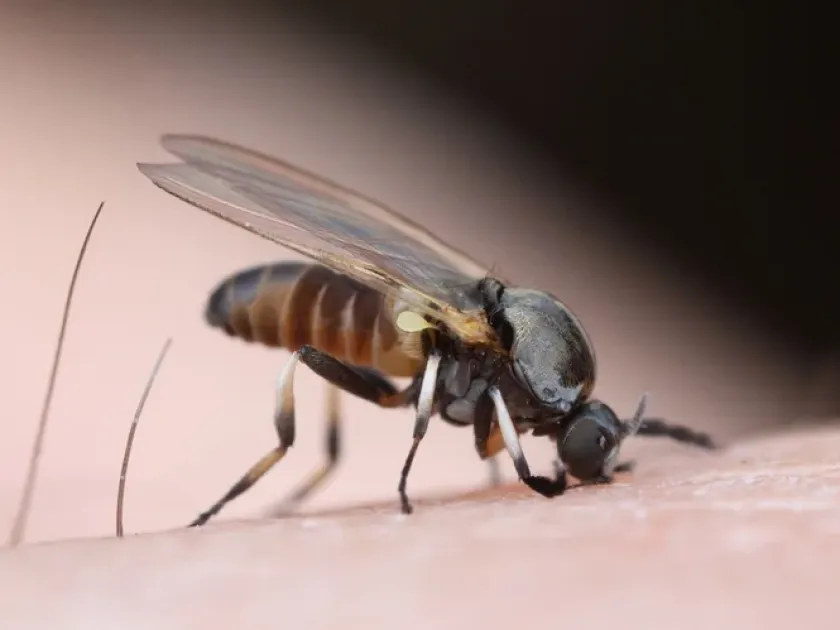
The genus Odagmia belongs to the Simuliidae family, order Diptera. Known as black flies, these small insects are notorious for their aggressive biting behavior. Adults typically measure between 2 and 4 mm in length and have a robust, compact body structure.
The life cycle of Odagmia involves four stages: egg, larva, pupa, and adult. The larval stage is strictly aquatic, requiring oxygen-rich running water. Larvae use a silk pad and a posterior hook-bearing disc to anchor themselves to submerged rocks or vegetation.
Adults are generally dark-colored with broad, transparent wings. The females are equipped with mandibles specialized for piercing the skin of mammals to take a blood meal, which is essential for egg maturation.
The eyes of the males are holoptic (meeting at the top of the head), whereas those of the females are dichoptic (widely separated). This sexual dimorphism is a key characteristic used for taxonomic identification in the field.
They are capable of traveling long distances, especially with the assistance of wind, and are often found in large swarms near rivers, streams, and damp, low-lying pastures.
What it damages
The primary economic impact of Odagmia is the harm they cause to livestock. When attacking in large numbers, these flies cause a condition known as simuliidosis. The toxins injected during feeding lead to severe allergic reactions and acute discomfort.
Livestock affected by black flies suffer from stress, which results in decreased weight gain, reduced milk production, and poor overall health. In extreme cases, anaphylactic shock or toxicosis can lead to the death of animals.
Secondary damage occurs when the bite sites become infected or attract other pests, potentially leading to dermatitis and other skin complications. The restless behavior of the herd caused by the swarms interferes with grazing and normal animal behavior.
For agricultural workers, the presence of black flies creates significant operational difficulties. Constant biting makes outdoor work, such as harvesting or equipment maintenance, nearly impossible without the use of specialized protective gear.
Financial losses in agricultural operations increase due to the need for veterinary medicine, animal loss, and the necessary protective equipment to prevent human exposure to the flies.
When it appears
The seasonal activity of Odagmia is heavily dependent on water temperature and flow. In temperate climates, the emergence of adults typically begins in early spring, following the melting of ice in breeding watercourses.
The peak emergence period usually occurs during late spring and early summer. During this time, the life cycle completes rapidly as temperatures become optimal, leading to massive population surges that can overwhelm local areas.
Adults are most active during calm, windless conditions, especially during the early morning and late afternoon hours. High temperatures or strong winds usually discourage flight and force the flies to remain in shaded or protected areas.
Variations in the hydrologic cycle, such as flooding or drought, can significantly alter the timing and intensity of the fly population. Higher water levels can provide more surface area for larval attachment, potentially increasing the population size.
As the season progresses toward autumn, the populations gradually decline as the water temperature fluctuates and becomes less favorable for the larval development of successive generations.
Control measures
Managing Odagmia requires a multifaceted approach focused on both the livestock and the breeding environment. Applying pyrethroid-based insecticides directly to animals is the most direct way to offer immediate protection.
Mechanical barriers, such as fine-mesh screens on barns and livestock sheds, help prevent swarms from entering buildings. Maintaining proper hygiene and ensuring that animals have access to dark, wind-protected areas during peak hours can help reduce stress.
Environmental management involves clearing channels of excessive aquatic vegetation, which reduces the sites available for larvae to attach and thrive. Altering the flow rate or water level in small streams can also disrupt the larvae's habitat.
- Wear protective clothing and repellents when working in infested fields.
- Graze animals away from river corridors during peak fly activity times.
- Encourage natural predators of larvae, such as fish and aquatic beetles.
- Use fans in livestock buildings to create wind speeds that discourage biting flies from landing.
Integrated pest management strategies are crucial for maintaining the health of the herd and ensuring that productivity remains stable throughout the fly season, minimizing the economic damage caused by these insects.
Taxonomy
- Latin name
- Odagmia
- Order
- Diptera (flies)
- Family
- Simuliidae
- EPPO code
- ODAGSP
Discussion
No discussions yet — be the first.