
Cnephia
Cnephia
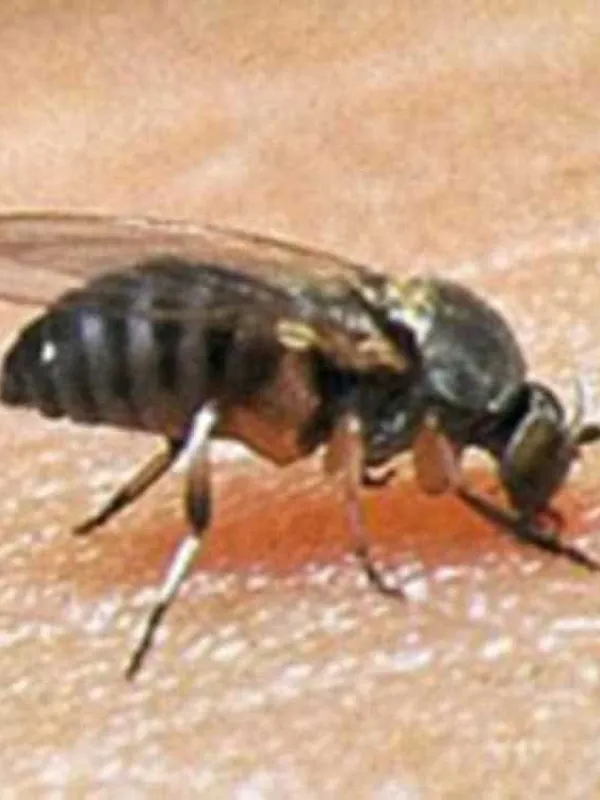
Description
How to identify
Cnephia is a genus of flies belonging to the Simuliidae family, commonly known as black flies. These insects are relatively small, typically measuring between 2 to 5 millimeters in length, with a robust and compact body structure.
The adult females possess mouthparts adapted for piercing skin and feeding on blood, which is necessary for their egg development. In contrast, males feed exclusively on nectar and plant juices, posing no direct threat to livestock.
Larval stages of Cnephia develop exclusively in running water, such as streams and rivers with high oxygen content. The larvae attach themselves to submerged surfaces like stones or vegetation using a posterior hook-like structure.
Adult flies are generally dark grey to black in color, providing effective camouflage in their natural environment. Their wings are powerful, allowing for active dispersal from breeding sites to surrounding pastures.
Taxonomically, Cnephia is classified within the order Diptera. Their ability to form massive swarms makes them a significant concern for the agricultural sector, particularly in regions with abundant freshwater resources.
What it damages
The primary economic impact of Cnephia is their role as external parasites that attack cattle, horses, sheep, and pigs. Persistent biting causes a systemic reaction known as simulidotoxicosis in livestock.
The toxic saliva injected during the biting process leads to inflammation, localized swelling, and severe irritation. In extreme cases of heavy infestation, animals may suffer from shock, anemia, or even death.
Beyond the direct toxic effects, these flies serve as mechanical vectors for various viral, bacterial, and parasitic pathogens. This increases the disease burden on farms, requiring additional veterinary intervention.
Infestations lead to significant productivity losses, including reduced milk yields in dairy cows and slower weight gain in livestock. The constant stress caused by the flies prevents animals from grazing properly.
The financial losses associated with Cnephia attacks are compounded by the costs of preventive treatments and the loss of production efficiency. Farmers in riverine areas often face the greatest economic pressure from these pests.
When it appears
The life cycle of Cnephia is highly dependent on water temperature and flow rates. In temperate climates, mass emergence of adults typically occurs during the spring and early summer months.
The larval development period varies depending on environmental conditions, including oxygen levels in the water and the availability of organic matter for filter-feeding. Pupation occurs on submerged substrates before adults emerge.
Adult activity is usually concentrated in the early morning and late evening hours when humidity is higher and temperatures are more moderate. During the heat of the day, they often seek refuge in shaded, sheltered vegetation.
Climatic anomalies, such as heavy spring floods, can trigger population explosions by creating new, ideal breeding grounds in overflow areas. The periodicity of these outbreaks often matches cycles of high rainfall.
An adult fly typically lives for several weeks, during which it may take multiple blood meals to sustain its metabolic needs and ensure the success of the reproductive cycle.
Signs of infestation
A primary indicator of a Cnephia outbreak is the agitated behavior of livestock. Animals will often stamp their feet, swish their tails continuously, and attempt to seek shelter or wade into water to escape the flies.
Physical signs include reddened skin, small puncture wounds, and swellings on vulnerable areas such as the belly, udder, inner thighs, and around the eyes and ears. These areas may become crusty due to inflammation.
Decreased feed intake and reduced weight gain are clinical signs of infestation. Affected animals often appear lethargic, anxious, and show visible signs of exhaustion from the persistent harassment.
The presence of dense, swarming clouds of tiny flies near riverbanks or fields is a clear indicator of a major emergence event. Farmers may also notice their animals refusing to graze in specific sections of the pasture.
Secondary infections often develop in areas where animals have repeatedly rubbed against trees or fences in an effort to relieve the irritation, creating open sores that attract further attention.
Control measures
Control strategies for Cnephia involve the application of approved insecticides and repellents directly onto livestock. Proper rotation of chemical products is recommended to prevent the development of resistance.
Pasture management is key; moving animals to open, breezy, and high-altitude fields can significantly reduce the level of harassment. Establishing barriers or using smoke-producing devices can also provide temporary relief.
In stable environments, screening windows and using automated misting systems for insect control can protect animals during the peak hours of fly activity.
Biological control methods involve treating larval habitats in streams with formulations based on *Bacillus thuringiensis israelensis*. This method targets the larvae specifically without harming other non-target aquatic organisms.
- Using insecticidal ear tags for sustained protection.
- Clearing brush and excessive vegetation near pastures.
- Monitoring fly populations with light or suction traps.
- Ensuring animal housing is well-ventilated and regularly disinfected.
Taxonomy
- Latin name
- Cnephia
- Order
- Diptera (flies)
- Family
- Simuliidae
- EPPO code
- CNEHSP
Discussion
No discussions yet — be the first.