
Ulidia
Ulidia
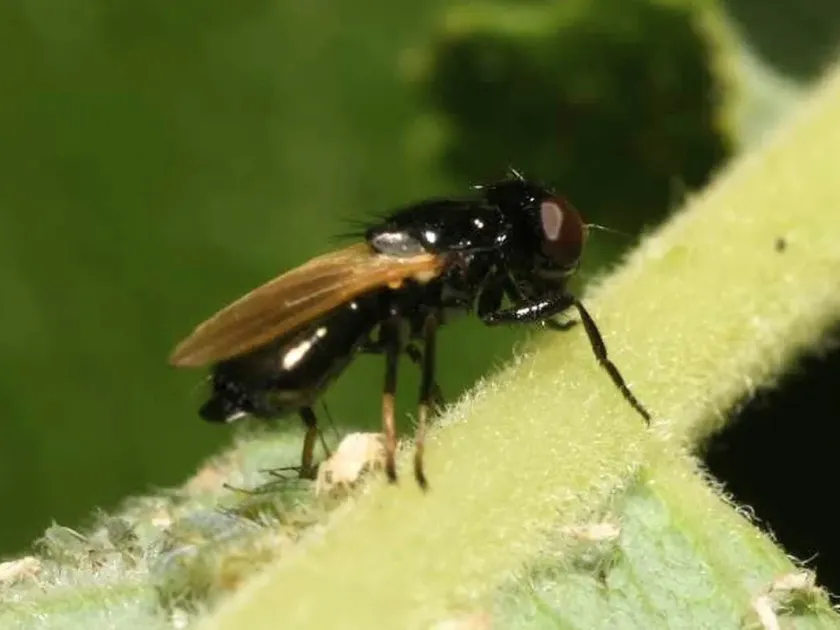
Description
How to identify
Ulidia is a genus of flies belonging to the family Ulidiidae, within the order Diptera. These are small to medium-sized flies often characterized by a dark, metallic, or shiny body appearance.
These flies are often found near decaying organic matter, which serves as a food source for their larvae. Their wings frequently display distinct dark patterns or bands, which are key for identifying specific members of the genus.
Adult flies exhibit agile behavior and are commonly observed during warm periods. They possess typical dipteran features, including prominent compound eyes and specialized mouthparts.
The larvae are legless and elongated, typical of many higher flies, and lack a distinct head capsule. They are specialized for life within decaying vegetable tissues or roots.
Accurate species identification often requires professional entomological examination of wing venation and male genitalia due to the morphological similarities between species.
What it damages
Ulidia larvae primarily infest various crops, including onions, garlic, and several types of root vegetables. They are particularly destructive to crops that are already stressed or showing signs of physiological decline.
The larvae feed by burrowing into the tissues of bulbs, stems, and roots. This feeding activity creates galleries that allow secondary pathogens and bacteria to enter the plant.
Significant economic losses occur when environmental conditions favor high soil moisture, which accelerates the rotting process in infested crops. This makes the affected produce unmarketable.
Beyond cultivated plants, the species can survive and reproduce in agricultural waste, making it a persistent pest in regions with poor sanitation practices.
The resulting damage reduces the storage life of harvested vegetables, leading to further post-harvest losses and quality degradation.
When it appears
Adult fly activity typically begins with the arrival of warm spring temperatures. Populations tend to peak during the mid-to-late summer months when crops are maturing.
The development of generations is heavily dictated by temperature and soil moisture levels. Warm and humid summers are the most conducive periods for rapid population expansion.
Multiple generations can occur throughout the growing season, which necessitates continuous monitoring. They overwinter as pupae in the soil or within plant debris.
The emergence of the spring generation usually aligns with the active growth phase of the host crops. Activity tapers off as temperatures decrease in the autumn.
Monitoring using sticky traps can help farmers pinpoint the start of adult activity and time their control measures more effectively.
Signs of infestation
Early signs of infestation include the wilting and yellowing of foliage. Upon closer inspection, larvae may be found inside the bulb or root system of the plant.
Infested plant tissues often emit an unpleasant, foul odor caused by the onset of bacterial rot. The areas damaged by larval feeding become soft and liquid-like.
Evidence of larval activity, such as dark excrement or feeding tracks, can often be seen when the plant tissue is sliced open. The larvae themselves are often visible inside these cavities.
High humidity causes rapid mold growth on damaged parts, which can quickly consume the entire plant. Severe infestations often lead to the plant becoming detached from the soil.
A high density of adult flies in the field serves as a major warning sign that preventative or corrective action is required immediately.
Control measures
Effective management relies on strict crop rotation and the prompt removal of crop debris, which acts as a primary habitat for larvae.
- Deep autumn plowing to disturb and kill overwintering pupae in the soil.
- Using high-quality, certified planting material.
- Maintaining proper irrigation and avoiding excessive soil saturation.
- Application of appropriate insecticides based on economic damage thresholds.
- Continuous scouting and removal of infested individual plants.
Chemical control programs must strictly adhere to label requirements and pre-harvest intervals to ensure the safety of the final food product.
Biological control options involve encouraging natural predators or parasites of the larvae, though this method is most effective when integrated into a long-term pest management strategy.
Taxonomy
- Latin name
- Ulidia
- Order
- Diptera (flies)
- Family
- Otitidae
- EPPO code
- ULIDSP
Discussion
No discussions yet — be the first.