
Black scavenger fly
Physiphora demandata
Description
How to identify
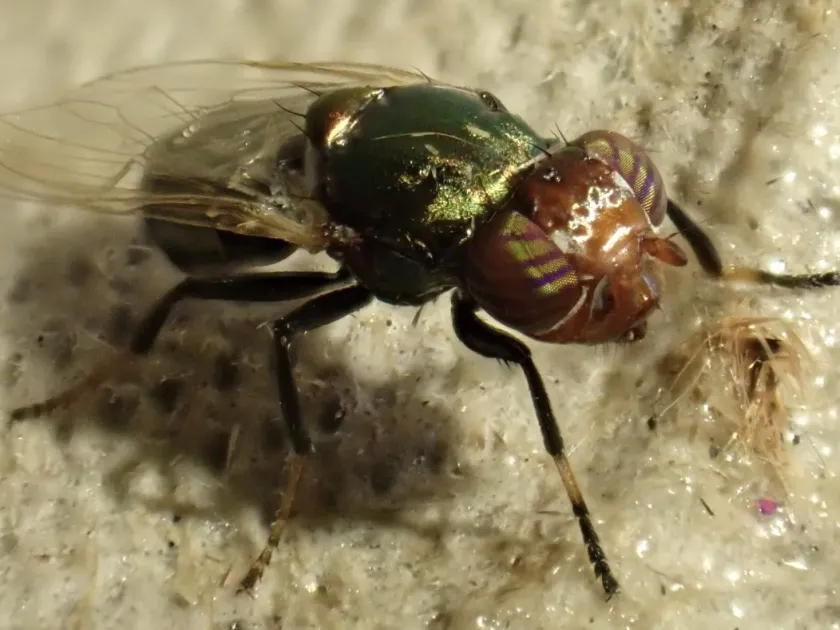
The black scavenger fly (Physiphora demandata) belongs to the family Ulidiidae (order Diptera). Adult flies are approximately 5–7 mm long, characterized by a metallic blue-black body, giving them their common name.
A distinctive morphological feature is the presence of a dark, clouded spot on the apex of the transparent wings, which serves as a reliable marker for field identification.
The larvae are typically whitish to pale yellow, cylindrical in shape, and lack a distinct head. They are primarily saprophagous, living and feeding within decomposing organic matter.
The biology of P. demandata is intimately linked to the decomposition of plant and animal tissues, making them common inhabitants of compost piles, manure, and rotting vegetation.
The life cycle involves a complete metamorphosis: egg, larva, pupa, and adult. The duration of the cycle varies significantly depending on ambient temperature and food availability.
What it damages
This species is widely recognized as a secondary pest. It rarely attacks healthy plants, instead gravitating toward tissues already damaged by environmental stress, mechanical injury, or other insects.
Affected crops often include vegetables like tomatoes, peppers, and cucumbers, as well as field crops like corn, where the ears may provide a suitable environment for egg-laying.
The larvae feed on the moist, decaying tissues, accelerating the rotting process and facilitating the entry of opportunistic bacteria and fungi that destroy the crop.
Economic damage is most significant when fruit comes into direct contact with wet soil, as the larvae easily migrate from the ground into the fruit through microscopic skin breaks.
In greenhouse settings, this fly can become a major nuisance, as the controlled, humid environment supports continuous breeding cycles and rapid population growth.
When it appears
The active flight season for adults generally begins in late spring, continuing throughout the summer and into early autumn as temperatures remain favorable.
Several generations per season are common, especially in warmer climates. The population density tends to peak during periods of high humidity and rainfall, which promote plant decay.
Adults are most active during daylight hours, feeding on nectar and moving between breeding sites, such as decaying fruit or decomposing organic matter, to lay their eggs.
Overwintering occurs primarily in the pupal stage. Pupae remain dormant in the soil or protected under thick layers of leaf litter, emerging as adults when spring temperatures rise.
The availability of rotting organic material acts as the primary limiting factor for their population density within a specific agricultural plot.
Signs of infestation
The first sign of an infestation is the presence of metallic black flies hovering around decaying vegetation or damaged produce, often in large numbers.
Visual signs of damage include dark, watery lesions on fruit or stems, accompanied by an unpleasant, putrid smell caused by the breakdown of tissues by larvae.
Upon closer inspection, the presence of larvae inside the soft tissue of the fruit or stalk confirms an infestation of Physiphora demandata.
A decline in produce quality following heavy rain or poor harvest conditions is another hallmark, as these factors increase the vulnerability of the crop.
In corn, the larvae can be observed burrowing into the silks and kernels of the ear, causing noticeable browning and decay in the tip area.
Control measures
Sanitation is the most effective management tool. Removing and properly disposing of rotting plant debris reduces the available breeding sites and disrupts the life cycle.
Improving cultural practices, such as preventing fruit-to-soil contact through staking or mulching, significantly reduces the likelihood of larval invasion.
Yellow sticky traps are highly effective in greenhouses for both monitoring population levels and reducing the number of active adults before they deposit eggs.
Chemical control is rarely the first choice and should be reserved for severe outbreaks, targeting adults on the wing before significant damage occurs to the crop.
- Practice crop rotation to minimize long-term buildup of soil-borne pupae.
- Harvest crops promptly to prevent over-ripening and subsequent rot in the field.
- Ensure adequate drainage in the field to prevent the soil from becoming excessively damp and attractive to the flies.
Taxonomy
- Latin name
- Physiphora demandata
- Order
- Diptera (flies)
- Family
- Otitidae
- EPPO code
- PHPADE
Discussion
No discussions yet — be the first.