
Melieria
Melieria
Description
How to identify
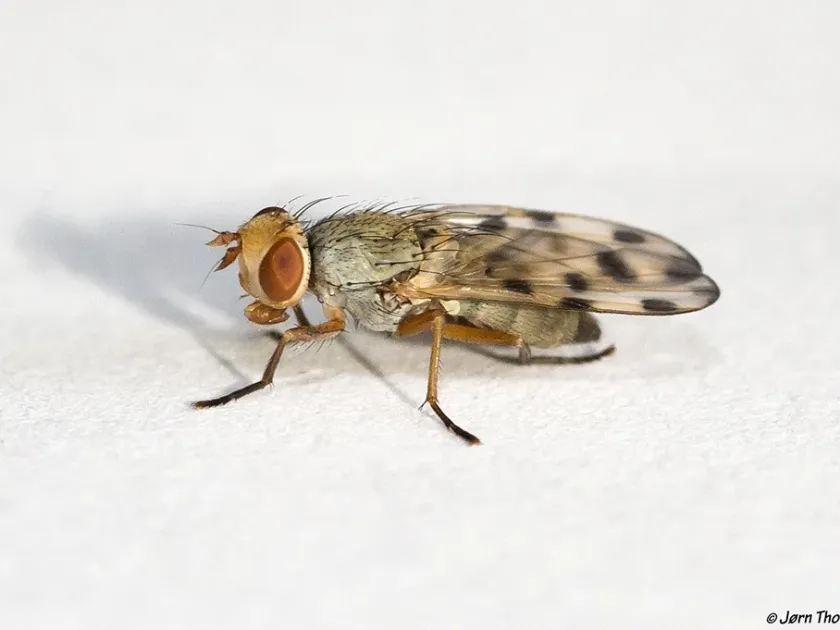
Melieria is a genus of insects belonging to the family Ulidiidae (picture-winged flies). These flies are distinguished by their patterned wings and are often found in various agricultural and natural habitats.
Adult insects are small to medium-sized. They possess a licking-type mouthpart typical of the order Diptera, which allows them to feed on decomposing organic matter and plant fluids.
The life cycle involves complete metamorphosis, including egg, larva, pupa, and adult stages. Larvae are typically legless maggots that burrow into the soft tissues of host plants to feed.
Taxonomically, the genus includes several species that can be difficult to distinguish without professional entomological examination, as they often share similar morphological traits.
These flies are biologically adapted to environments where they can find suitable breeding substrates, which often include the stems and bulbs of specific host plants.
What it damages
Certain species of Melieria act as pests of onion and related Allium crops. The larvae cause direct damage by feeding inside the bulbs and stems, which disrupts the plant's development.
The feeding activity creates tunnels within the plant tissue, leading to structural weakening. This process often causes the host plant to wilt and eventually collapse under severe infestation.
Damage is not limited to physical destruction; the wounds created by the larvae provide entry points for secondary pathogens, such as bacteria and fungi, which exacerbate the rot.
Infested onions lose their marketability due to softness and discoloration. If not addressed, the presence of these pests can lead to significant post-harvest losses in storage.
Economic damage is most pronounced when the infestation occurs early in the growing season, preventing the proper development and maturation of the bulb.
When it appears
The active flight period for adult flies typically begins in late spring, following the warming of soil and air temperatures. This is when mating and egg-laying occur.
Larval development takes place during the warmer summer months. Depending on the climatic conditions and the specific species, multiple generations can emerge within a single growing season.
Pupation usually occurs within the soil or inside the damaged plant tissue, where the insect remains protected until the next life stage or until the onset of winter.
Overwintering is achieved in the pupal stage. The puparia are resilient, allowing the population to survive the winter dormant in field soil or debris.
Monitoring for the presence of adults using visual traps is most effective during the early summer, allowing farmers to predict potential population surges.
Signs of infestation
Symptoms of infestation often start with subtle yellowing of the leaf tips, which is frequently misidentified as nutritional deficiency or drought stress.
As the larvae feed internally, the base of the plant becomes soft. Plants may appear stunted and exhibit a lack of vigor compared to unaffected neighboring plants.
Dissection of a suspected bulb reveals larvae or signs of larval tunnels. The internal tissue is often macerated, damp, and emits a strong, unpleasant smell characteristic of decay.
In the field, infested plants can often be easily pulled from the ground because their root systems and basal plates have been severely compromised by larval feeding.
- Yellowing and wilting of foliage.
- Softness at the plant base.
- Presence of internal tunnels in bulbs.
- Foul odor originating from damaged tissue.
- High percentage of bulbs rotting in storage.
Control measures
Crop rotation is the primary preventive measure. Avoiding the cultivation of Allium crops on the same field for several years breaks the pest's reproductive cycle.
Sanitation is equally critical. Removing and destroying all crop residues after harvest prevents the survival of puparia in the field soil.
Deep plowing in late autumn or early spring can bury puparia, making it physically difficult for the emerging adults to reach the soil surface.
Chemical control via insecticides should be timed to coincide with the flight period of adults, targeting them before eggs are laid within the plant tissue.
Integrated pest management strategies, including the use of pheromone or sticky traps, help in determining the precise timing for intervention and minimizing pesticide use.
Taxonomy
- Latin name
- Melieria
- Order
- Diptera (flies)
- Family
- Otitidae
- EPPO code
- MLIESP
Discussion
No discussions yet — be the first.