
Corn silk fly
Euxesta stigmatias
Description
How to identify
The corn silk fly (Euxesta stigmatias) is a member of the Ulidiidae family within the order Diptera. It is recognized as a significant pest in maize production.
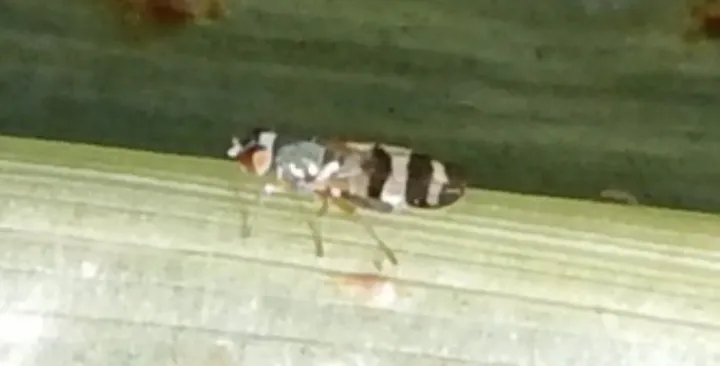
Adults are small, shiny flies, typically 5-6 mm long, characterized by prominent dark bands or spots on their wings, which is a key identification feature.
The larvae are cream-colored, headless, and legless, typically found feeding inside the ears of the host plants.
The life cycle progresses through the egg, three larval stages, pupa, and adult. The entire life cycle can be completed in less than a month under optimal conditions.
Adult flies are highly mobile and are typically observed feeding on the silks and pollen of maize plants during the silking stage.
What it damages
The primary host is maize (sweet corn and field corn). Larvae feed directly on the developing kernels, causing significant yield losses and quality reduction.
Beyond feeding on kernels, the larvae consume the silks, which can interfere with the pollination process and lead to poor ear fill.
Damage to the kernels creates entry points for fungal pathogens and bacterial infections, leading to ear rot and mycotoxin contamination.
In sweet corn production, even minimal larval damage renders the ears unmarketable due to cosmetic defects and food safety standards.
High infestation levels can result in almost total destruction of the grain quality, making the crop unfit for commercial use.
Signs of infestation
The first sign of infestation is the presence of adult flies hovering around the silks of the maize plants during the silking phase.
Inspect the silks for the presence of small, white eggs deposited by females, which indicate that larval damage is imminent.
Internal ear inspection often reveals larvae, chewed-up kernels, and the characteristic presence of frass (larval waste) inside the husk.
Visible decay of the ear tip, discoloration, and mold development under the husk are typical indicators of established larval infestation.
Wilting or abnormal browning of the silk threads, unrelated to normal maturation, can also signal that the flies have been active in the field.
Control measures
Cultural control practices include planting hybrids with tight-fitting husks, which provide a mechanical barrier that limits the fly's access to the silks.
Early planting dates can help avoid peak populations of the corn silk fly, ensuring the most vulnerable silking stage occurs outside the fly's peak activity.
Deep plowing after harvest is essential to bury pupae and reduce the overwintering population for the next growing season.
Chemical control involving insecticide applications during the silking period is effective at managing adult populations and preventing egg laying.
- Regular monitoring using baited traps.
- Field sanitation to remove crop residues.
- Integrated pest management (IPM) to optimize chemical usage.
Taxonomy
- Latin name
- Euxesta stigmatias
- Order
- Diptera (flies)
- Family
- Otitidae
- EPPO code
- EUXEST
Discussion
No discussions yet — be the first.