
Spotted root maggot fly
Euxesta notata
Description
How to identify
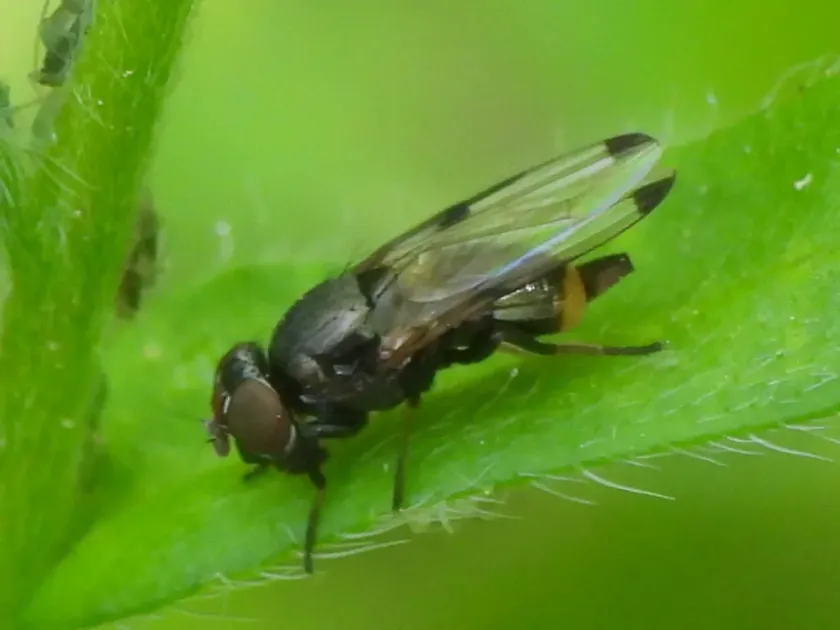
The spotted root maggot fly (Euxesta notata) is a member of the Ulidiidae family within the order Diptera. These small flies typically measure between 4 to 5 mm in body length.
The most distinctive feature of the adult fly is the presence of clear, dark patterns or spots on their wings, which makes them identifiable under close inspection.
The larvae are typical fly maggots, measuring 6-8 mm long. They are legless, cylindrical in shape, and possess a pale, yellowish-white color with mouth hooks for feeding.
Pupation occurs within brown puparia, which are often found in the soil or within decaying plant material, providing excellent protection against environmental stress.
These flies thrive in environments with abundant organic matter, moisture, and warmth, which allows them to flourish in neglected fields or compost-rich agricultural plots.
What it damages
The damage is primarily caused by the larvae, which are generalist feeders. They consume both healthy plant tissues and decomposing plant matter.
A wide range of crops is susceptible, including corn, onions, tomatoes, potatoes, beets, and several other vegetable varieties.
In corn, the larvae tunnel into the ears, consuming kernels and significantly reducing yields while facilitating the entry of secondary fungal pathogens.
Vegetable crops such as onions are affected at the root zone or the base of the stem, often leading to rapid tissue decay, wilting, and total plant loss.
The pest often acts as a secondary invader, targeting plants already stressed by drought, poor soil conditions, or previous mechanical damage to the plant tissues.
When it appears
Adult flies become active in the spring when temperatures rise sufficiently to trigger the emergence of the first generation of the season.
Multiple generations can occur throughout a single growing season, making consistent monitoring essential to prevent populations from spiraling out of control.
Activity peaks during flowering and fruit maturation, as these stages offer the best conditions for egg-laying and larval development in the plant tissues.
Winter survival is typically achieved through the pupal stage, with puparia remaining dormant in the soil or protected under crop debris until the following spring.
High infestation levels are most commonly observed mid-to-late summer, coinciding with the peak harvest times of the host plants.
Signs of infestation
One of the primary signs of infestation in corn is the discovery of feeding tunnels, larval excrement, and partially eaten kernels inside the ears.
For vegetable crops, sudden wilting and the presence of a foul odor near the root base strongly indicate larval feeding and subsequent bacterial or fungal infection.
Manual inspection of the root zone often reveals the pale, legless larvae, which are clearly visible once the decaying tissue is peeled back.
The presence of adult flies with spotted wings swarming around the crop canopy is a definitive indicator that active egg-laying is likely taking place.
- Yellowing foliage without signs of nutritional deficiency.
- Soft, rotting tissues at the stem base.
- Secondary rot spreading from points of larval entry.
Control measures
Implementing effective crop rotation is a primary defense, as it breaks the pest's life cycle and removes its preferred host plants from the area.
Deep autumn plowing is a crucial cultural practice that exposes overwintering puparia to predators and extreme weather, significantly reducing the next season's population.
Field sanitation is essential; removing crop residues and weeds prevents the build-up of the fly population after the main harvest season ends.
When necessary, chemical control using targeted insecticides should be applied during the adult flight stage to prevent the population from establishing eggs.
Integrated Pest Management (IPM) encourages maintaining crop health and avoiding over-irrigation, as moist, decaying plants are major attractants for the female flies.
Taxonomy
- Latin name
- Euxesta notata
- Order
- Diptera (flies)
- Family
- Otitidae
- EPPO code
- EUXENO
Discussion
No discussions yet — be the first.