
Euxesta eluta
Euxesta eluta
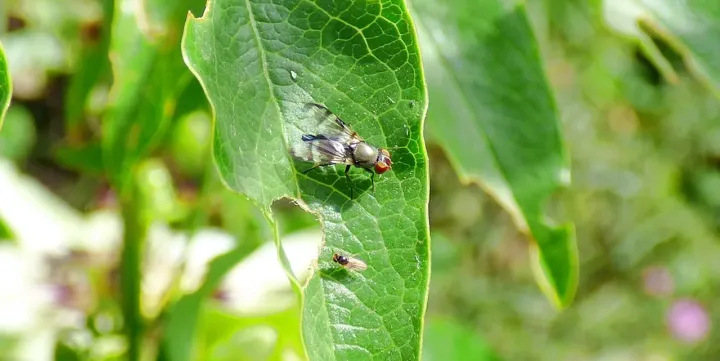
Description
How to identify
Euxesta eluta is a species of picture-winged fly belonging to the family Ulidiidae. It is a well-known pest in various regions, specifically noted for its impact on corn crops during the grain-filling stage.
The adult fly is characterized by distinct markings on its wings, which serve as a primary diagnostic feature for field identification. They are active fliers and are typically observed around the silks of developing corn ears.
The larvae, which are the stage responsible for the damage, are small, legless, and creamy-white in color. They are adapted to thrive within the enclosed environment of the corn ear, protected from external predators.
Understanding the life cycle is crucial for effective management. The species undergoes a complete metamorphosis, and its developmental rate is highly sensitive to environmental temperature and moisture.
While often overlooked due to their small size, the presence of Euxesta eluta can lead to significant economic losses if not properly monitored and managed throughout the growing season.
What it damages
The primary damage caused by Euxesta eluta occurs when females lay eggs on the silks of the corn ear. Upon hatching, the larvae burrow into the ear to feed on the developing kernels.
This feeding activity directly reduces the yield of the crop, as the larvae consume the starch and proteins of the kernels during the milk and dough stages of development.
Beyond the loss of individual kernels, the damaged tissues become highly susceptible to fungal colonization. Various molds often thrive on the damaged areas, further degrading grain quality.
In cases of severe infestation, the cumulative damage can lead to a significant percentage of spoiled or unmarketable ears, impacting the overall profit margin for farmers.
Economic damage is often more pronounced in regions where the environmental conditions favor multiple generations of the pest throughout the corn growing season.
When it appears
Adult flies typically emerge in early summer, coinciding with the flowering phase of corn. This synchronization allows the pests to target the most vulnerable part of the plant for egg-laying.
The life cycle can progress rapidly under warm conditions, allowing for several overlapping generations within a single season, which increases the pressure on corn crops.
Larvae develop within the husk of the corn ear for a period of several weeks before transitioning into the pupal stage. This pupation often occurs in the soil or within crop debris.
As the harvest season approaches, the population density of the pest may fluctuate, but the damage sustained during the ear-filling phase remains the most critical impact.
Monitoring the flight periods of adult flies using traps is a recommended practice to predict the timing of the potential infestation peak.
Signs of infestation
The most reliable sign of an Euxesta eluta infestation is the presence of adult flies hovering around the silks of corn ears during the pollination period.
When inspecting the ears, one might notice damaged kernels at the tip or along the sides of the ear. The presence of larvae or their excrement inside the husk is a definitive sign of infestation.
The silks may appear discolored, prematurely wilted, or damaged due to the flies' activity. These visual cues are essential for scouting fields.
Secondary infestation signs include visible mold or decay on the ear tips, which frequently occurs after the larvae have breached the protective layers of the husks.
- Adult flies seen on corn silks.
- Damaged, hollowed-out kernels at the ear tip.
- Larvae found within the corn husk.
- Fungal growth or mold on damaged grain areas.
- Overall reduction in ear fill and grain quality.
Control measures
Chemical control is most effective when targeted at adult flies during their peak flight period to prevent egg-laying on the vulnerable silks.
Cultural practices, such as deep plowing after harvest, are essential to disrupt the pupation cycle of the pest by burying the larvae and pupae in the soil.
Selecting corn hybrids with tight, overlapping husks can physically obstruct the flies from reaching the kernels, serving as an effective deterrent.
Implementing proper crop rotation and maintaining spatial isolation from previous corn fields can significantly reduce the local population density of this pest.
Integrated Pest Management (IPM) strategies, including regular scouting and threshold-based insecticide applications, provide the most sustainable approach to long-term control.
Taxonomy
- Latin name
- Euxesta eluta
- Order
- Diptera (flies)
- Family
- Otitidae
- EPPO code
- EUXEEL
Discussion
No discussions yet — be the first.