
Euxesta annonae
Euxesta annonae
Description
How to identify
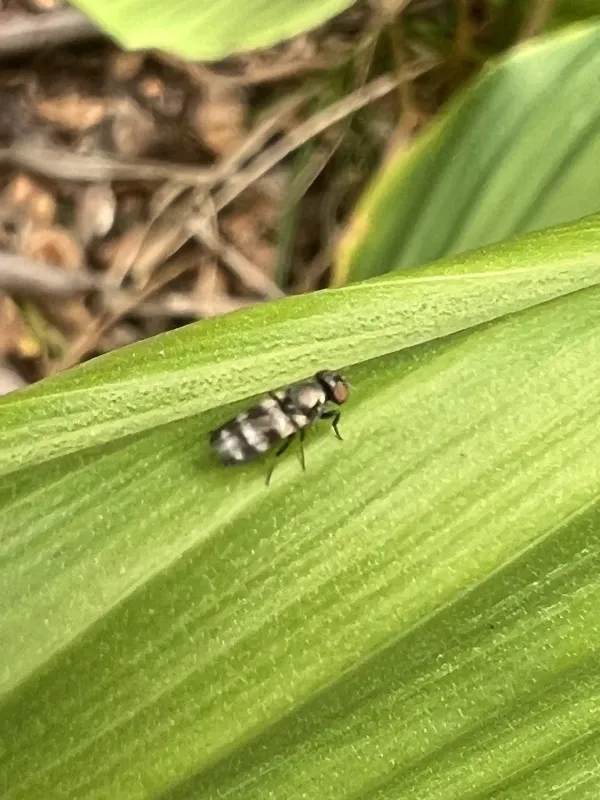
Euxesta annonae is a fly species belonging to the family Ulidiidae (picture-winged flies). These flies are easily recognized by their dark, shiny bodies and the distinct pattern of dark transverse bands across their wings, which is a hallmark of the family.
The fly is highly active in warm climates, where it can complete multiple generations throughout the year. Adults are strong fliers and are highly sensitive to the odors released by decaying plant matter, which serves as both a food source and a site for oviposition.
The life cycle consists of four distinct stages: egg, larva, pupa, and adult. The females seek out protected areas on the host plant, such as the silks or husks of corn, to lay their eggs, ensuring the larvae have immediate access to plant tissues upon hatching.
Larvae are small, white, and legless, equipped with mouth hooks to feed on plant tissues. They are typically found boring into the fruit or seeds of the host plant. Pupation occurs either within the damaged tissues or in the soil surrounding the plant base.
Their ability to thrive in various agricultural settings and exploit a wide range of host plants makes them a persistent challenge for farmers, requiring consistent monitoring to prevent population spikes.
What it damages
Corn is the primary crop host for Euxesta annonae. The larvae target the ears, particularly during the milk stage of development, entering through the silks or feeding on the kernel tissue after tunneling through the husks.
Beyond corn, this species affects various tropical and subtropical crops, including bananas, pineapples, and citrus. They are attracted to wounded or ripening tissues, where their feeding activities cause significant internal damage to the produce.
Damage to corn kernels results in direct yield loss and compromises the quality of the ears, often making them unsuitable for processing or animal feed. The feeding activity frequently destroys the endosperm and embryo of the grains.
Wounds created by the larvae are susceptible to secondary infections by various pathogens, including fungi that produce mycotoxins, which can lead to further degradation of the crop and potential health risks for consumers or livestock.
The economic impact can be severe, especially when infestation levels are high, leading to significant downgrading of harvest quality and necessitating costly interventions to salvage the remaining crop.
Signs of infestation
Early identification is often difficult, but adult flies can be observed on the corn tassels or silks during the flowering phase. Their presence in high numbers is a strong indicator of potential infestation.
The most reliable sign of damage is the presence of entry holes in the husks, often accompanied by brown, discolored tissue surrounding these openings. When the husk is peeled back, the presence of frass (larval waste) is a clear diagnostic sign.
Direct inspection of the kernels will reveal missing grain, tunnels, and active larvae feeding. In advanced cases, the entire tip of the ear may be consumed, with visible rot spreading across the surface of the cob.
Puparia, which appear as small, barrel-shaped brown objects, may be found attached to the inner husk or tucked near the damaged kernels, signaling that the infestation has reached a mature stage.
A foul, fermented odor emanating from the ears is another telltale sign that significant larval damage is occurring within, often attracting further pests and contributing to the overall decline of the ear.
Control measures
Management of Euxesta annonae relies on integrated pest management (IPM) strategies. Monitoring adult populations using attractant traps is essential to determine the timing and necessity of control interventions.
Cultural control practices, such as choosing corn hybrids with tighter husk coverage, can significantly reduce the fly's ability to access the ears. Rapid harvesting as soon as the crop reaches maturity also limits the time available for larval development.
Chemical control can be effective if applied during the adult flight period before egg-laying occurs. However, once the larvae are inside the husk, insecticides have limited efficacy, making timing crucial for success.
Biological control, utilizing natural predators and parasitoids, can play a role in suppressing populations. Maintaining field hygiene by destroying crop residues after harvest prevents the pest from overwintering and reduces future infestation pressure.
- Use pheromone-based monitoring traps to track population levels.
- Select corn varieties with long, tight-fitting husks for protection.
- Incorporate deep tillage to destroy pupae in the soil.
- Apply systemic insecticides based on economic threshold levels.
Taxonomy
- Latin name
- Euxesta annonae
- Order
- Diptera (flies)
- Family
- Otitidae
- EPPO code
- EUXEAN
Discussion
No discussions yet — be the first.