
Scatella subguttata
Scatella subguttata
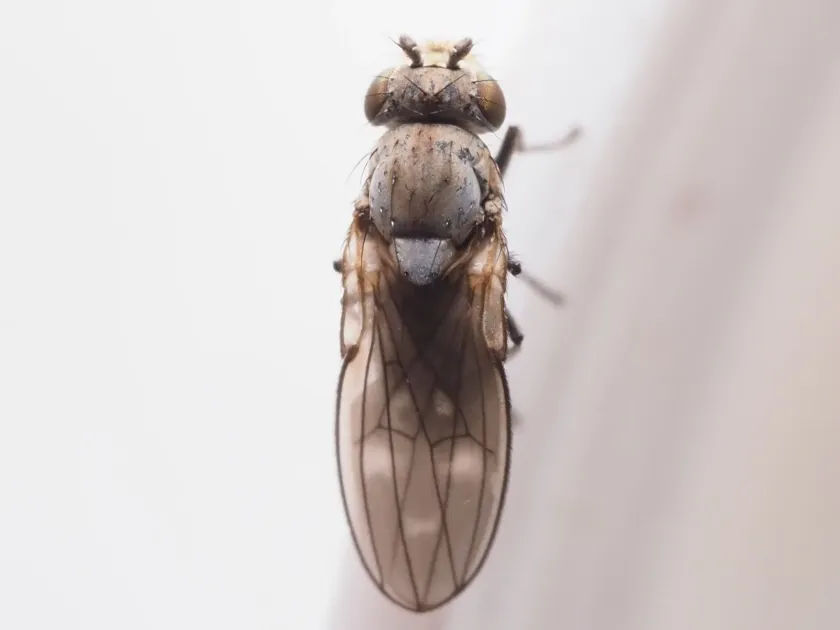
Description
How to identify
Scatella subguttata belongs to the shore fly family (Ephydridae) within the order Diptera. These small flies are typically identified by their dark coloration and distinct spotted wings.
Adults possess specialized mouthparts adapted for grazing on algae, bacteria, and organic detritus that accumulate on moist surfaces.
The larvae exhibit a cylindrical body shape, often with characteristic posterior appendages that help them navigate in wet or aquatic environments.
The life cycle of this pest involves a complete metamorphosis through four stages: egg, larva, pupa, and adult, with the larval stage being the most ecologically active.
In greenhouses, they are often confused with fungus gnats (sciarids), but they are primarily attracted to wet surfaces covered with algal growth rather than decaying organic soil matter alone.
What it damages
While primarily feeding on algae, large populations of Scatella subguttata larvae can cause direct damage to the delicate root systems of young seedlings.
Crops grown in hydroponic systems, rockwool, or overly saturated peat-based media are at the highest risk of infestation and subsequent damage.
Larval feeding on roots creates entry wounds that facilitate the secondary colonization of soil-borne pathogens, including Pythium and Phytophthora root rots.
Adult flies serve as mechanical vectors for various plant pathogens, including bacteria and fungi, spreading disease spores as they move across plant tissues.
Heavy infestations reduce the aesthetic value of ornamental plants, as adult flies leave numerous black excrement spots on leaves and flowers.
When it appears
In controlled greenhouse environments, Scatella subguttata is active year-round, provided that moisture levels remain high and temperature conditions are favorable.
Population surges often coincide with periods of poor ventilation, leading to stagnant water in trays, irrigation lines, and drainage basins.
The development speed is highly temperature-dependent, with warmer conditions significantly shortening the generation time from egg to adult.
In outdoor settings, these flies are typically found during spring and summer months near water sources, stream banks, and wetlands.
Winter survival inside greenhouses is guaranteed if moisture persists, allowing the population to build up in hidden, damp niches.
Signs of infestation
The most obvious sign of infestation is the sudden appearance of large numbers of dark flies crawling or flying near moist substrate surfaces.
The presence of a green or brown algal film on the surface of potting media acts as a primary indicator that the environment is suitable for these pests.
Wilting of seedlings or stunted growth despite adequate irrigation suggests potential root damage caused by high larval density in the root zone.
Closer inspection of the substrate surface often reveals the presence of pale, maggot-like larvae that actively move when the substrate is disturbed.
Dark fecal spots on leaves and plant containers serve as clear visual markers of an established adult fly population within the facility.
Control measures
The primary control measure is cultural management: maintaining proper drainage, avoiding water accumulation in trays, and ensuring good air circulation.
Strict sanitation protocols, such as removing algae from benches, floors, and irrigation equipment, are essential to deprive the pests of their food source.
Yellow sticky cards are highly effective tools for both monitoring the presence of adult flies and physically reducing their population density.
- Application of biological insecticides containing entomopathogenic fungi.
- Use of biological control agents such as predatory nematodes (Steinernema feltiae).
- Targeted application of insecticides to the substrate to manage larval stages if monitoring reveals high pest pressure.
Using sterilized growing media and monitoring irrigation water quality can drastically reduce the risk of bringing these pests into the greenhouse environment.
Taxonomy
- Latin name
- Scatella subguttata
- Order
- Diptera (flies)
- Family
- Ephydridae
- EPPO code
- SCALSU
Discussion
No discussions yet — be the first.