
Shore fly
Scatella stagnalis
Description
How to identify
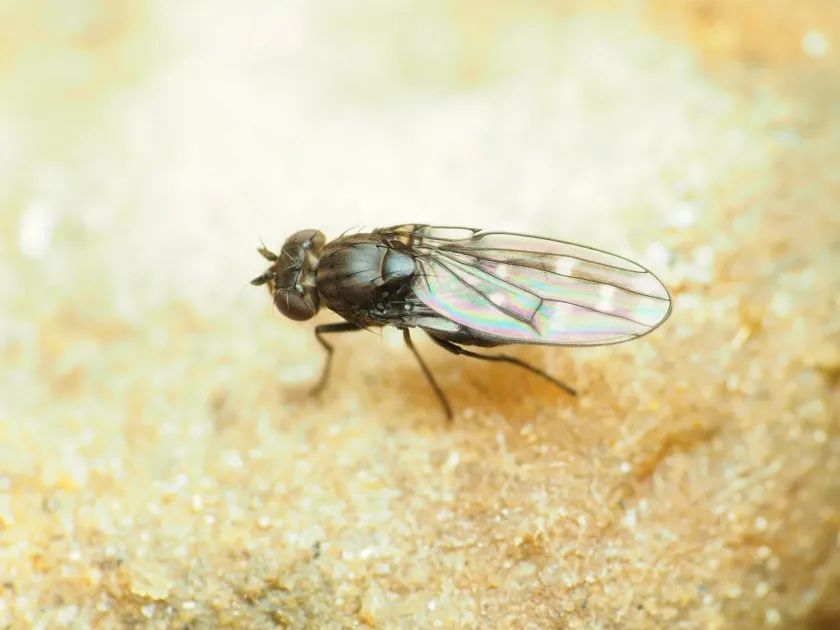
The shore fly (Scatella stagnalis) belongs to the Ephydridae family, order Diptera. These are small insects, with adults reaching 2–3 mm in length, possessing a dark body and distinct spotted wings.
Adults are highly mobile and are often found congregating on damp substrate surfaces or greenhouse walls. The larvae are translucent, cylindrical in shape, and typically reside within algal mats or moist growing media.
The life cycle of the shore fly is heavily dependent on ambient temperature and humidity levels. Optimal conditions for rapid reproduction include high humidity combined with the presence of organic debris covered in green algae.
Development from egg to adult proceeds through several larval and pupal stages. In heated greenhouses, the pest can produce multiple generations per year, posing a significant threat to young seedlings.
Females deposit eggs directly into the nutrient-rich substrate where the larvae subsequently develop. The total duration of the life cycle can range from two to four weeks, depending on the specific greenhouse microclimate.
What it damages
This pest is a specific problem in protected cultivation, affecting vegetable and ornamental crops at the seedling stage. While larvae primarily feed on organic matter, they can damage the roots of young plants under high population density.
A primary concern is that the presence of shore flies often indicates poor management practices, such as excessive moisture and stagnant soil conditions. Damaged roots become susceptible to secondary infections like root rot pathogens.
Crops most susceptible to attack include tomatoes, cucumbers, leafy greens, and ornamental flowers grown in hydroponics or peat-based substrates. Heavy infestations lead to stunted growth and reduced commercial quality of the produce.
Beyond direct root damage, adult shore flies act as mechanical vectors for fungal spores and pathogenic bacteria. They move actively throughout the greenhouse, facilitating the spread of diseases from one plant area to another.
The pest favors areas with active green algae growth on the surface of pots or growing mats. Controlling algae growth is key to reducing the attractiveness of the environment for shore fly reproduction.
Signs of infestation
The first sign of infestation is the appearance of large numbers of small black flies that take flight when plants or trays are disturbed. Their gatherings are frequently seen on moist surfaces near irrigation systems.
Upon inspecting the root zone of seedlings, larvae may be visible in the top layer of the substrate. Infected plants exhibit stunted growth and loss of turgor, even when moisture levels appear sufficient.
A dense green layer of algae on the soil or hydroponic mats often signals a shore fly problem, as this algae serves as the primary food source for the larvae. The presence of this algal mat is a major indicator of risk.
Adults leave characteristic small excrement spots on the surface of leaves or stems. These traces, which are easily visible with a magnifying lens, provide evidence of high population density.
If seedlings begin to wilt en masse without an obvious cause in high-humidity conditions, one should investigate the root zone for larvae. Failure to address this early leads to the rapid loss of young crop stands.
Control measures
The primary control method involves optimizing moisture management. Providing adequate ventilation in the greenhouse to allow the substrate surface to dry between waterings is essential to prevent algal growth.
Using yellow sticky traps is an effective monitoring and control tool, as they attract adults and allow for population density tracking. Regular trap replacement is critical for lowering the reproductive potential of the flies.
In commercial operations, biological control methods are applied, including the use of entomopathogenic nematodes (such as Steinernema feltiae), which effectively kill larvae within the substrate.
Chemical intervention is only justified when infestation thresholds are exceeded, using insecticides approved for greenhouse application. Rotating chemical classes is important to prevent the development of resistance.
Maintaining greenhouse hygiene, regularly disinfecting equipment, and removing plant debris promptly significantly reduce the risk of shore fly outbreaks. Cleanliness is the best defense against this pest.
Taxonomy
- Latin name
- Scatella stagnalis
- Order
- Diptera (flies)
- Family
- Ephydridae
- EPPO code
- SCALST
Discussion
No discussions yet — be the first.