
Shore fly
Scatella
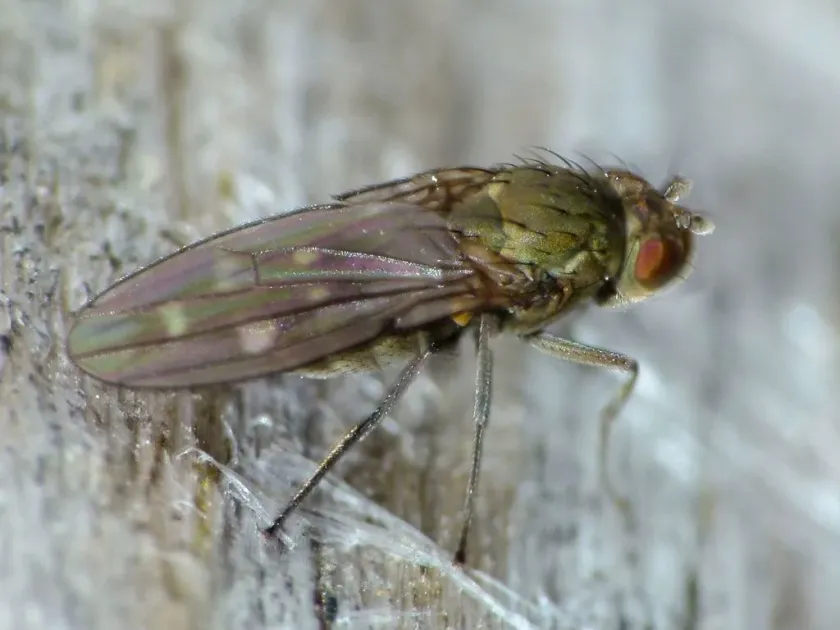
Description
How to identify
The shore fly, belonging to the genus Scatella, is a member of the family Ephydridae, order Diptera. These are small flies, typically dark in color, often with spotted wings, which are common pests in greenhouse environments.
Adult flies are highly mobile and are frequently found in areas with high humidity and algal growth. They do not consume plant tissue directly, but their presence indicates conditions that favor the development of larvae.
Shore fly larvae are cylindrical and translucent, often found in wet substrates. They are well-adapted to aquatic or semi-aquatic environments, where they primarily feed on algae and decomposing organic matter.
The life cycle of the shore fly is relatively short, particularly in warm greenhouse conditions. This rapid development allows populations to build up quickly, potentially leading to significant infestations within a short period.
Monitoring for adult shore flies is best achieved using yellow sticky traps placed near the growing media. These traps help identify the presence and density of the population early on.
What it damages
The primary damage is caused by the larvae inhabiting the substrate. While they prefer feeding on algae, in the presence of high populations, they may feed on young plant roots and the base of seedling stems.
Shore flies are particularly problematic in hydroponic operations. Larvae can move easily within the nutrient solution, making them difficult to manage without integrated pest management strategies.
Feeding damage to the root system disrupts the plant's ability to absorb water and nutrients. Consequently, plants may exhibit symptoms of wilting, stunted growth, and yellowing foliage.
Root damage serves as an entry point for various secondary pathogens, such as Pythium and other root rot fungi, which can cause severe plant collapse in infested greenhouses.
In addition, adult flies act as mechanical vectors, potentially spreading spores of plant pathogens from one plant to another as they move throughout the growing area.
Signs of infestation
One of the earliest signs of a shore fly infestation is the presence of small, active flies hovering above the moist surface of the potting media or near irrigation lines.
Plants affected by larval feeding show signs of stress, particularly wilting during the day. Examination of the roots often reveals necrotic spots or tissue degradation caused by larval feeding activity.
The development of green algae on the surface of substrates is a strong indicator of conditions suitable for shore fly breeding and suggests that a population increase is likely.
Stunted development and overall plant weakness are common results of a compromised root system. Leaves may appear chlorotic due to the inability of the roots to transport essential nutrients.
A high capture rate on yellow sticky traps provides a clear visual signal that an infestation has reached a level requiring immediate intervention and control measures.
Control measures
The most effective strategy for managing shore flies is sanitation. Eliminating algal growth on surfaces and in irrigation systems is critical, as algae are the primary food source for the larvae.
Implementing proper irrigation management is essential. Avoiding standing water in trays and ensuring good drainage helps create a less favorable environment for larvae to develop.
Chemical control measures include the application of registered insecticides compatible with greenhouse use. These should be applied to target both adults and larvae to break the life cycle.
Biological control, particularly the use of entomopathogenic nematodes such as Steinernema feltiae, has proven highly effective in suppressing larval populations within the growing media.
- Maintain greenhouse sanitation by removing algae from surfaces.
- Ensure proper substrate drainage and avoid waterlogging.
- Use yellow sticky traps for population monitoring and adult removal.
- Apply biocontrol agents like nematodes to target larvae in the media.
Taxonomy
- Latin name
- Scatella
- Order
- Diptera (flies)
- Family
- Ephydridae
- EPPO code
- SCALSP
Discussion
No discussions yet — be the first.