
Psilopa leucostoma
Psilopa leucostoma
Description
How to identify
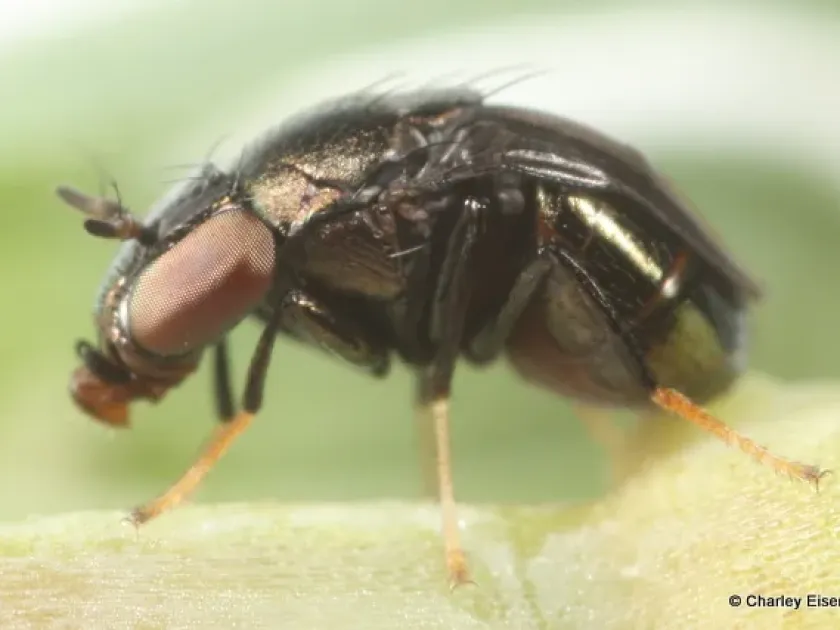
Psilopa leucostoma is a species of shore fly belonging to the family Ephydridae within the order Diptera. These small flies are typically dark in color, often exhibiting a metallic sheen on their exoskeleton.
The larvae of this pest are legless and adapted to mining into leaf tissues or surviving in humid conditions, which is characteristic of the Ephydridae family.
The life cycle encompasses four stages: egg, larva, pupa, and adult. The developmental rate is significantly influenced by moisture levels and ambient temperatures.
Adult flies are frequently observed near irrigation systems, wetlands, or moist soil surfaces where they find suitable conditions for laying eggs.
Their biological resilience makes them capable of producing several generations per year, potentially leading to outbreaks under favorable environmental conditions.
What it damages
The primary hosts of Psilopa leucostoma include plants in the Amaranthaceae family, particularly sugar beets and various other vegetable crops.
Larvae feed within the mesophyll layer of leaves, creating serpentine or blotch-shaped mines that disrupt the plant's ability to undergo photosynthesis.
In cases of high infestation, the foliage becomes discolored, necrotic, and eventually withers, leading to a significant reduction in overall crop yield.
Seedlings and young plants are particularly vulnerable, as the damage can stunt their growth and significantly delay their development.
The mines created by the larvae serve as entry points for secondary pathogens, such as fungi and bacteria, which can cause further tissue decay.
Signs of infestation
The most distinctive sign of infestation is the appearance of light-colored, winding trails or blotches on the leaf surface, which represent the feeding tunnels.
Upon closer inspection, the epidermis of the leaf may remain intact while the internal green tissue is consumed, leaving the area semi-transparent.
Severely damaged leaves often show signs of curling, wilting, and tissue death starting from the edges or the center of the lamina.
Adult feeding activity may leave tiny, circular punctures on the leaf surface, which are less destructive but indicate the presence of the flies.
- Visible serpentine mines on leaves.
- Chlorotic spots or patches on the foliage.
- Stunted growth of infested plants compared to healthy ones.
Control measures
Effective management begins with robust crop rotation practices to prevent the buildup of pest populations in the soil over consecutive seasons.
Weed control is essential, particularly targeting wild species of the Amaranthaceae family that act as alternate hosts for the pest.
Systemic insecticides should be applied strategically, targeting the egg-laying period to prevent larvae from successfully penetrating the leaves.
Deep plowing after harvest is a recommended cultural practice to bury pupae and disrupt the life cycle of the pest during the overwintering stage.
Monitoring using yellow sticky traps is an effective way to track adult activity and determine the optimal timing for chemical interventions.
Taxonomy
- Latin name
- Psilopa leucostoma
- Order
- Diptera (flies)
- Family
- Ephydridae
- EPPO code
- PSIOLE
Discussion
No discussions yet — be the first.