
Rice leaf miner
Hydrellia sasakii
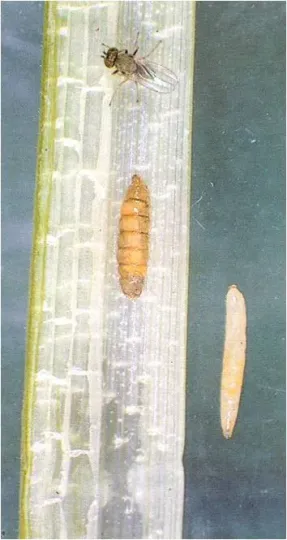
Description
How to identify
The rice leaf miner, scientifically known as Hydrellia sasakii, is a dipterous insect belonging to the Ephydridae family. These tiny flies are characterized by their dark, slate-grey bodies and measure approximately 2 to 3 mm in length.
The larval stage is the primary cause of concern. Larvae are slender, translucent, and cream-colored, typically developing within the parenchyma of rice leaves. They lack legs but possess mouth hooks for feeding.
Their life cycle is highly dependent on aquatic environments. Adults lay eggs on the leaves of rice plants near the water surface. The larvae hatch and burrow directly into the leaf tissue to feed.
The development cycle is rapid, especially in warm, humid climates. Depending on environmental conditions, several generations of the pest can emerge throughout the rice growing season, posing a continuous threat.
Pupation occurs within the mines created on the leaves or on the plant surface. The puparia are small, dark brown, and are often overlooked by farmers until significant damage to the crop has already occurred.
What it damages
The primary host for Hydrellia sasakii is rice (Oryza sativa). The pest is most destructive during the early vegetative stages, particularly during the seedling and tillering phases, when plants are most vulnerable.
In addition to rice, these flies can infest various grasses found in and around rice fields. These weeds act as alternative hosts, maintaining the pest population even during the off-season or when rice is not present.
Larvae feed by mining the leaf tissue between the epidermis layers. This feeding activity destroys the chlorophyll-containing parenchyma, preventing the plant from performing photosynthesis efficiently.
Severe infestations lead to stunting and yellowing of the plants. If damage is extensive, entire leaves may wither and die, leading to reduced tillering and, consequently, a significant decrease in the number of panicles.
Overall economic damage is manifested in reduced grain quality and yield loss. Heavily infested fields may exhibit uneven growth and delayed maturity, which complicates management and harvesting efforts.
Signs of infestation
The most distinctive symptom of infestation is the appearance of white or pale longitudinal streaks on the leaves. These tracks correspond to the path where the larva has been feeding within the leaf.
As the tissue inside the mine dries out, these streaks turn brown. The tips of the affected leaves often curl, turn yellow, and become brittle, giving the crop a scorched appearance.
Close observation of the leaf mines often reveals the presence of larvae or empty puparia. When held against the light, the larvae can sometimes be detected inside the feeding tunnels.
Patches of stunted, chlorotic plants within a field often indicate a localized outbreak. These areas require immediate inspection to determine the level of pest activity and the need for corrective measures.
The presence of adults hovering just above the water surface during calm, warm days is another indicator. This is often the period when peak egg-laying occurs, signaling that intervention may be necessary.
Control measures
Agronomic management is the cornerstone of control. Ensuring healthy, vigorous crop development through appropriate fertilization helps plants withstand or recover from minor leaf miner damage.
Draining the field for a short period is a highly effective control measure. This disruption forces the larvae to desiccate and inhibits the adults from laying eggs on the leaves, effectively breaking the cycle.
Effective weed management in irrigation channels and field bunds is essential. Reducing the number of alternative host plants near the field helps to minimize the initial pest pressure on the rice crop.
Chemical control should be applied judiciously, based on economic thresholds. The focus should be on targeting the adult population before egg-laying becomes widespread, using selective insecticides.
- Utilize resistant or fast-maturing rice varieties.
- Practice synchronized planting to ensure uniform field development.
- Use yellow sticky traps to monitor adult population dynamics.
- Maintain proper water level management to disrupt the insect lifecycle.
Taxonomy
- Latin name
- Hydrellia sasakii
- Order
- Diptera (flies)
- Family
- Ephydridae
- EPPO code
- HYDRSA
Discussion
No discussions yet — be the first.