
Rice leaf miner
Hydrellia maura
Description
How to identify
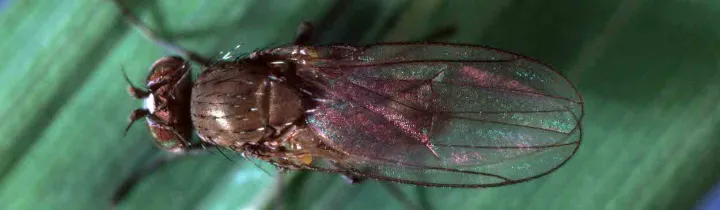
The rice leaf miner (Hydrellia maura) is a dipteran insect belonging to the family Ephydridae, commonly known as shore flies. The adult is a small, dark-colored fly measuring approximately 2–3 mm in length.
The larva of this species is pale, legless, and typically measures up to 4 mm. It possesses specialized respiratory structures that allow it to breathe while embedded within the aquatic plant tissues.
Its life cycle follows a complete metamorphosis: egg, larva, pupa, and adult. Eggs are typically laid individually on the upper surface of the rice leaves.
The pupation stage takes place inside the leaf mine. The puparium is brownish and provides essential protection for the developing insect against environmental stressors.
This pest is highly adapted to the flooded conditions of rice paddies, making it a persistent threat in many regions where rice is cultivated.
What it damages
The primary host plant for Hydrellia maura is Oryza sativa (rice). It mainly attacks plants during the tillering and jointing stages, which are critical for yield formation.
In addition to rice, this pest can utilize various aquatic grasses and weeds as alternative hosts, which often serve as reservoirs for the pest during the off-season.
Damage occurs when larvae mine the leaf tissue, feeding on the parenchyma and leaving the epidermis intact, which creates transparent streaks along the leaf veins.
Severe infestations reduce the photosynthetic capacity of the plant, leading to stunted growth and, in some cases, the total death of the affected leaves.
This damage significantly stresses the plant, reducing its ability to tiller effectively and ultimately resulting in decreased grain yield and quality.
When it appears
Adult flies emerge in the spring once the weather warms and the fields are flooded. They are most active in humid, temperate conditions.
Peak infestation usually occurs during the early growth stages of the rice crop, which corresponds to the first generation of the pest.
Depending on environmental conditions, the rice leaf miner can complete multiple generations per season, with development accelerating in warmer temperatures.
The presence of water in the rice fields is a critical environmental factor that facilitates the survival and spread of the pest population throughout the growing season.
Natural biological control by predators and parasitoids often helps to regulate the population density towards the latter half of the season.
Signs of infestation
The most visible sign of infestation is the presence of white or yellowish streaks (mines) running parallel to the veins of the rice leaves.
Close inspection of the damaged leaves often reveals the presence of larvae or dark excrement deposited along the path of the mine.
In cases of heavy infestation, the leaves may become twisted, turn yellow from the tips, and gradually wither or die prematurely.
Overall, rice plants that have been significantly mined appear smaller, paler, and less vigorous than healthy plants in adjacent fields.
- Presence of transparent leaf mines on the surface of rice leaves.
- Visible larvae or fecal remains inside the leaf tissue.
- Wilting and yellowing of the leaf tips during the early vegetative stage.
- General reduction in plant height and density of the rice stand.
Control measures
Cultural control is a primary management tool, which includes the thorough management of weeds on field edges that host the flies between rice crops.
Water level management, such as temporary draining of the paddy, can be an effective way to expose the larvae to unfavorable conditions and reduce their numbers.
Adjusting the planting time to avoid the peak egg-laying period of the first generation of flies is a highly recommended preventive strategy.
Chemical control involving systemic insecticides is utilized when the pest population exceeds the economic threshold to prevent substantial yield loss.
Biological control methods, such as enhancing natural parasitoid populations, are encouraged as they offer a sustainable way to manage the pest density without harmful chemical residues.
Taxonomy
- Latin name
- Hydrellia maura
- Order
- Diptera (flies)
- Family
- Ephydridae
- EPPO code
- HYDRMA
Discussion
No discussions yet — be the first.