
Shore fly
Ephydra macellaria
Description
How to identify
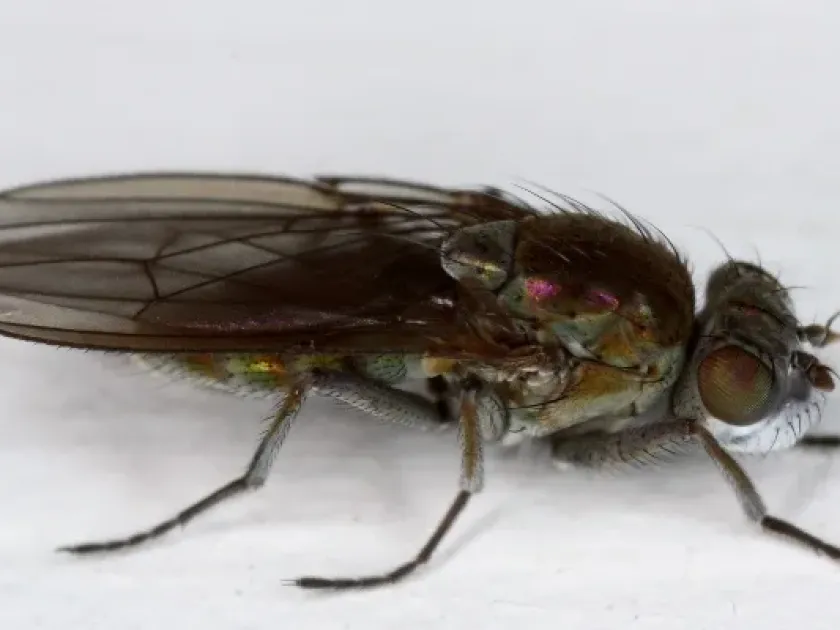
The shore fly (Ephydra macellaria) belongs to the family Ephydridae, within the order Diptera. These small flies are typically dark-colored and adapted to environments with high humidity.
Adult flies possess specialized mouthparts for feeding on organic films and microorganisms found on damp surfaces. They are strong fliers and aggregate in areas with moisture and decaying matter.
Larvae are cylindrical and feature distinct physical adaptations, such as prolegs or respiratory tubes, which allow them to thrive in aquatic or semi-aquatic substrates.
The developmental cycle encompasses eggs, three larval instars, a pupal stage (puparium), and the adult stage. The pupal stage is often spent within or near the larval habitat.
These insects are commonly associated with wetlands, irrigation ditches, or over-irrigated fields where moisture levels remain consistently high throughout the season.
What it damages
While shore flies are often considered scavengers, in high populations, their larvae can cause significant damage to young plants, particularly in greenhouses.
The larvae feed on roots and the lower stems of seedlings. This feeding activity leads to the destruction of root hairs and subsequent wilting of the plant.
The wounds created by larval feeding serve as entry points for pathogens, including various species of fungi and bacteria that cause root and stem rots.
Seedlings and young plants are the most vulnerable, as their root systems are not yet robust enough to withstand significant tissue loss.
High moisture levels in the growing medium, combined with high organic matter content, create the ideal conditions for the larvae to switch from scavenging to feeding on living plant tissues.
When it appears
Shore flies are active throughout the growing season, with population peaks occurring during periods of high humidity and warm temperatures.
In greenhouse settings, they can complete multiple generations annually if the environment remains warm and damp enough to support larval development.
Adult flight activity increases significantly following irrigation events, as the flies seek out new damp sites for oviposition.
Winter survival is typically achieved through the pupal stage, which remains dormant in the soil or protected organic debris until favorable conditions return.
Continuous monitoring is required, especially in propagation areas where constant misting or high humidity is maintained for plant growth.
Signs of infestation
Early signs include a noticeable decline in plant vigor, leaf chlorosis, and stunted growth that cannot be explained by nutritional deficiencies.
Close inspection of the root zone often reveals chewed root surfaces and the presence of small, cylindrical larvae in the soil or growing media.
Dark, water-soaked lesions on the lower stems of seedlings are a diagnostic indicator of severe larvae activity in the substrate.
The presence of adult flies hovering over the soil surface, particularly near water puddles or wet potting mix, signals a potential infestation.
In cases of heavy infestation, seedlings may easily collapse due to the extensive destruction of the lower root system and stem base.
Control measures
Proper water management is the most effective cultural control. Ensuring excellent drainage and allowing the surface of the soil to dry out between waterings helps break the life cycle.
Sanitation is critical; all dead plant material and debris should be removed from the growing area to eliminate potential larval food sources.
Increasing air circulation within greenhouses helps reduce the humidity on the soil surface, making the environment less hospitable to the flies.
Biological control agents, such as specific entomopathogenic nematodes or predatory mites, can be effective in targeting larvae in the root zone.
If chemical intervention is necessary, apply registered soil-applied insecticides, ensuring strict adherence to label directions to protect both the crop and beneficial organisms.
Taxonomy
- Latin name
- Ephydra macellaria
- Order
- Diptera (flies)
- Family
- Ephydridae
- EPPO code
- EPDRMA
Discussion
No discussions yet — be the first.