
Shore fly
Ephydra
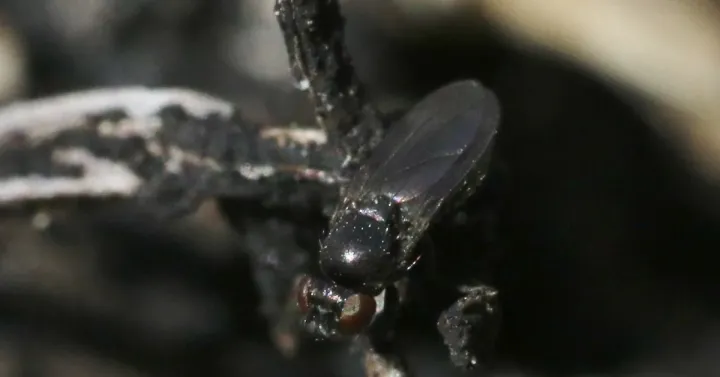
Description
How to identify
Shore flies (genus Ephydra) belong to the family Ephydridae, order Diptera. These insects are well-adapted to aquatic and semi-aquatic habitats, including salt marshes and irrigated crops.
Adult flies are typically small, dark-colored, and often possess iridescent wings. They are highly active near water surfaces and moist vegetation.
The larvae are specialized organisms featuring prolegs and a respiratory siphon, which allows them to extract oxygen from the air while submerged in water.
Eggs are commonly deposited directly on the water surface or submerged plant tissues, making them difficult to detect without careful inspection.
Pupation occurs within a puparium, which is often attached to stems or debris, providing a robust shell against environmental stress.
What it damages
Shore flies are particularly recognized as pests in rice cultivation, especially during the early growth stages of the crop.
The larvae consume the tender roots and stems of rice seedlings, causing significant weakening or death of the young plants.
Infestation is most severe in fields with poor water drainage or stagnant water, where organic debris provides abundant food for the larvae.
Direct damage often leads to uneven stands in the field, reducing the final crop yield and overall uniformity of the harvest.
Wounds created by feeding larvae often serve as entry points for bacterial and fungal pathogens, leading to secondary plant diseases.
When it appears
The activity of shore flies is highly temperature-dependent, usually peaking when water temperatures rise during late spring and summer months.
Multiple generations can occur throughout the growing season, resulting in a persistent threat to rice plants if conditions remain favorable.
Larval populations tend to multiply rapidly in mid-summer, which coincides with the critical development stages of rice.
Fluctuations in water levels during the season can either concentrate the pest population or help in reducing it depending on management practices.
As temperatures begin to drop at the end of the season, the flies enter overwintering stages in protected areas or debris.
Signs of infestation
The most evident sign is the localized yellowing and wilting of rice seedlings in patches across the field without any visible surface cause.
Inspection of the submerged parts of the plants often reveals the presence of larvae or feeding scars on the stems near the roots.
High densities of small, dark flies swarming just above the water surface indicate a significant adult population and potential egg-laying activity.
Plants affected during early stages often fail to recover and show stunted growth compared to healthy seedlings in the same field.
Root system damage, if examined, appears as irregular chewing marks, distinguishing it from mechanical damage or nutrient deficiencies.
Control measures
The primary control method involves water management, specifically draining fields to disrupt the life cycle of the larvae.
Chemical control is applied when the pest population exceeds the economic threshold, using targeted insecticides applied to the water or foliage.
Good field preparation, including proper leveling of rice paddies, prevents the creation of stagnant pools that harbor high pest concentrations.
Removal of aquatic weeds and debris reduces the available sites for egg-laying and provides less shelter for developing larvae.
- Implement systematic monitoring of larval counts in fields
- Maintain optimal water flow to prevent stagnation
- Use trap crops if necessary to divert infestation
- Consult local agronomic guides for specific pesticide labels
- Promote natural predator populations in the rice ecosystem
Taxonomy
- Latin name
- Ephydra
- Order
- Diptera (flies)
- Family
- Ephydridae
- EPPO code
- EPDRSP
Discussion
No discussions yet — be the first.