
Psorosina
Psorosina
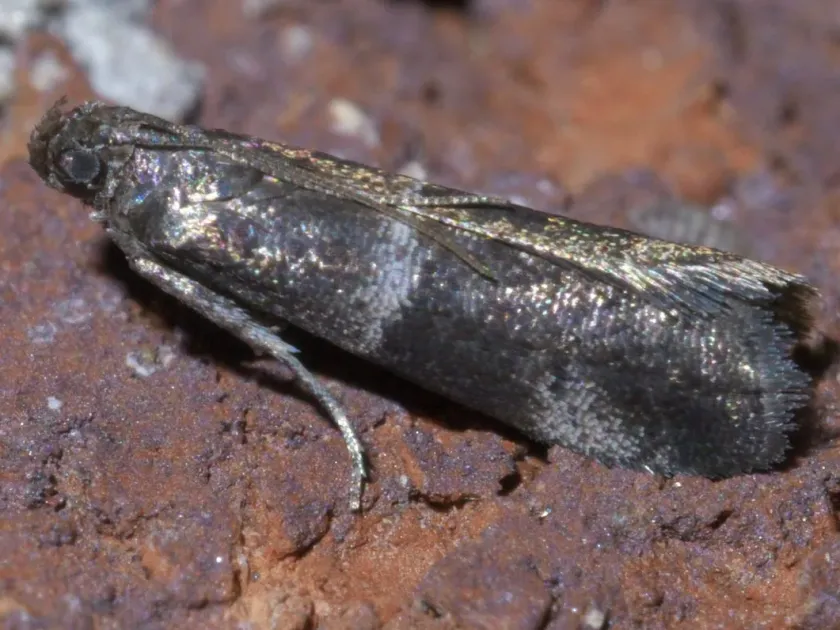
Description
How to identify
The genus Psorosina belongs to the Pyralidae family. These are small moths whose larvae are known for causing significant damage to various woody plants. The adult moths are typically cryptic, blending in with bark and leaves.
The larvae are generally caterpillars that possess strong mandibles. They are often found in sheltered areas such as rolled leaves or dense webs which they construct on the host plant to protect themselves from predators.
Identification is primarily based on larval behavior and specific wing patterns of the adult moths. Because they are part of a diverse subfamily, precise classification often requires morphological examination of genital structures.
The life cycle follows a complete metamorphosis pattern. Depending on the species and environmental conditions, they can complete one or more generations per year, which significantly affects their potential for outbreaks.
Survival through winter is achieved by entering diapause in the larval stage. They find refuge in crevices of bark, leaf litter, or other sheltered parts of the host plant until spring temperatures rise.
What it damages
Damage is caused by larvae feeding on developing buds, flowers, and foliage. This feeding habit can destroy the reproductive potential of fruit-bearing trees and shrubs.
The larvae often bind leaves together with silk, creating a protective enclosure. Within these structures, they feed on leaf tissues, leading to skeletonization and drying of the foliage.
Severe infestations can lead to significant defoliation, which hampers the tree's ability to photosynthesize and store energy for the subsequent year. This weakens the overall health of the plant.
In orchards, the damage to buds and young fruit directly translates into reduced yields and poor commercial quality. Fruit deformation can also occur due to larval feeding on the developing fruitlets.
- Bud damage and loss.
- Leaf curling and skeletonization.
- Destruction of blossoms and fruits.
- Reduced vigor of the host plant.
When it appears
The activity of Psorosina typically begins in the spring as soon as plants start budding. This is the period when the overwintering larvae emerge and resume feeding.
The development of the population is highly dependent on temperature accumulations. Warm springs often lead to more synchronous larval emergence, which can increase the impact on the plants.
Pupation occurs in specialized cocoons during the summer months. The length of this stage is influenced by local climate conditions and may vary between different generations within the same year.
Adult moth activity peaks in the warmer parts of the season. During this time, they mate and lay eggs on the leaves or bark, initiating the next generation of the pest.
As autumn approaches, the larvae transition into a dormant phase. They seek out protected spots to spend the winter, ensuring the survival of the population through the colder months.
Control measures
Effective control starts with good orchard hygiene. Removing dead bark, pruning infested twigs, and clearing debris from around the tree bases are simple yet effective preventive measures.
Biological control methods, such as using Bt-based (Bacillus thuringiensis) insecticides, are highly effective against larvae. These treatments are best applied when the caterpillars are still young.
Chemical control should be used as a last resort and timed precisely to the larval development stages. Monitoring the flight of adult moths using pheromone traps is essential for timing applications.
Conserving natural enemies is vital for long-term management. Predatory beetles, wasps, and other beneficial insects play a key role in keeping pest populations below the economic threshold.
Integrated Pest Management (IPM) strategies, which combine cultural practices, biological controls, and targeted chemical applications, offer the most sustainable approach to handling Psorosina infestations.
Taxonomy
- Latin name
- Psorosina
- Order
- Lepidoptera (butterflies)
- Family
- Pyralidae
- EPPO code
- PSOOSP
Discussion
No discussions yet — be the first.