
Polyocha
Polyocha
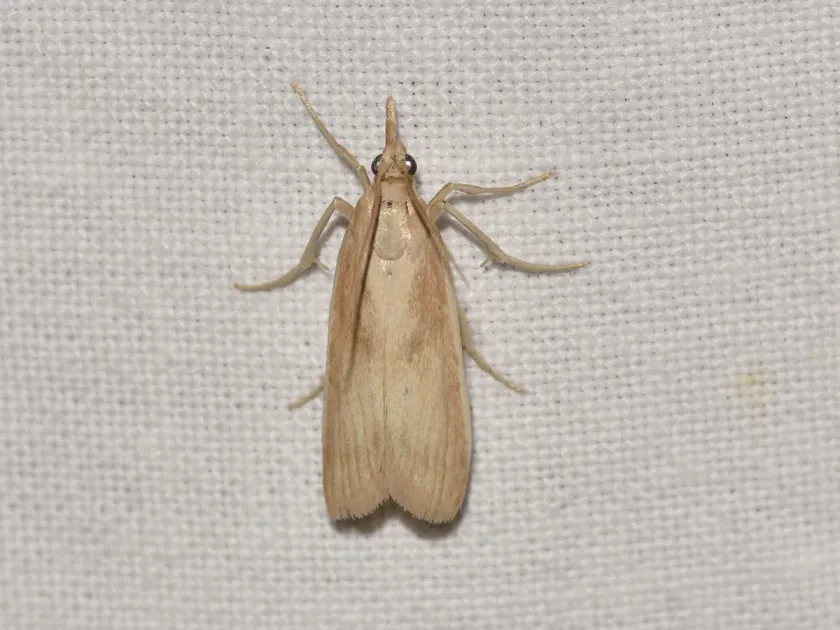
Description
How to identify
Polyocha is a genus of moths belonging to the family Pyralidae, within the order Lepidoptera. These moths are specialized pests whose adults feature a characteristic morphology typical of pyralids, with wings folded closely along the body when at rest.
The larvae (caterpillars) of Polyocha possess a typical lepidopteran body structure with a well-developed head capsule and thoracic legs. Their coloration often ranges from pale to grayish-brown, providing effective camouflage within plant tissues or the soil substrate.
The genus includes several species, with the most significant ones associated with damage to specific botanical groups in arid regions. Precise identification often requires an examination of the adult's genital apparatus, as they may resemble other species within the subfamily Phycitinae.
The lifecycle is closely synchronized with the phenology of the host plant, making them highly specialized phytophagous insects. Under favorable temperature conditions, these insects can produce multiple generations within a single growing season.
Agronomic monitoring is challenging due to the concealed behavior of the larvae, which spend most of their lifecycle inside stems or inflorescences, making early detection difficult before significant damage occurs.
What it damages
The primary damage is caused by the larvae, which feed on the internal tissues of both generative and vegetative plant organs. Depending on the specific host plant, Polyocha larvae may infest inflorescences, seeds, and the soft tissues of stems.
This pest poses a threat to various agricultural and wild crops, frequently appearing on members of the Chenopodiaceae family and other drought-tolerant plants. High population densities can lead to substantial losses in seed yield.
Feeding damage to inflorescences often results in deformation and premature abscission, which significantly reduces the plant's fertility and the overall volume of marketable seed material during harvest.
Beyond direct mechanical tissue destruction, entry points created by larvae act as vectors for secondary infections, such as fungal and bacterial rots, which further weaken the plant and reduce its physiological vigor.
Economic impact is most severe in drought-prone years, when plants are under physiological stress and exhibit lower resistance to lepidopteran infestations.
When it appears
Adult flight typically begins in late spring or early summer, coinciding with the period of active growth for host plants. The breeding period is extended and depends heavily on the accumulation of effective heat units.
Eggs are primarily deposited on inflorescences or in leaf axils. Upon hatching, larvae immediately begin feeding, boring into the plant tissues to protect themselves from environmental stressors and predators.
The overwintering stage is typically the final-instar larva, which enters diapause in the soil or within plant debris, ensuring population survival during the harsh autumn and winter months.
The second half of summer represents the peak of larval activity, as late-season generations consume remaining seed contents and fruit tissues while preparing for pupation.
The use of pheromone traps is an essential tool for determining the onset of adult emergence and predicting peak larval hatching periods for the application of control measures.
Signs of infestation
A primary sign of infestation is the presence of silk webbing on the surface of inflorescences, which larvae construct to secure their frass (excrement) and provide protection against predators.
The presence of small entry holes in stems or fruits, often surrounded by brownish, crumbly frass, is a direct indicator of Polyocha larval activity inside the plant structure.
Visual symptoms such as wilting shoot tips or the yellowing of individual sections of an inflorescence, despite adequate soil moisture, often indicate internal damage to the vascular system.
During inspection, one may observe fragments of consumed seeds and tissues held together by sticky larval secretions, which severely disrupt normal crop maturation processes.
In cases of heavy infestation, a characteristic premature drying of flower heads or inflorescences occurs, which significantly complicates harvesting operations and reduces yield quality.
Control measures
Cultural control methods include deep autumn plowing, which helps destroy overwintering larvae by disrupting their natural development cycle within the soil profile.
Implementing crop rotation and ensuring spatial isolation of fields from natural breeding sites of the pest can significantly lower infestation levels in subsequent seasons.
Biological control strategies involve the use of products based on Bacillus thuringiensis, which are most effective against early-instar larvae before they bore deeply into plant tissues.
When economic thresholds are reached, the application of systemic insecticides is recommended; these chemicals can penetrate the plant tissues to reach the localized larvae.
Sanitation measures, including the removal and destruction of crop residues and weeds that serve as reservoirs for the pest during the off-season, are crucial components of integrated pest management.
Taxonomy
- Latin name
- Polyocha
- Order
- Lepidoptera (butterflies)
- Family
- Pyralidae
- EPPO code
- PLYHSP
Discussion
No discussions yet — be the first.