
Pococera
Pococera
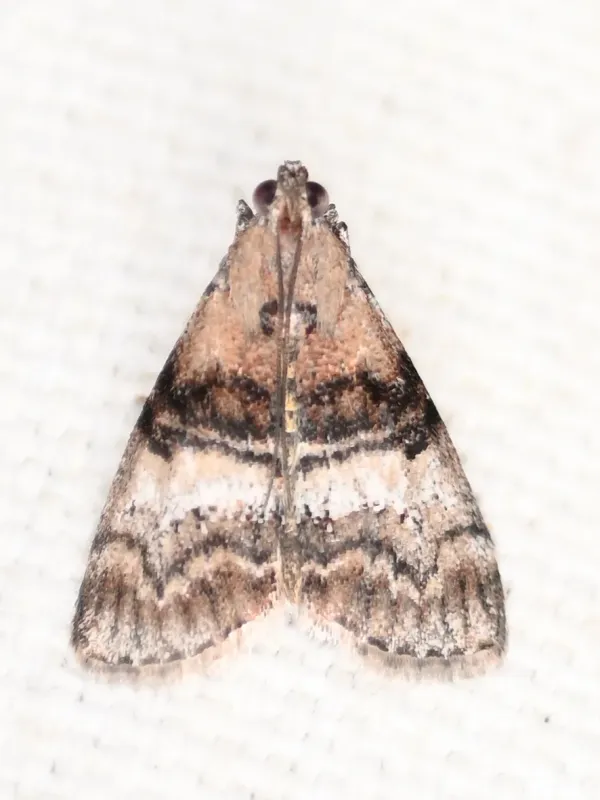
Description
How to identify
The genus Pococera belongs to the Pyralidae family (snout moths). These insects are known for their medium-sized wings with cryptic coloration, perfectly adapted to mimic bark patterns.
The larvae are characterized by their social behavior, often constructing silken webs where they live and feed in groups, providing significant protection from predators.
The life cycle involves complete metamorphosis, consisting of the egg, larval (caterpillar), pupal, and adult stages. Depending on the species, they may produce multiple generations per season.
Identifying adult moths often requires light trapping, as they are nocturnal and rarely seen during the day when they remain camouflaged on trunks.
Larval stages are the primary focus for detection, as they leave distinct physical traces on the host plant throughout their development.
What it damages
Pococera robustella, commonly known as the pine webworm, is a notable species that causes significant damage to various pine species.
The caterpillars feed on needles, often girdling them near the base, which causes the foliage to wither, turn brown, and drop prematurely.
In addition to conifers, certain Pococera species can affect deciduous trees, causing localized tissue damage to leaves and terminal buds.
Chronic infestation weakens the host plant, leaving it susceptible to secondary pests like bark beetles or various fungal pathogens.
Heavy infestations lead to stunted growth, reduced photosynthetic capacity, and a decline in the overall vigor of the tree.
Signs of infestation
The most prominent sign is the presence of webbing nests on branches, composed of silk mixed with frass and dead needles.
Patches of chlorotic or necrotic needles on specific branches indicate active feeding zones within the tree's canopy.
Under the canopy, one may find accumulated piles of dry, brown frass (larval waste), signaling a high concentration of larvae above.
Disturbed branches often reveal caterpillars rapidly retreating into their silk tunnels when the host plant is shaken.
In severe cases, the visual symmetry of the tree is lost due to uneven foliage loss and the accumulation of debris in the webbed clusters.
Control measures
Manual pruning and destruction of webbing nests during the dormant season significantly reduce the population of overwintering larvae.
Insecticides containing Bacillus thuringiensis are highly recommended as they specifically target lepidopteran larvae with minimal impact on beneficial insects.
Contact insecticides should be applied early in the season when young larvae are exposed and actively feeding on the plant surface.
Promoting tree health through appropriate irrigation and soil nutrient management helps the host plant withstand and recover from pest-induced stress.
Regular visual inspections, especially in late spring, allow for early intervention before the caterpillars cause widespread defoliation.
Taxonomy
- Latin name
- Pococera
- Order
- Lepidoptera (butterflies)
- Family
- Pyralidae
- EPPO code
- POCOSP
Discussion
No discussions yet — be the first.