
Indianmeal moth
Plodia interpunctella
Description
How to identify
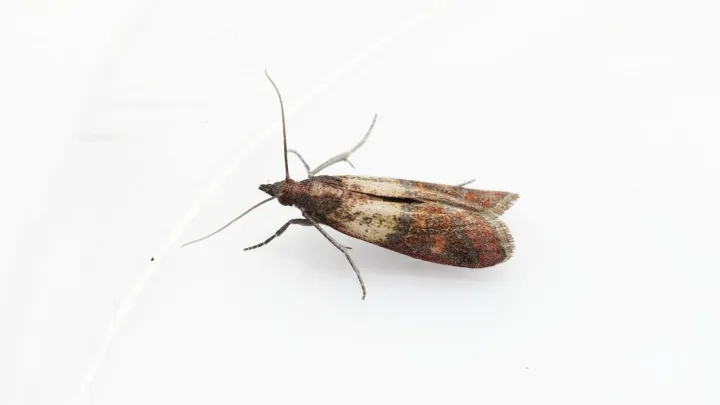
The Indianmeal moth (Plodia interpunctella) is a common pest belonging to the Pyralidae family. The adult moth has a wingspan of approximately 16–20 mm.
The forewings have a distinct color pattern: the inner part is yellowish-gray, while the outer portion is reddish-brown with copper luster and dark bands.
Larvae (caterpillars) grow up to 12–15 mm in length. Their bodies are typically off-white, yellow, or greenish-tinted, with a distinct dark brown head capsule.
Pupae are found within cocoons in protected areas, such as wall cracks, equipment crevices, or deep inside the infested food substrates.
This species is a prolific breeder; under optimal conditions of 25–30°C, it can complete its life cycle in about a month, leading to multiple generations per year.
What it damages
This moth is a generalist feeder that attacks a wide variety of stored products including grain, cereals, flour, cornmeal, and dry pet food.
It is particularly destructive to high-value items such as dried fruits, nuts, seeds, spices, chocolate, and various dried herbs stored in warehouses or pantries.
Larvae are notorious for their ability to chew through thin plastic, paper, and cardboard packaging, successfully invading sealed containers to feed on the contents.
Infestation often occurs in the top layers of grain bins, where larvae feed on the germs of the kernels, causing significant loss of nutritional value.
The secondary damage is often more critical: the accumulation of webbing, frass (excrement), and larval skins renders the infested product unfit for commercial use.
Signs of infestation
The presence of silken webbing on or within the food material is the most characteristic sign of an Indianmeal moth infestation.
Adult moths flying erratically in a zigzag pattern near food storage areas indicate an active infestation and the need for immediate intervention.
When inspecting bulk products, clumps of grain or powder stuck together with silk indicate where the larvae have been feeding and maturing.
Contaminated products often exhibit a musty, off-flavor odor and may show signs of clumping due to the larvae stitching the food particles together.
Larval skins, empty pupal casings, and small, cylindrical frass pellets found in the storage area confirm the presence of an established pest population.
Control measures
Sanitation is the cornerstone of control: frequent cleaning of storage areas to remove dust, debris, and spilled grains prevents new generations from thriving.
Maintaining low humidity levels (below 12%) in storage environments creates unfavorable conditions for larval survival and slows down their development.
Pheromone traps are essential for monitoring and suppressing male populations, helping to break the reproductive cycle of the moth.
In large-scale storage facilities, chemical fumigation with phosphine-based products is the standard procedure to eradicate all life stages of the pest.
For household management, storing susceptible food items in airtight glass or rigid plastic containers prevents infestation and limits the spread if pests are introduced.
Taxonomy
- Latin name
- Plodia interpunctella
- Order
- Lepidoptera (butterflies)
- Family
- Pyralidae
- EPPO code
- PLODIN
Discussion
No discussions yet — be the first.