
Phycita
Phycita
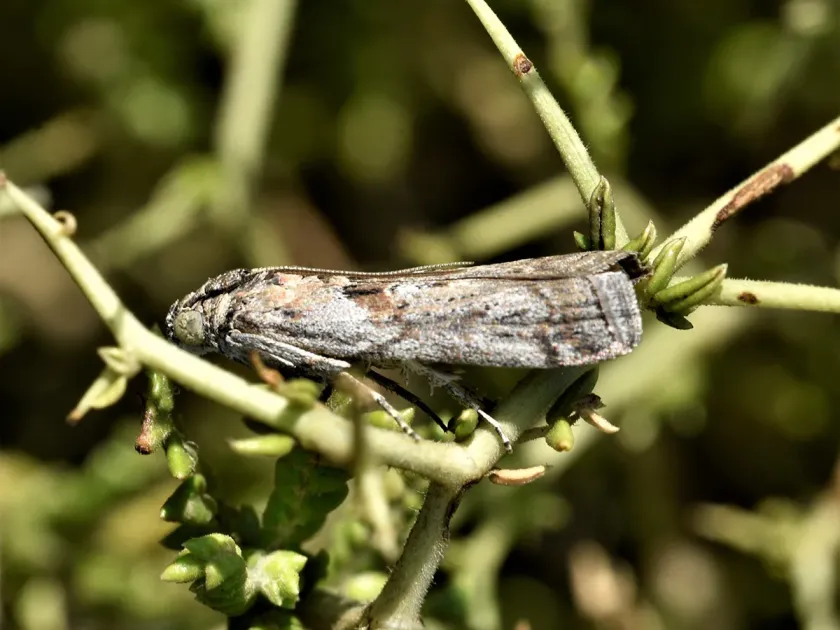
Description
How to identify
The genus Phycita belongs to the family Pyralidae (snout moths). These insects are characterized by a specific wing pattern that provides excellent camouflage against tree bark, with an average wingspan of 20–30 mm.
The larvae, or caterpillars, have a cylindrical body ranging from green to brownish colors, often marked with longitudinal stripes. Their well-developed mouthparts allow them to feed efficiently on plant tissues.
Pupation occurs within dense silk cocoons. These cocoons are typically hidden in bark crevices, leaf litter, or debris, providing protection for the pupae during dormant periods.
Adult moths are nocturnal and are strongly attracted to light sources. This behavior is widely used in field monitoring to detect their flight activity and population density.
The life cycle undergoes complete metamorphosis, including egg, larva, pupa, and adult stages. The number of generations per year varies depending on local climate conditions and available host plants.
What it damages
Phycita species are specialized phytophagous pests that primarily target woody plants, including apple trees, pears, and various nut-bearing species in orchards.
Larvae often adopt a concealed feeding style, targeting terminal buds, young leaves, and developing flower clusters, which causes deformation and reduced tree vigor.
In some cases, the caterpillars bore into fruit, leading to premature drop or secondary infections, rendering the produce unmarketable and susceptible to rot.
In nursery settings, Phycita larvae cause structural damage by consuming the leading shoots, which disrupts the natural growth habit of young saplings.
Economic damage is cumulative; repeated infestations over several seasons can significantly weaken trees, making them more susceptible to drought and other stressors.
When it appears
Seasonal activity begins in early spring as temperatures rise, triggering the emergence of larvae from overwintering sites or the hatch of the first generation from eggs.
The peak period of feeding intensity occurs during late spring and early summer when the trees are putting out new, nutrient-rich vegetative growth.
Subsequent generations of adult moths emerge throughout the summer months, leading to continuous egg-laying cycles that can persist until late autumn.
As the season progresses toward winter, the insects prepare for diapause, seeking protected areas on the tree or in the soil to survive the cold months.
Field scouting using pheromone traps is the most reliable method for determining the start of flight activity and timing protective treatments effectively.
Signs of infestation
The most common sign of infestation is the presence of silk webbing, which caterpillars use to tie leaves or fruit together to create protected feeding sites.
Small, dark granular frass (excrement) found on leaves or trapped within silk webs is a clear indicator of active feeding by larvae in the vicinity.
Wilting of terminal shoots and the appearance of clumped, dried leaves are characteristic symptoms of larval damage within the canopy structure.
Fruit infestation is marked by entry holes, often accompanied by necrotic spots where pathogens may enter and initiate further decay of the plant tissue.
Increased activity of insectivorous birds near specific canopy areas often points to a concentration of larvae being exploited as a food source.
Control measures
Sanitation practices, such as pruning and removing infested plant parts during the dormant season, help eliminate overwintering populations and reduce future outbreaks.
Biological control using Bacillus thuringiensis is highly effective against young larvae and minimizes the impact on beneficial predators and pollinators.
Chemical control should be implemented based on monitoring results, using selective insecticides that target larvae while protecting the natural environment.
Adopting sticky bands on tree trunks can act as a mechanical barrier to prevent the movement of certain larval stages, effectively suppressing pest pressure.
Integrated Pest Management (IPM) strategies, including the conservation of natural enemies like parasitic wasps, are essential for long-term sustainable control of Phycita.
Taxonomy
- Latin name
- Phycita
- Order
- Lepidoptera (butterflies)
- Family
- Pyralidae
- EPPO code
- PHYISP
Discussion
No discussions yet — be the first.