
Pempelia moth
Pempelia
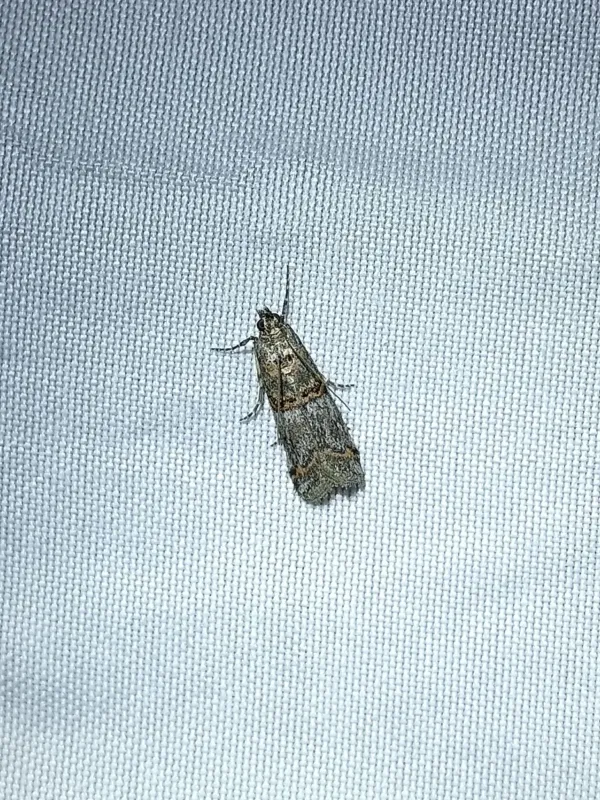
Description
How to identify
The Pempelia genus belongs to the Pyralidae family within the order Lepidoptera. These are small moths with a wingspan of approximately 20–25 mm, typically featuring grey or brownish wing patterns that provide excellent camouflage against tree bark.
The larvae, or caterpillars, have cylindrical bodies ranging from yellowish-green to brown, often marked with longitudinal stripes. Their well-developed head capsules allow them to feed effectively on plant tissues throughout their larval stage.
The life cycle encompasses complete metamorphosis, including egg, larva, pupa, and adult stages. They typically overwinter as late-instar larvae within silken cocoons hidden in bark crevices or under leaf litter.
In spring, as temperatures rise, the overwintering larvae become active and begin feeding on newly developing buds and young foliage. Pupation usually occurs in May or June within their feeding sites or protected areas in the canopy.
Entomologists distinguish Pempelia species from other pyralid moths by specific wing vein patterns in adults and the characteristic way their larvae bore into host plant buds.
What it damages
These pests primarily target members of the Rosaceae family, causing significant economic damage to apple, pear, cherry, and plum orchards.
The larvae are particularly destructive in early spring, as they consume both flower and vegetative buds, potentially leading to substantial fruit yield losses before the season even starts.
During the summer months, the larvae may feed on young fruitlets, boring tunnels into the developing fruit, which eventually causes premature fruit drop and reduces marketable yield.
Mass infestations can severely stunt the growth of young trees, as the constant feeding on shoot tips inhibits normal structural development and canopy formation.
Damage to leaf petioles and young shoots leads to premature wilting and abscission, which weakens the tree's overall vigor and photosynthetic capacity.
Signs of infestation
The most diagnostic sign of a Pempelia infestation is the presence of webbed nests, where larvae congregate and bind together clusters of leaves or flower buds with silk.
Accumulation of frass (larval excrement) appearing as small, dark granules on leaves or within bud clusters indicates active feeding sites.
Spring observations often reveal dried, unopened buds with small entry holes, signifying that larvae have hollowed out the interior tissue.
Distorted shoots and premature leaf drop are common symptoms, resulting from larval feeding at the base of the petioles or on the young succulent stems.
Visible entry holes on small, falling fruitlets during the summer are clear evidence that the second generation of larvae has begun feeding on the developing fruit crop.
Control measures
Integrated Pest Management (IPM) for Pempelia involves autumn sanitation, such as scraping loose bark from tree trunks to eliminate overwintering pupae and larvae sites.
Manual removal and destruction of silken nests containing larvae during the growing season is a highly effective mechanical control method for small-scale infestations.
When chemical intervention is necessary, insecticides should be applied during the peak larval emergence period, ensuring strict adherence to safety guidelines and pre-harvest intervals.
Biological control using formulations based on Bacillus thuringiensis provides a selective approach that targets larvae without disrupting beneficial insect populations.
- Deploying pheromone traps to monitor adult moth activity and time control measures accurately.
- Cultivating the soil beneath tree canopies to disrupt pupation sites and reduce overwintering success.
- Encouraging natural predators, such as parasitic wasps and predatory beetles, to maintain ecological balance in the orchard.
Taxonomy
- Latin name
- Pempelia
- Order
- Lepidoptera (butterflies)
- Family
- Pyralidae
- EPPO code
- PMPESP
Discussion
No discussions yet — be the first.