
Paralipsa
Paralipsa
Description
How to identify
Paralipsa gularis, commonly known as the mulberry webworm or warehouse moth, belongs to the family Pyralidae. It is a notorious pest that primarily thrives in warehouses and food storage facilities, affecting various agricultural commodities.
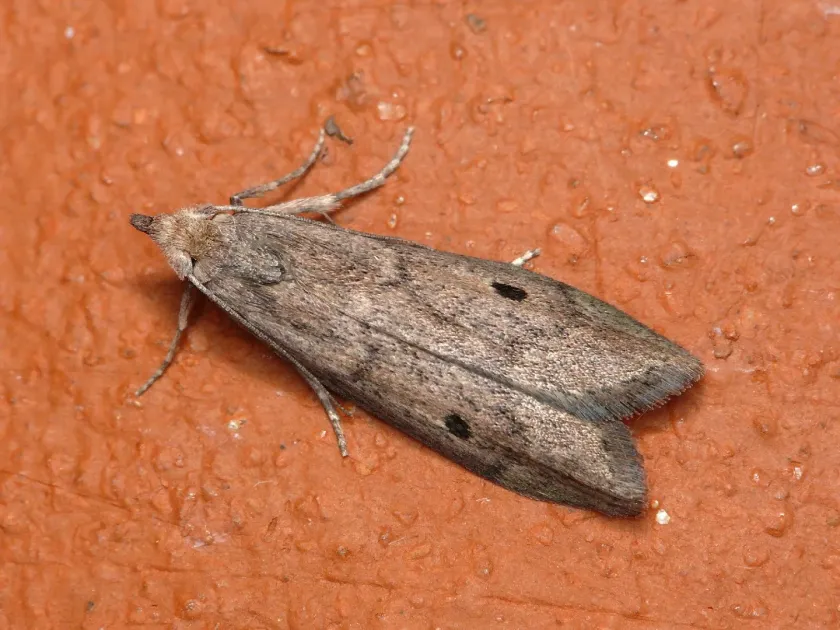
The adult moth is small, with a wingspan ranging from 20 to 25 mm. The forewings display a greyish-brown coloration with darker transverse bands, providing effective camouflage against the dusty backgrounds typical of storage sites.
The larvae are approximately 15-18 mm long when mature. They have a characteristic appearance with a dirty-white to yellowish body and a distinctively dark, often black-brown head capsule, which serves as a reliable identification feature.
Prior to pupation, the larvae construct robust, silk-lined cocoons. These cocoons are frequently camouflaged with debris from the surrounding substrate, making them difficult to detect during routine inspections of the facility.
The biological cycle of the moth is highly temperature-dependent. In optimal indoor conditions, with temperatures around 20-25°C and sufficient humidity, the pest can complete several generations annually, leading to rapid population growth.
What it damages
This pest is highly destructive to a wide range of stored products, with a strong preference for oilseeds such as peanuts, sunflower seeds, and soybeans. It also infests dried fruits, nuts, and various flour-based goods.
Damage is primarily caused by the feeding larvae. They penetrate the seeds or fruits, consuming the nutrient-rich interior and leaving behind galleries filled with frass, webbing, and silk, which renders the product unmarketable.
The moth's high reproductive potential allows for rapid infestation of storage batches. A small initial population can quickly expand, covering the product in a thick layer of webbing that compromises the entire inventory.
The webbing produced by the larvae causes the commodity to clump together. These clumps inhibit airflow within the storage bulk, creating warm spots that favor the growth of molds and further degradation of the stored material.
Economic losses include not only the weight reduction of the stored goods but also the costs associated with mandatory cleaning, pest control measures, and potential total rejection of contaminated batches by buyers.
Signs of infestation
The most evident sign of a Paralipsa infestation is the presence of dense, sticky webbing on the surface of the stored grain or seeds. In heavy infestations, this webbing creates visible mats that bind the material together.
Monitoring efforts often reveal the presence of adult moths, particularly during the twilight hours or at night, as they are attracted to light sources within the warehouse environment.
Visual inspection of the produce shows entry holes in seeds and nuts, often accompanied by silk threads and larval excrement. The overall quality of the produce is visibly degraded, often emitting a distinct musty odor.
The discovery of larval exuviae (shed skins) and pupal cocoons in floor cracks, on warehouse walls, or within packaging material is a clear indicator of a resident population that has established itself in the facility.
Pheromone traps are essential tools for early detection. They help warehouse managers identify the arrival of the moth before the population reaches damaging levels, allowing for targeted and proactive control measures.
Control measures
Sanitation is the cornerstone of Paralipsa management. Regular removal of spills, dust, and debris from storage floors, equipment, and structural corners is critical to eliminate breeding habitats for the larvae.
Pre-storage facility treatment is vital. Empty warehouses should be thoroughly cleaned and treated with approved residual insecticides or aerosol treatments to eliminate any overwintering stages of the moth.
Environmental management involves controlling the temperature and moisture content of the stored products. Keeping moisture levels low and utilizing aeration systems to cool the grain significantly slows down larval development.
Fumigation is the most effective method for eradicating established infestations. Gas treatment penetrates deep into the product bulk, effectively eliminating all stages of the moth, including eggs and larvae protected by webbing.
Proper packaging and storage hygiene play a preventive role. Utilizing hermetically sealed containers or protective overwraps prevents adult moths from accessing the product to lay their eggs during transport and storage.
Taxonomy
- Latin name
- Paralipsa
- Order
- Lepidoptera (butterflies)
- Family
- Pyralidae
- EPPO code
- PRLISP
Discussion
No discussions yet — be the first.