
Asian corn borer
Ostrinia furnacalis
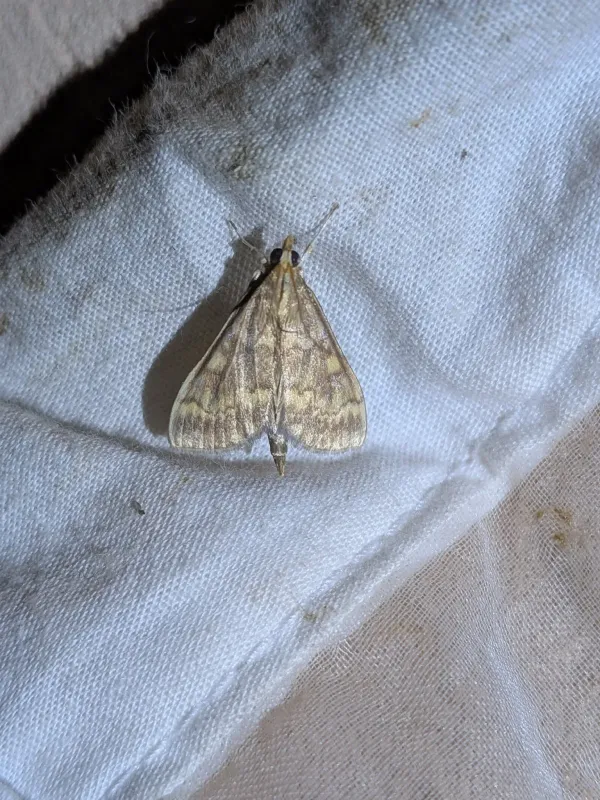
Description
How to identify
The Asian corn borer (Ostrinia furnacalis) is a significant moth pest within the Crambidae family. The adult moths are relatively small, with a wingspan of approximately 20–30 mm, displaying a pale brown color with indistinct wavy markings.
The larvae are the destructive stage of this insect. They typically measure 20–25 mm when fully grown and can be identified by their grayish-white to pinkish bodies marked with dark spots on each abdominal segment, which aid in field diagnosis.
The life cycle is closely linked to the availability of host plants and climatic conditions. Under optimal temperatures, the insect can complete several generations per year, making continuous monitoring essential throughout the growing season.
Overwintering occurs in the larval stage, primarily inside corn stalks or crop residues. As spring progresses, the larvae pupate, eventually emerging as adults to mate and lay eggs on the undersides of leaves.
Distinguishing Ostrinia furnacalis from other borer species often requires expert examination of the genitalia, though local distribution patterns and specific crop preferences are generally sufficient for practical agricultural purposes.
What it damages
The primary host for this pest is corn, although it also poses a serious threat to sorghum, millet, cotton, and various vegetable crops. The damage inflicted can lead to substantial reductions in crop yields.
Larvae consume leaf tissue initially, causing small holes and windowing patterns. As they mature, they bore into the stalks, leaf sheaths, and ears, disrupting the plant's vascular system and nutrient transport.
Bored stalks are prone to lodging, especially during high winds, which complicates harvest and can result in significant field losses. This mechanical damage also creates entry points for various fungal pathogens.
When larvae target the ears, they destroy kernels and compromise the quality of the harvest. This damage often invites secondary infections, such as ear rots, which further degrade the market value of the corn grain.
The cumulative effect of these injuries results in stunted plant growth, decreased weight of the cobs, and, in severe cases of infestation, total crop failure if management measures are not implemented promptly.
When it appears
Adult moth activity typically begins in late spring or early summer, depending on regional temperatures. The emergence of moths signals the start of the primary infestation period for young corn crops.
Egg-laying is heavily influenced by the presence of pollen, which makes the silking and tasseling stages of corn particularly attractive to female moths seeking sites for their offspring.
The duration of the larval stage is highly sensitive to ambient temperature. Monitoring for the appearance of egg masses and neonate larvae is critical for determining the timing of field treatments.
In mid-summer, larval populations often reach their peak, coinciding with the rapid development of the corn ears, which are highly susceptible to damage during this window of high metabolic activity.
As temperatures begin to decline in the fall, mature larvae cease feeding and move deeper into the lower parts of the stalks to prepare for winter dormancy, effectively marking the end of the active seasonal infestation.
Signs of infestation
Early-season infestation is characterized by small holes in the leaf blades arranged in rows, often referred to as "shot-hole" damage, resulting from neonate larvae feeding on the leaf surface.
The presence of fine, sawdust-like frass (larval excrement) at the base of leaves or near entry points in the stalks is a diagnostic indicator that larvae are actively feeding within the plant tissue.
Sudden breakage or wilting of the tassel is a classic sign of internal stalk infestation, indicating that the borer has disrupted the structural integrity of the plant.
Careful inspection of the ear husks often reveals entry holes where the larvae have penetrated to reach the developing kernels, frequently accompanied by localized web-like structures.
In infested fields, secondary symptoms such as yellowing or prematurely drying stalks can be seen, which are often the result of water and nutrient pathways being severed by the borer's activity.
Control measures
Cultural control is vital and includes the shredding and deep burial of crop residues after harvest to eliminate the overwintering sites for the larvae and reduce the emergence of the next generation.
Biological control methods, such as the strategic release of Trichogramma wasps, can effectively parasitize the pest's eggs and suppress population numbers without the use of broad-spectrum chemicals.
Chemical control involving systemic insecticides is most effective when applied during the period of egg hatching, before the larvae successfully penetrate the protected environment inside the corn stalks.
The use of genetically modified or resistant hybrid varieties has proven to be the most reliable defense, offering long-term protection against the damage caused by the Asian corn borer.
- Crop rotation with non-host plants.
- Regular monitoring using light and pheromone traps.
- Timed application of biological Bacillus thuringiensis sprays.
- Efficient weed management in and around cornfields.
Taxonomy
- Latin name
- Ostrinia furnacalis
- Order
- Lepidoptera (butterflies)
- Family
- Pyralidae
- EPPO code
- PYRUFU
Discussion
No discussions yet — be the first.