
Nephopterix
Nephopterix
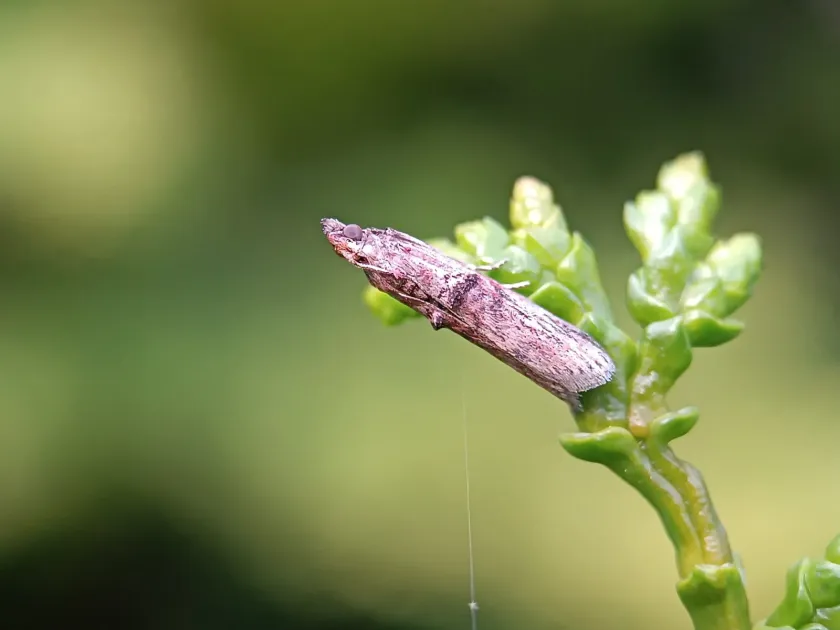
Description
How to identify
The genus Nephopterix belongs to the family Pyralidae, commonly known as snout moths, which includes numerous species of significant agricultural importance.
Adult moths are characterized by narrow, elongated forewings with cryptic coloration, often mimicking the bark or dry foliage where they rest during the day.
The larvae, or caterpillars, typically possess a well-developed chewing mouthpart and often exhibit striped patterns that serve as camouflage while feeding on plants.
This genus undergoes a complete metamorphosis, including egg, larva, pupa, and adult stages, with each stage adapted to specific seasonal conditions.
Identification often requires careful inspection of the larval feeding behavior and the structure of the moth's wing venation or genital anatomy.
What it damages
These pests primarily target various woody plants, with a strong preference for fruit trees and ornamental shrubs within the Rosaceae family.
Larvae consume buds, foliage, and occasionally developing fruit, leading to significant defoliation and reduction in the plant's photosynthetic capacity.
Feeding damage can cause the deformation of new shoots, which stunts the growth of young trees and weakens their overall physiological health.
In severe infestations, the loss of leaf area and damage to reproductive buds can result in substantial reductions in annual harvest yield.
Secondary infections often manifest at the site of feeding, as wounds created by the larvae provide entry points for pathogenic fungi and bacteria.
When it appears
Adult moths are typically active during the late spring and early summer, which correlates with the onset of the tree's growth season.
Oviposition usually occurs on the underside of leaves or near the base of buds, ensuring that newly hatched larvae have immediate access to food.
The larval stage is most active during the warmest months, during which they build silken nests between leaves to protect themselves from predators.
Overwintering occurs at the larval stage, often as a late-instar caterpillar protected by a silken cocoon hidden under loose bark or in debris.
As spring temperatures rise, the overwintered larvae emerge from their diapause, complete their pupation, and initiate a new cycle.
Signs of infestation
The most prominent sign of an infestation is the presence of webbed or tightly rolled leaves that contain larvae feeding inside.
Accumulation of frass (larval excrement) within these silken nests is a clear indicator of an active and feeding population of Nephopterix.
Early spring damage often appears as stunted, withered, or partially consumed buds that fail to develop into healthy leaves or blossoms.
Premature leaf drop and visible skeletonization of leaves are frequent consequences of heavy larval grazing during the mid-summer period.
Observation of small exit holes in buds or twigs can also indicate the presence of larvae that have bored into plant tissues for protection.
Control measures
Sanitation practices, such as removing dead bark and pruning infested branches, are crucial for reducing the overwintering population of the pest.
Biological control, including the use of Bacillus thuringiensis sprays, is highly effective for targeting young larvae while preserving beneficial predators.
Chemical intervention should be reserved for periods of high population density, strictly following local guidelines for application to minimize ecological impact.
Integrating the use of pheromone traps helps in monitoring adult moth flights, allowing growers to time their control efforts with maximum precision.
Promoting orchard biodiversity by planting nectar-rich borders supports natural enemies, such as parasitic wasps, which act as a check on moth populations.
Taxonomy
- Latin name
- Nephopterix
- Order
- Lepidoptera (butterflies)
- Family
- Pyralidae
- EPPO code
- NPPTSP
Discussion
No discussions yet — be the first.