
Moodna
Moodna
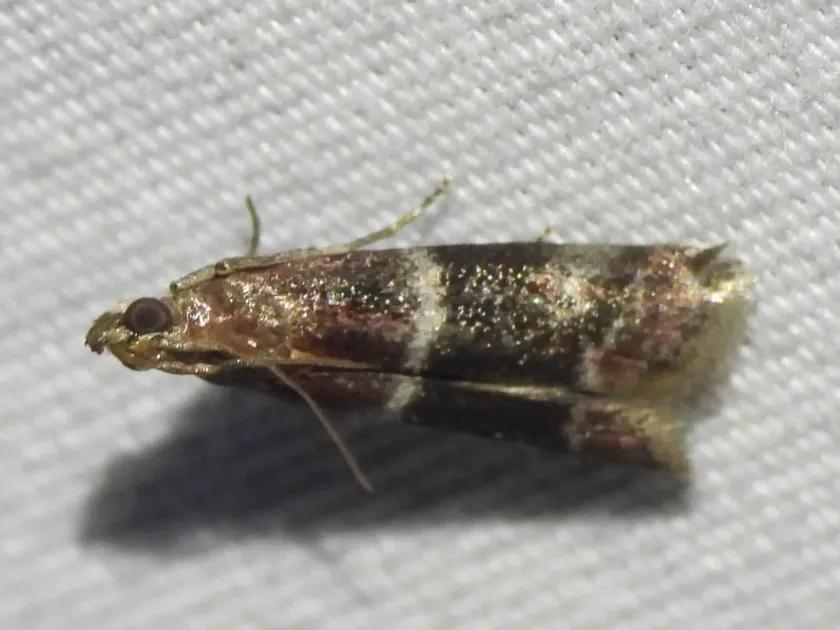
Description
How to identify
The Moodna pest belongs to the order Lepidoptera, family Pyralidae. These are typically small nocturnal moths that are difficult to distinguish without professional identification tools.
Adult moths possess wing shapes and resting postures characteristic of the snout moth family. Their coloration is generally cryptic, featuring shades of brown and grey, providing excellent camouflage.
The larvae, or caterpillars, are the most specialized stage of the insect. They undergo several molts, increasing in size and robustness as they mature into their final instar.
Field identification often relies on pheromone traps, which are essential for confirming the presence of the species and monitoring population density within the crop.
Given the morphological similarities to other pyralid moths, professional entomological inspection is recommended for precise species confirmation in agricultural contexts.
What it damages
The primary damage is caused by the larval stage. Moodna caterpillars actively feed on both vegetative and reproductive tissues of various host plants.
In field environments, this pest can affect cereals and industrial crops, showing a preference for energy-rich plant parts during their active growth phases.
Early-stage infestations are particularly damaging, as the young plants have limited capacity to recover from significant tissue loss or stem damage.
Feeding activities often create entry points for secondary infections, allowing fungal and bacterial pathogens to colonize the plant and cause systemic decay.
In storage conditions, the pest can significantly degrade grain quality, reducing its commercial value through contamination and feeding damage.
When it appears
Pest activity is strongly correlated with ambient temperature. Moth emergence typically occurs from late spring to early summer as conditions stabilize.
The Moodna life cycle allows for multiple generations within a single season if the climate permits rapid development from egg to adult.
The peak feeding damage usually coincides with the period when crops are developing fruit or grain, as these tissues are highly palatable and nutrient-dense.
Overwintering occurs as either larvae or pupae, hiding in protected environments such as soil crevices, crop debris, or storage structure cracks.
Climatic variability, including heat waves or excessive rainfall, plays a major role in determining emergence timing and the intensity of pest pressure.
Signs of infestation
An early indicator of infestation is the presence of frass (small granular excrement) found in leaf axils or near entry holes on plant stems.
Another classic sign is the presence of silken webbing, which Moodna larvae construct to create protective shelters or bind adjacent leaves together.
Visual inspection often reveals entry holes on stems or fruit, frequently accompanied by localized necrosis or tissue darkening due to larval activity.
In cases of stem-boring behavior, top-growth wilting or deformation occurs as the vascular tissues of the plant are compromised by the larvae.
Severe infestations manifest as yellowing leaves and premature leaf drop, resulting in a measurable decline in the plant's overall photosynthetic efficiency.
Control measures
Effective management of Moodna requires an integrated pest management (IPM) strategy that combines cultural, biological, and chemical methods.
- Deep plowing post-harvest to disrupt overwintering sites.
- Strict adherence to crop rotation cycles.
- Encouraging natural predators and parasitoids.
- Targeted insecticide application during moth emergence.
- Removal and destruction of crop residues to reduce pressure.
Chemical control should be implemented based on established economic thresholds to avoid unnecessary environmental impact and secondary pest outbreaks.
Biological alternatives, such as Bacillus-based products, provide an effective and eco-friendly method for controlling larval populations without harming beneficial insects.
Consistent monitoring using pheromone traps is the most reliable way to time protective measures, ensuring maximum efficiency and minimal chemical usage.
Taxonomy
- Latin name
- Moodna
- Order
- Lepidoptera (butterflies)
- Family
- Pyralidae
- EPPO code
- MOODSP
Discussion
No discussions yet — be the first.