
Monoptilota
Monoptilota
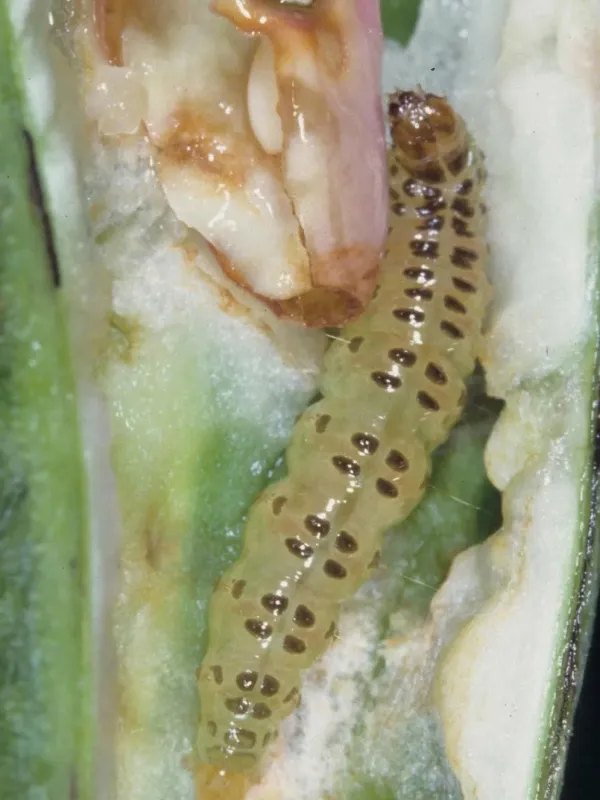
Description
How to identify
Monoptilota is a genus of moths belonging to the order Lepidoptera and the family Pyralidae. These insects are known as specific pests that impact certain agricultural crops.
The life cycle of the moth consists of four stages: egg, larva (caterpillar), pupa, and adult. The larval stage is the most damaging phase for crops.
Adult moths are characterized by narrow wings and are usually nocturnal. Proper identification of the species often requires professional entomological expertise.
Environmental factors such as temperature and humidity significantly influence the development rate and the number of generations per season.
Monitoring the population of adults is vital for timing control measures and preventing large-scale infestation of agricultural fields.
What it damages
The primary host plants for Monoptilota are members of the Amaranthaceae family, specifically various cultivated species of amaranth.
Larvae feed internally on the plants, tunneling through stems, petioles, and flowering stalks, which severely hampers the plant's structural integrity.
The internal damage interrupts the vascular system, causing nutrient deficiencies, wilting, and stunted growth in the infested crops.
Secondary fungal infections often occur in the damaged tissues, further accelerating the decline of the plant health and reducing the overall quality of the harvest.
High infestation levels can result in significant yield losses, making Monoptilota a species of concern for commercial amaranth growers.
Signs of infestation
The most common sign of infestation is the appearance of small holes in the base of the stems, often accompanied by frass (caterpillar excrement).
Wilting of the top leaves or the entire plant indicates that internal stem tissues have been heavily damaged by the larvae feeding inside.
Early-stage infestations can sometimes be identified by subtle curling or yellowing of the foliage, suggesting an internal disruption.
Splitting the stem of a suspected plant often reveals longitudinal tunnels packed with sawdust-like debris, confirming the presence of the pest.
During the egg-laying season, observant growers can spot small eggs deposited on the underside of leaves or within the leaf axils.
Control measures
Crop rotation is the most effective cultural method to break the life cycle of the pest and minimize the risk of recurring infestations.
Sanitation practices, such as removing weeds from the Amaranthaceae family, are essential as they serve as alternative hosts during the off-season.
Chemical control involving systemic insecticides is recommended during the peak larval hatching period to ensure optimal efficacy.
Biological control, particularly the use of Bacillus thuringiensis sprays, provides an eco-friendly option for managing pest populations.
- Regular scouting of fields for early detection.
- Deep autumn plowing to disturb and destroy pupae in the soil.
- Monitoring adult flight with pheromone traps.
Taxonomy
- Latin name
- Monoptilota
- Order
- Lepidoptera (butterflies)
- Family
- Pyralidae
- EPPO code
- MNPTSP
Discussion
No discussions yet — be the first.